
Selecting the right coffee machine for your hospitality business shapes customer satisfaction and operational efficiency. With numerous machine types available, each offering distinct features and capabilities, making an informed choice requires understanding how different systems align with your venue’s demands. This guide explores essential evaluation criteria, compares popular machine types, and provides practical frameworks to help you select equipment that delivers consistent quality whilst supporting your business growth.
Table of Contents
- Key takeaways
- How to evaluate coffee machines for hospitality businesses
- Types of coffee machines explained
- Comparing coffee machine features in hospitality settings
- Choosing the right coffee machine for your hospitality business
- Discover tailored coffee solutions with The Coffee Factory
- Types of coffee machines FAQ
Key Takeaways
| Point | Details |
|---|---|
| Capacity alignment | Assess daily cup capacity in relation to peak demand to prevent downtime during busy service. |
| Staff capability | Staff skill levels and training requirements shape the most suitable machine type for the operation. |
| Maintenance and parts | Maintenance frequency and spare parts availability influence running costs and potential downtime. |
| Installation and service | Professional installation and local service networks improve reliability and minimise downtime when repairs are necessary. |
How to evaluate coffee machines for hospitality businesses
Understanding your operational requirements forms the foundation for selecting appropriate coffee equipment. Start by analysing your peak service periods and average daily cup volume. A busy hotel breakfast service demands different capacity than a boutique café serving specialty drinks throughout the day.
Machine reliability directly impacts your revenue stream. Equipment downtime during peak hours frustrates customers and reduces sales. Choosing coffee machines involves balancing reliability, capacity, and maintenance considerations to ensure consistent service delivery. Evaluate build quality by examining boiler materials, pump specifications, and component accessibility for repairs.
Staff capability influences which machine type suits your operation. Fully automatic systems require minimal training, whilst manual espresso machines demand skilled baristas who understand extraction variables. Consider your team’s experience level and training availability when assessing options.
Maintenance requirements vary significantly between machine types. Daily cleaning protocols, descaling schedules, and component replacement frequency affect operational costs and staff time allocation. Professional installation ensures proper setup from day one, reducing early failures and optimising performance.
Key evaluation factors:
- Daily cup capacity aligned with peak demand periods
- Staff skill levels and training investment required
- Maintenance frequency and accessibility of replacement parts
- Build quality indicators like boiler type and pump pressure ratings
- Local service support availability for rapid repairs
Pro tip: Prioritise machines with readily available spare parts and local service networks. Equipment sourced from regional suppliers with established support infrastructure minimises downtime when repairs become necessary.
Types of coffee machines explained
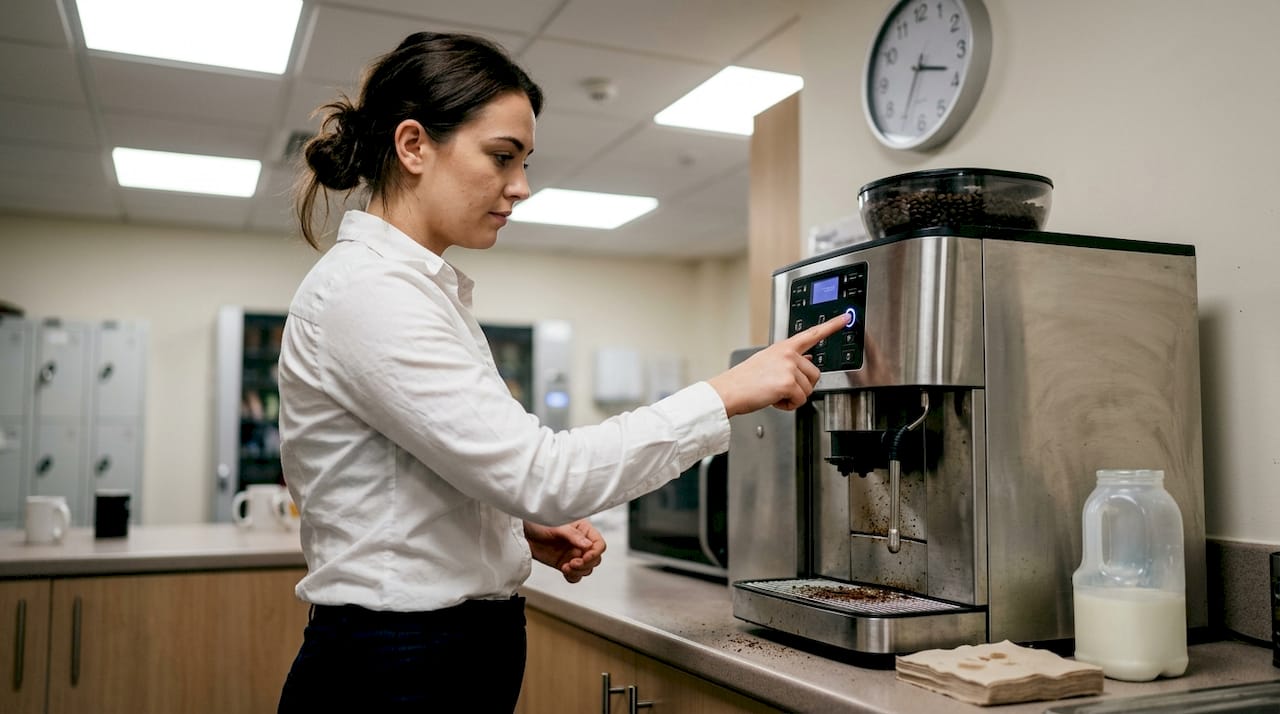
Bean-to-cup machines automate the entire brewing process from grinding fresh beans through milk frothing. These systems deliver consistent quality with minimal operator intervention, making them ideal for high-volume environments where staff turnover occurs frequently. Bean-to-cup machines offer consistent quality and ease, particularly valuable for hotels and conference centres serving hundreds of guests daily. Modern units feature programmable recipes ensuring every cappuccino or americano meets your quality standards.
Semi-automatic espresso machines provide baristas with control over extraction time and pressure whilst automating water delivery and temperature regulation. This balance suits cafés where skilled staff create signature drinks and customers value the craft element. These machines require understanding of grind size, tamping pressure, and shot timing to achieve optimal results.
Manual lever espresso machines represent traditional coffee craftsmanship. Baristas control every aspect of extraction by manually operating the lever to regulate pressure and flow. Semi-automatic and manual espresso machines provide greater control but demand experienced operators who understand extraction chemistry. Artisan coffee shops and speciality venues use these machines to showcase barista expertise and create theatre around coffee preparation.
Filter drip machines brew large quantities of black coffee efficiently, serving breakfast buffets and conference settings where speed matters more than individual drink customisation. Pod systems offer convenience for office environments and guest rooms but lack flexibility for hospitality venues requiring diverse menu options.
Machine type characteristics:
- Bean-to-cup: automated grinding, brewing, and milk frothing with programmable recipes
- Semi-automatic: barista-controlled extraction with automated water delivery and temperature
- Manual lever: complete operator control over pressure and extraction timing
- Filter drip: bulk brewing for black coffee service in buffet settings
Comparing coffee machine features in hospitality settings
Different hospitality environments demand specific machine capabilities. Understanding how features align with operational contexts helps narrow your selection effectively.
| Feature | Bean-to-cup | Semi-automatic | Manual lever | Filter drip |
|---|---|---|---|---|
| Daily capacity | 200-500 cups | 150-300 cups | 80-150 cups | 300-800 cups |
| Skill level required | Minimal | Intermediate | Advanced | Minimal |
| Maintenance frequency | Weekly cleaning | Daily cleaning | Daily maintenance | Daily cleaning |
| Drink variety | High | Very high | Very high | Low |
| Setup time per drink | 45-60 seconds | 60-90 seconds | 90-120 seconds | Batch brewing |
Bean-to-cup machines excel in hotel lobbies and busy cafeterias where consistent quality matters more than artisan presentation. Their automated systems reduce labour costs whilst maintaining drink standards even during staff changes. Semi-automatic machines suit restaurants and cafés where skilled baristas create signature drinks and customers appreciate visible coffee preparation.
Manual lever machines belong in speciality coffee venues where the brewing process becomes part of the customer experience. These settings typically serve lower volumes but command premium prices for expertly crafted drinks. Filter drip systems serve conference centres and breakfast buffets requiring large black coffee volumes with minimal staff involvement.
Professional installation and repair services are vital for maintaining equipment performance. Proper installation ensures water pressure, filtration, and electrical supply meet manufacturer specifications. Local service providers familiar with your specific machine model respond faster when issues arise, reducing revenue loss from equipment downtime.
Accessibility of internal components affects repair speed and costs. Machines designed for commercial use feature modular construction allowing technicians to replace faulty parts without extensive disassembly. This design consideration becomes crucial in busy venues where every hour of downtime impacts profitability.
Pro tip: Establish relationships with local service engineers before equipment issues arise. Having pre-arranged emergency repair service agreements ensures priority response when problems occur during peak trading periods.
Choosing the right coffee machine for your hospitality business
Your venue type determines which machine features matter most. Cafés serving specialty coffee require equipment supporting diverse brewing methods and milk texturing capabilities. Hotels need reliable machines handling breakfast rush volumes with minimal staff intervention. Restaurants balance quality with speed during service periods when kitchen demands compete for staff attention.
Matching machine complexity to staff capabilities prevents operational frustrations. Investing in sophisticated equipment without corresponding training wastes potential and creates inconsistent results. Tailoring coffee machine choice to your business type ensures equipment supports rather than hinders service delivery. Consider whether your team includes experienced baristas or requires automated systems compensating for limited coffee knowledge.
Professional support transforms equipment from liability to asset. Suppliers offering installation, training, and ongoing maintenance provide operational confidence that equipment will perform reliably. Barista training for staff maximises machine capabilities whilst developing team skills that enhance customer experience.
Business volume projections guide capacity selection. Underestimating demand leads to slow service and customer dissatisfaction. Overspecifying equipment wastes capital and increases maintenance costs. Analyse historical data or comparable venue statistics to forecast realistic cup volumes across different service periods.
Decision framework:
- Calculate peak hour cup demand and daily volume projections
- Assess current staff coffee skills and training availability
- Determine budget including installation, training, and maintenance costs
- Evaluate space constraints and utility requirements at installation location
- Research local service providers and parts availability
- Request demonstrations with your team using actual menu drinks
- Compare total cost of ownership over expected equipment lifespan
Discover tailored coffee solutions with The Coffee Factory
The Coffee Factory supports hospitality businesses throughout Southwest England with comprehensive coffee programmes designed for operational success. Our wholesale services overview details how we combine premium freshly roasted coffee with equipment solutions, professional training, and reliable local support.
We understand that selecting the right coffee machine represents a significant investment requiring careful consideration. Our team evaluates your specific venue requirements, staff capabilities, and service volumes to recommend equipment matching your operational needs. Professional installation and setup service ensures your machine performs optimally from day one, whilst our barista training for staff develops the skills needed to maximise equipment potential and deliver exceptional customer experiences.
Types of coffee machines FAQ
How often do commercial coffee machines require maintenance?
Commercial machines need daily cleaning including group head flushing and milk system purging. Weekly tasks include backflushing and descaling depending on water hardness. Professional servicing every six months maintains optimal performance and extends equipment lifespan.
What distinguishes semi-automatic from fully automatic machines?
Semi-automatic machines require baristas to control extraction timing and milk frothing manually, offering greater drink customisation. Fully automatic systems handle grinding, extraction, and milk frothing with programmable settings, delivering consistent results with minimal operator skill required.
How do I choose a coffee machine for different hospitality volumes?
Calculate your peak hour demand and daily cup totals. Venues serving under 150 cups daily suit semi-automatic or small bean-to-cup machines. Operations exceeding 300 cups require commercial bean-to-cup systems with dual boilers and high-capacity grinders supporting continuous service.
Why invest in professional installation and training?
Professional installation ensures correct water pressure, filtration, and electrical supply preventing early equipment failure. Training develops staff confidence and skills that maximise machine capabilities whilst reducing user errors causing damage or inconsistent drink quality.
Can I lease coffee machines instead of purchasing?
Yes, coffee machine rental options provide flexible alternatives to outright purchase. Leasing spreads costs over time, includes maintenance coverage, and allows equipment upgrades as your business grows without large capital investments.