
A recent survey reveals that 72% of hotel guests consider coffee quality crucial to their overall experience, yet many hospitality managers underestimate its impact on ratings and repeat business. Coffee expertise extends far beyond simply brewing a cup. It encompasses barista training, equipment precision, blend customisation, and sustainable sourcing practices that directly influence guest satisfaction. This guide explores how mastering coffee quality elevates your B2B hospitality offering, strengthens competitive positioning, and drives measurable business outcomes in the southwest UK market.
Table of Contents
- Key takeaways
- Understanding coffee expertise in B2B hospitality
- The mechanics and methodologies behind expert coffee service
- Why coffee quality matters in hospitality guest satisfaction
- Choosing the right coffee solutions provider in the southwest UK
- Balancing branded and independent coffee providers for best results
- Enhance your hospitality coffee offering with expert support
- Frequently asked questions
Key Takeaways
| Point | Details |
|---|---|
| Guest satisfaction impact | 72% of hotel guests consider coffee quality crucial to their overall experience, making it a key driver of ratings and repeat business. |
| Barista training and maintenance | Professional barista training and regular equipment maintenance ensure consistency and premium quality across service periods. |
| Local suppliers benefits | Choosing local suppliers supports quality, sustainability and customisation aligned with guest preferences. |
| Branded versus independent | The choice between branded and independent coffee providers affects cost, perceived quality and customer trust. |
| Continual training and sustainability | Continual training and sustainable practices align with modern guest preferences and reinforce brand standards. |
Understanding coffee expertise in B2B hospitality
Coffee expertise in B2B hospitality involves consultancy, staff training, equipment selection, and blend customisation to ensure consistent premium quality. This comprehensive approach addresses every touchpoint in your coffee service, from selecting the right beans to delivering the perfect cup to your guests. Many hospitality providers focus solely on purchasing equipment without recognising that technical proficiency and ongoing support determine service quality.
Professional barista training for staff forms the cornerstone of coffee expertise. Training durations range from foundation courses lasting 2 hours to advanced programmes extending 8 hours, covering essential competencies that transform coffee service. These programmes develop practical skills rather than theoretical knowledge, ensuring your team can execute consistently under pressure.
Key training components include:
- Espresso extraction techniques and shot timing
- Milk texturing and steaming for various beverages
- Latte art fundamentals and presentation standards
- Machine operation, cleaning, and basic troubleshooting
- Customer interaction and service workflow optimisation
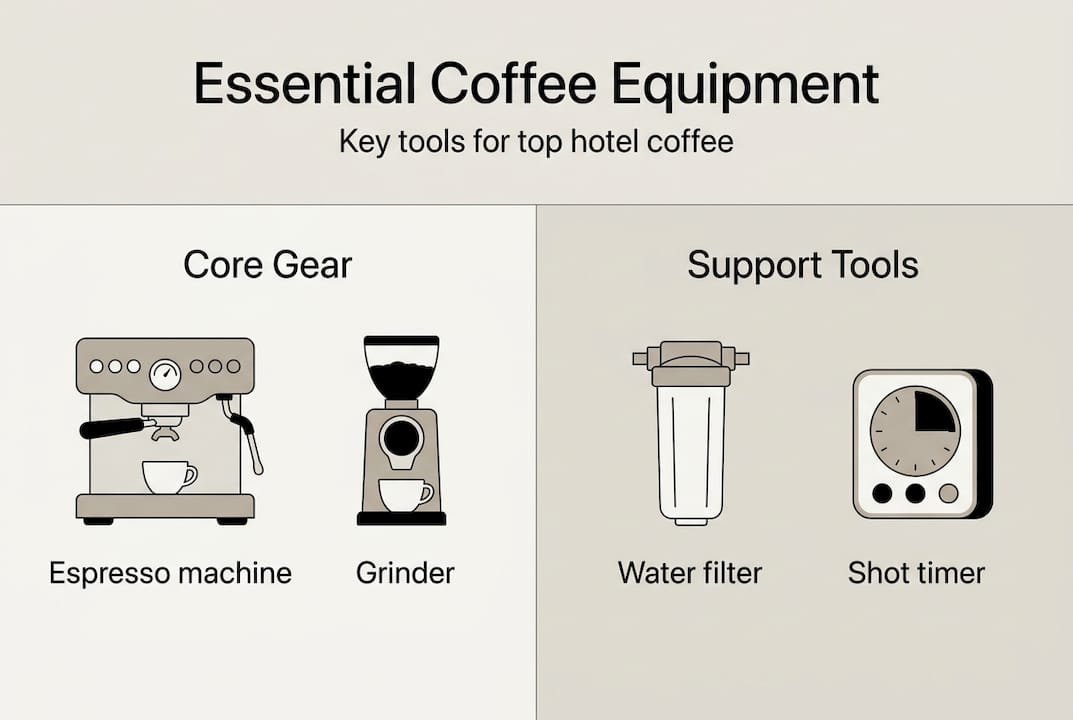
Equipment selection extends beyond purchasing a machine. You need to consider water quality, grinder precision, maintenance schedules, and how equipment integrates with your service model. Commercial espresso machines require regular calibration and cleaning protocols that prevent flavour degradation and mechanical failures. Your supplier should provide engineering support and replacement parts to minimise downtime.
Custom coffee blends overview allows you to align flavour profiles with guest preferences and brand identity. Working with experienced roasters, you can develop signature blends that differentiate your offering whilst maintaining consistency across service periods. This personalisation creates memorable guest experiences that generic solutions cannot replicate.
The mechanics and methodologies behind expert coffee service
Technical mastery separates adequate coffee service from exceptional experiences. Barista skills explain 68% variance in service quality, with dialling-in grinders, milk steaming, and sensory protocols proving crucial to consistency. Understanding these mechanics empowers your team to troubleshoot issues and maintain standards without constant supervision.
Dialling-in involves adjusting grind size, dose weight, and tamping pressure to achieve optimal espresso extraction. This process requires sensory evaluation of each shot, assessing crema colour, flow rate, and taste balance. Temperature stability, extraction time between 25-30 seconds, and yield ratios all influence the final cup quality. Your baristas must recalibrate throughout service as ambient conditions change.
Milk texturing demands precise temperature control and technique:
- Purge steam wand to release condensation
- Position wand tip just below milk surface for aeration phase
- Create microfoam texture through controlled whirlpool motion
- Heat to 60-65°C without exceeding 70°C to preserve sweetness
- Tap pitcher to eliminate large bubbles before pouring
Pro Tip: Invest in thermometers and shot timers for your baristas during training. These tools provide objective feedback that accelerates skill development and ensures consistency across team members.
Machine maintenance protocols prevent service disruptions and flavour contamination. Daily tasks include backflushing group heads, purging steam wands, and wiping seals. Weekly strip-downs remove coffee oil buildup that turns rancid and taints subsequent extractions. Coffee machine rental options often include maintenance schedules and engineering support that reduce your operational burden.
Sensory evaluation follows Q-grader and SCA protocols to assess coffee quality objectively. Trained evaluators score attributes like acidity, body, sweetness, and aftertaste using standardised cupping procedures. This systematic approach identifies defects, verifies roast consistency, and guides blend development. Regular cupping sessions with your supplier ensure quality standards remain aligned with your specifications.
“Barista competence directly impacts customer interaction quality, influencing both immediate satisfaction and long-term loyalty. Technical skills provide the foundation, but service delivery determines guest perception.”
Why coffee quality matters in hospitality guest satisfaction
Coffee quality directly influences guest satisfaction metrics and business outcomes. 72% of guests rate coffee quality as important to their overall experience, whilst 89% of 4-5 star hotel guests say it affects their ratings. These statistics reveal that coffee serves as a quality indicator guests use to assess your entire operation. Poor coffee signals broader service deficiencies, even when other aspects meet expectations.

The financial impact extends beyond immediate satisfaction. One-third of guests report being deterred from returning to venues serving substandard coffee, representing significant revenue loss through reduced repeat business. In competitive hospitality markets, this attrition compounds over time as negative word-of-mouth spreads through review platforms and social networks.
| Guest segment | Coffee quality importance | Impact on ratings | Repeat visit influence |
|---|---|---|---|
| 4-5 star hotel guests | 89% consider crucial | Directly affects star ratings | High deterrent if poor |
| Business travellers | 76% prioritise quality | Influences venue selection | Moderate deterrent |
| Leisure guests | 68% value experience | Affects overall satisfaction | Low to moderate deterrent |
| Conference attendees | 82% expect consistency | Impacts event perception | Venue recommendation factor |
Branded and well-known coffees increase guest likelihood to recommend your venue. Familiarity creates confidence, particularly for guests uncertain about independent offerings. However, this advantage only materialises when service execution matches brand expectations. Poorly prepared branded coffee damages your reputation more severely than mediocre independent offerings because guests attribute failures to your operation rather than the product.
Pro Tip: Monitor online reviews specifically mentioning coffee quality. This feedback provides early warning of service degradation and identifies training opportunities before satisfaction metrics decline significantly.
Investing in coffee expertise yields measurable competitive advantages. Venues recognised for exceptional coffee attract guests specifically seeking quality experiences, commanding premium pricing and generating positive reviews. This differentiation proves particularly valuable in saturated markets where traditional amenities no longer distinguish offerings. Your wholesale services overview should emphasise quality assurance and training support that enable consistent excellence.
Choosing the right coffee solutions provider in the southwest UK
Selecting the appropriate supplier determines your ability to deliver consistent quality whilst managing costs and sustainability commitments. Local suppliers in southwest UK offer premium, ethical sourcing, training, fresh roasts, and engineering support to hospitality businesses within their service radius. This proximity enables responsive service and reduces transportation environmental impact compared to national distributors.
Local roasters provide distinct advantages:
- Fresh, seasonal roasts delivered within days of roasting
- Customised blend development aligned with your brand identity
- On-site barista training tailored to your equipment and service model
- Rapid equipment maintenance and troubleshooting support
- Flexibility to adjust orders based on occupancy fluctuations
Sustainability practices increasingly influence guest perception and venue selection. Modern travellers research environmental commitments before booking, with coffee sourcing representing a visible sustainability indicator. Suppliers demonstrating ethical sourcing, carbon reduction programmes, and waste minimisation align with guest values whilst strengthening your environmental commitment credentials.
| Provider type | Typical pricing | Quality consistency | Training support | Sustainability focus |
|---|---|---|---|---|
| Local independent roasters | Moderate to premium | High (small batch) | Comprehensive on-site | Strong ethical sourcing |
| Regional distributors | Competitive | Moderate | Limited group sessions | Variable |
| National branded suppliers | Premium | Very high (standardised) | Structured programmes | Corporate initiatives |
| Commodity suppliers | Budget | Low to moderate | Minimal | Limited |
Private label services enable you to develop signature offerings that reinforce brand identity. Custom packaging featuring your branding creates retail opportunities and extends guest engagement beyond their stay. This approach works particularly well for boutique hotels and restaurants seeking differentiation through unique coffee experiences.
Equipment options vary from outright purchase to rental agreements with maintenance included. Coffee bags and pods provide convenient alternatives for guest rooms and meeting spaces where espresso machines prove impractical. Evaluating your service requirements across different venue areas ensures you select appropriate solutions for each application.
Balancing branded and independent coffee providers for best results
The branded versus independent decision involves trade-offs between perceived value, cost efficiency, and quality differentiation. Branded providers emphasise trust and revenue potential whilst independents focus on ethical sourcing and single-origin quality, with barista mastery strongly driving loyalty regardless of brand choice. Understanding these distinctions enables strategic decisions aligned with your guest demographic and business objectives.
Branded coffees deliver immediate recognition and perceived quality assurance. Guests familiar with established brands experience reduced uncertainty about their beverage choice, particularly valuable in rushed service environments like breakfast buffets. However, premium pricing and standardised offerings limit your ability to differentiate or respond to emerging preferences. Licensing agreements may restrict your flexibility to source alternatives or develop custom blends.
Independent roasters typically offer superior price-quality ratios through direct relationships and smaller operational overheads. Single-origin offerings and seasonal rotations appeal to discerning guests seeking authentic experiences beyond commodity coffee. This approach positions your venue as a destination for coffee enthusiasts whilst supporting local businesses and reducing supply chain environmental impact.
Key comparison factors:
- Cost per serving and wholesale pricing structures
- Quality consistency across different service periods
- Guest demographic preferences and familiarity
- Sustainability credentials and ethical sourcing transparency
- Training and technical support availability
- Flexibility for menu innovation and seasonal changes
Sustainability and plant-based milk options increasingly influence guest satisfaction. Younger demographics particularly value environmental commitments, with coffee sourcing serving as a visible indicator of broader sustainability practices. Suppliers offering organic certifications, direct trade relationships, and carbon-neutral delivery align with these expectations whilst differentiating your offering.
“Barista skill level correlates more strongly with customer loyalty than coffee brand recognition. Exceptional preparation of independent coffee outperforms poor execution of premium brands in guest satisfaction metrics.”
Decaffeinated options require equal attention to quality and preparation standards. Many venues treat decaf as an afterthought, using inferior beans or neglecting proper extraction protocols. This oversight alienates guests with dietary restrictions or preferences, representing missed opportunities for inclusive service excellence.
Choosing the right balance depends on analysing your guest profile, service model, and competitive positioning. Boutique hotels targeting discerning travellers benefit from independent roasters offering unique experiences. Conference centres prioritising efficiency and familiarity may prefer branded solutions with standardised training. Many successful operations blend both approaches, featuring branded options alongside independent selections that showcase local partnerships.
Enhance your hospitality coffee offering with expert support
Elevating your coffee service requires more than quality beans. You need comprehensive support encompassing training, equipment maintenance, and sustainable sourcing that aligns with modern guest expectations. The Coffee Factory provides wholesale services overview tailored to southwest UK hospitality businesses, combining fresh roasts with bespoke training programmes and ongoing technical support.
Our family-run roastery delivers premium coffee solutions within a 60-mile radius of Devon, ensuring freshness and responsive service that national distributors cannot match. Barista training for staff develops essential skills through hands-on sessions at your venue, using your equipment to ensure immediate practical application. This localised approach builds confidence and consistency whilst strengthening relationships that support long-term success.
Our environmental commitment encompasses ethical sourcing, waste reduction, and carbon-conscious delivery that resonates with environmentally aware guests. Partnering with experienced local suppliers ensures quality, consistency, and operational support that elevate your coffee offering from functional necessity to memorable guest experience. Contact us to discuss how tailored coffee solutions can enhance your hospitality business.
Frequently asked questions
What is barista dialling-in and why is it important?
Dialling-in involves adjusting grind size, dose weight, and tamping pressure to achieve optimal espresso extraction for your specific beans and equipment. This calibration process ensures consistent flavour profiles across service periods, preventing under-extraction that tastes sour or over-extraction that becomes bitter. Environmental factors like humidity and temperature require periodic recalibration throughout the day. Without proper dialling-in, even premium beans produce inconsistent, substandard results that undermine guest satisfaction.
How does coffee expertise influence guest satisfaction in hotels?
Coffee quality serves as a proxy for overall service standards in guest perception. 72% of guests say coffee quality is important to their experience, with poor coffee deterring a third from returning to venues. High-quality coffee enhances morning experiences, influences online ratings, and generates positive word-of-mouth recommendations. Conversely, substandard coffee signals broader service deficiencies that damage your reputation beyond the beverage itself. Investing in coffee expertise demonstrates attention to detail that guests recognise and reward through loyalty and positive reviews.
What factors should I consider when choosing a coffee supplier?
Assess coffee quality through cupping sessions and trial periods that reveal consistency and flavour profiles. Evaluate training programmes for comprehensiveness and on-site delivery that addresses your specific equipment and service model. Investigate sustainability credentials including ethical sourcing, certifications, and environmental practices that align with guest values. Consider support services like equipment maintenance, emergency response times, and flexibility to adjust orders based on occupancy. Local suppliers often provide fresher coffee and tailored service compared to national distributors. Review wholesale services overview to understand comprehensive support options.
Why is ongoing barista training essential for B2B hospitality?
Barista skills correlate strongly with customer interaction quality and service consistency, requiring continuous development to maintain standards. Staff turnover, equipment updates, and evolving guest preferences necessitate regular training refreshers that prevent skill degradation. Ongoing programmes build confidence, reduce errors during peak service, and ensure new team members integrate smoothly into established workflows. Advanced training introduces techniques like latte art and alternative brewing methods that differentiate your offering. Investing in barista training for staff demonstrates commitment to excellence that improves both employee satisfaction and guest experiences.