
Running a successful coffee program in your restaurant or hotel means balancing speed, quality, and profit margins while keeping guests happy. Many hospitality managers struggle with slow service times, inconsistent drinks, and unclear profitability metrics that eat into their bottom line. This guide walks you through practical improvements to your coffee service process, from initial preparation and workflow optimization to troubleshooting challenges and measuring results. You’ll discover actionable strategies to reduce wait times, boost consistency, and strengthen your financial performance in 2026.
Table of Contents
- Preparing Your Coffee Service For Success
- Implementing An Efficient Coffee Service Workflow
- Troubleshooting Common Coffee Service Challenges
- Measuring And Refining Your Coffee Service Process
- Enhance Your Restaurant’s Coffee Experience With Expert Services
Key takeaways
| Point | Details |
|---|---|
| Service efficiency drives profitability | Streamlined workflows reduce wait times and increase table turnover without sacrificing drink quality. |
| Strategic pricing improves margins | Regular pricing reviews and financial monitoring help maintain healthy profit margins and cash flow. |
| Staff training ensures consistency | Certified barista training and attention to service details create refined customer experiences that boost sales. |
| Proactive tax planning prevents surprises | Monthly VAT provisioning and threshold monitoring protect cash flow and avoid unexpected tax bills. |
Preparing your coffee service for success
Before you can improve your coffee service workflow, you need the right foundation in place. Start by auditing your current equipment to ensure it meets your volume demands. Essential items include a commercial espresso machine with adequate group heads for your peak service times, a high quality grinder that delivers consistent particle size, milk steamers or automatic frothers for speed, and reliable water filtration to protect equipment and flavor.
Your staffing structure matters just as much as your equipment. Trained baristas form the backbone of consistent service. Barista training for staff ensures your team can execute drinks properly under pressure, maintain equipment correctly, and deliver the refined customer experience that drives repeat business. Schedule at least one experienced barista per shift, with additional support during breakfast and lunch rushes.
Financial monitoring separates profitable coffee programs from money losers. Understanding and managing gross profit margins is crucial for cafe profitability; industry benchmarks can provide a useful comparison. Track your cost of goods sold monthly, including coffee beans, milk, syrups, and disposables. Calculate your gross profit margin by subtracting COGS from revenue, then dividing by revenue. Most successful hospitality coffee programs maintain margins between 60% and 75%.
Pro Tip: Set up a simple spreadsheet to track weekly coffee sales, costs, and margins. This 15 minute weekly habit reveals pricing problems and waste issues before they seriously impact profitability.
Your supply chain needs attention too. Stock the following materials:
- Fresh roasted coffee blends suited to your customer preferences
- Whole milk, alternative milks, and flavor syrups
- Cleaning supplies including backflush detergent and descaling solution
- Spare parts like portafilter baskets and steam wand tips
- Takeaway cups, lids, and stirrers if you offer grab and go service
VAT awareness prevents nasty surprises. If your annual turnover exceeds £90,000 in the UK, you must register for VAT and charge it on applicable items. Hot takeaway coffee is zero rated, but eating in attracts the standard 20% rate. This threshold matters for financial planning, so monitor your revenue monthly.
| Equipment Category | Essential Items | Maintenance Frequency |
|---|---|---|
| Espresso Machine | Commercial multi group, water filtration | Daily cleaning, monthly descaling |
| Grinder | Burr grinder, dosing system | Weekly deep clean, burr replacement annually |
| Milk Equipment | Steam wands, automatic frother | Daily purging, weekly deep clean |
| Accessories | Tampers, pitchers, knock boxes | Daily washing, monthly inspection |
Once you have equipment, trained staff, and financial systems ready, you can implement workflow improvements. Professional installation and setup service ensures your equipment operates at peak performance from day one, avoiding the costly trial and error that plagues many new coffee programs.
Implementing an efficient coffee service workflow
Your workflow determines whether customers wait 30 seconds or 5 minutes for their latte. Start by organizing your barista station for minimal movement. Place your grinder directly beside the espresso machine. Position milk pitchers, syrups, and cups within arm’s reach. This setup eliminates wasted steps during high volume periods.
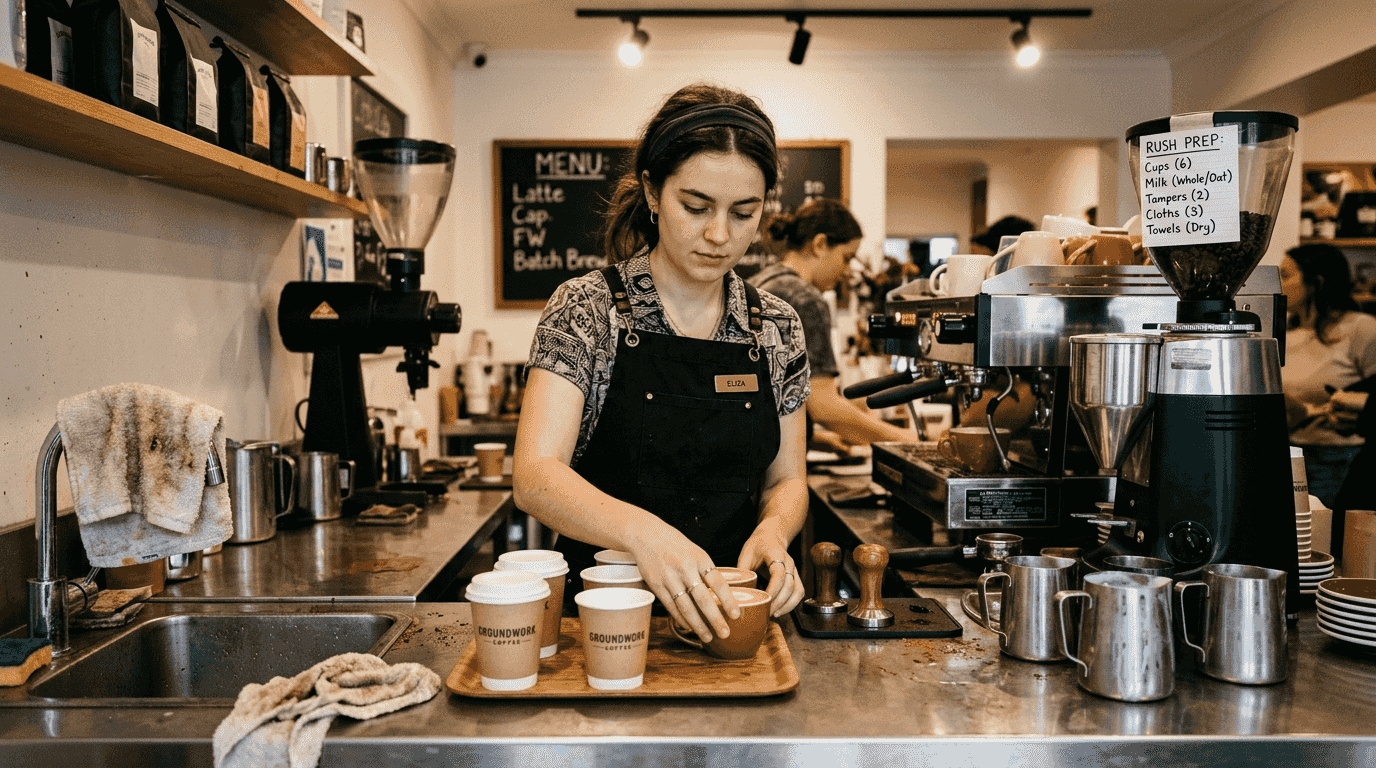
The pre-batched espresso method has sparked debate in specialty coffee circles, but it delivers undeniable speed benefits for high volume hospitality settings. Pre-batched espresso can reduce service times significantly, allowing for milk drinks to be served in as little as 10 seconds. Here’s how it works: pull multiple shots into a small insulated carafe, then portion them into drinks as orders arrive. This approach works best during predictable rush periods when you know you’ll serve 20 lattes in the next 15 minutes.
Pre-batching has tradeoffs. Espresso begins losing optimal flavor after about 10 seconds, so batches should be used within 2 to 3 minutes maximum. The method suits milk based drinks better than straight espresso or Americanos, where flavor degradation shows more prominently. For restaurants focused on speed over third wave coffee culture, the tradeoff often makes business sense.
Follow these steps to streamline your standard workflow:
- Take orders and input them into your POS system in sequence
- Grind fresh coffee and dose portafilters for the next 2 to 3 drinks
- Pull espresso shots while simultaneously steaming milk for previous orders
- Combine espresso and milk, add any flavor modifications
- Serve drinks in order received, calling out customer names clearly
- Wipe steam wands and rinse portafilters immediately between drinks
Pro Tip: Train your team to work in parallel during rushes. One barista pulls shots while another steams milk and assembles drinks. This parallel processing can double your output without adding equipment.
Maintaining quality under time pressure requires discipline. Use these techniques:
- Dial in your grinder at the start of each shift for optimal extraction
- Monitor shot times, aiming for 25 to 30 seconds for a double espresso
- Steam milk to 140 to 160 degrees Fahrenheit for proper texture and sweetness
- Taste test drinks periodically throughout service to catch quality drift
- Replace coffee beans showing staleness, typically after 2 to 3 weeks post roast
| Service Method | Average Time per Drink | Quality Level | Best Use Case |
|---|---|---|---|
| Traditional individual shots | 45 to 60 seconds | Highest | Low volume, specialty focus |
| Pre-batched espresso | 10 to 15 seconds | Good for milk drinks | High volume breakfast and lunch |
| Super automatic machine | 30 to 40 seconds | Consistent but limited | Untrained staff, office settings |
Equipment reliability makes or breaks your service speed. Keep emergency repair service contact information posted near your machine. Basic troubleshooting knowledge helps your team handle minor issues without calling for help. If your grinder produces inconsistent particle sizes, check for worn burrs. If your espresso machine loses pressure, verify your water supply and check for scale buildup.
Offer decaffeinated options to capture customers who want evening coffee or have caffeine sensitivities. Keep a separate grinder for decaf to avoid cross contamination. Menu variety drives incremental sales without complicating your core workflow. Your wholesale services overview should include options for building a complete beverage program that serves diverse customer preferences.
Troubleshooting common coffee service challenges
Consistency separates memorable coffee programs from forgettable ones. Variations in customer experience account for up to one-third of differences in sales and profitability between a chain’s individual stores. Small details matter enormously. Train your staff to maintain consistent shot times, milk temperatures, and presentation across every shift. Create simple checklists for opening and closing procedures to eliminate variability.
Equipment problems derail even the best workflows. Here are quick fixes for common issues:
- Weak or sour espresso: Grind finer, increase dose, or check water temperature
- Bitter or over extracted shots: Grind coarser, reduce dose, or descale machine
- Poor milk texture: Clean steam wand thoroughly, check for blockages, verify steam pressure
- Slow flow rate: Backflush machine, replace shower screen, check for scale buildup
- Inconsistent grind: Replace burrs, check for bean oil buildup, verify hopper is full
Pricing strategy directly impacts your bottom line more than most managers realize. Increasing prices, even by a significant percentage, can improve margins and cash flow. Many hospitality businesses underprice coffee because they fear customer pushback, but modest increases rarely impact volume when your quality and service justify the cost. Calculate your target margin, then work backwards to set prices that achieve it.
Consider this pricing example. If your cost per latte is £1.20 including labor, and you charge £3.00, your margin is 60%. Increasing the price to £3.50 raises your margin to 66% and adds £0.50 profit per drink. Serving 100 lattes daily generates an extra £50 in profit, or £1,500 monthly, without any additional cost or effort.
VAT and tax management requires ongoing attention. Monitor your revenue monthly to avoid crossing the £90,000 threshold unexpectedly. Once registered, you must charge VAT on applicable items and file returns quarterly or monthly. Set aside 20% of your VAT inclusive sales in a separate account to avoid cash flow crunches when payments come due. This simple habit prevents the panic many small businesses face when large tax bills arrive.
“The biggest mistake hospitality managers make is treating coffee as an afterthought rather than a profit center. Small improvements in consistency, pricing, and cost control compound into significant financial gains over a year.”
Refine customer experience through intentional service design. Greet regulars by name and remember their usual orders. Offer seasonal specials that create excitement and give customers reasons to visit more frequently. Stock coffee bags and pods for retail sales, turning your coffee program into an additional revenue stream. These small touches build loyalty and increase average transaction values without requiring major investments.
Measuring and refining your coffee service process
You can’t improve what you don’t measure. Identify key performance indicators that reveal how your coffee service actually performs. Track average service time from order to delivery, aiming for under 3 minutes during normal periods and under 5 minutes during rushes. Monitor your daily coffee sales volume and average transaction value. Calculate your waste percentage by weighing discarded coffee and milk weekly.
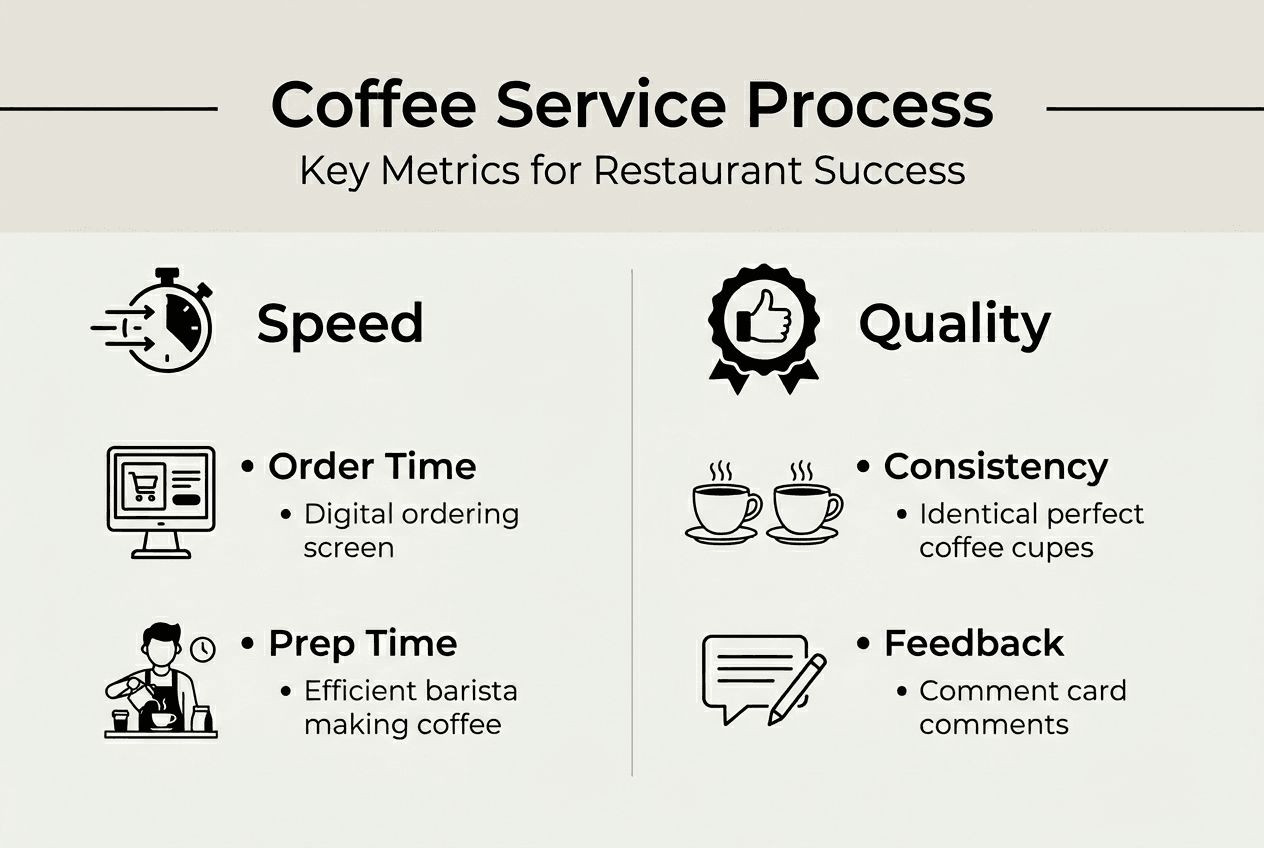
Customer feedback provides qualitative insights your numbers miss. Create a simple feedback system using comment cards, online reviews, or direct conversations. Ask specific questions like “How was your wait time?” and “Did your drink meet your expectations?” rather than generic “How was everything?” prompts. Negative feedback about consistency or speed signals training gaps or equipment issues that need immediate attention.
Financial performance review should happen monthly, not annually. Compare your actual margins against your targets. Analyze which menu items deliver the best profitability and promote them more actively. Review your supplier costs quarterly to ensure you’re getting competitive pricing on beans, milk, and disposables. Implementing a structured tax planning strategy can transform a business from a monthly deficit to a cash surplus.
| Metric | Target Range | Measurement Frequency | Action if Below Target |
|---|---|---|---|
| Gross Profit Margin | 60% to 75% | Monthly | Review pricing and reduce waste |
| Average Service Time | Under 3 minutes | Daily during rushes | Streamline workflow, add staff |
| Customer Satisfaction | 4.5+ stars | Weekly | Address specific complaints |
| Equipment Downtime | Under 2% | Monthly | Improve maintenance schedule |
| Waste Percentage | Under 5% | Weekly | Retrain staff, adjust portions |
Ongoing refinement keeps your coffee program competitive. Follow these steps quarterly:
- Audit your current processes by observing service during peak times
- Gather feedback from your barista team about pain points and bottlenecks
- Test one workflow improvement for two weeks and measure results
- Review financial performance and adjust pricing if margins slip
- Schedule refresher training to reinforce standards and introduce new techniques
- Evaluate your coffee supplier relationship and explore alternatives if quality or service declines
Your location matters for sourcing decisions. Choose local Devon suppliers when possible to reduce delivery times, support your regional economy, and build relationships with vendors who understand your market. Local suppliers often provide more responsive service and flexibility than national distributors, particularly for smaller hospitality businesses.
Continuous improvement requires commitment from your entire team. Share your performance metrics with staff so they understand how their work impacts profitability. Celebrate wins when you hit margin targets or receive positive customer feedback about coffee quality. Create a culture where everyone takes ownership of the coffee program’s success rather than viewing it as just another task. This mindset shift transforms your coffee service from a commodity offering into a competitive advantage that drives customer loyalty and revenue growth.
Your wholesale services overview should include regular business reviews with your supplier to discuss performance trends, upcoming menu changes, and opportunities for improvement. The best wholesale relationships function as partnerships where both parties actively work to strengthen your coffee program’s performance and profitability.
Enhance your restaurant’s coffee experience with expert services
Transforming your coffee service from adequate to exceptional requires more than just good intentions. You need reliable suppliers who understand the unique demands of Southwest UK hospitality. Sourcing wholesale coffee blends specifically developed for your regional customer preferences ensures consistency and quality that keeps guests coming back.
Professional barista training for staff elevates your entire operation by teaching proper technique, equipment maintenance, and customer service skills that directly impact your bottom line. Certified training programs create confidence and competence across your team, reducing waste and improving drink consistency. When equipment issues arise, responsive installation and setup service gets you back to full operation quickly, minimizing revenue loss from downtime. Local support means faster response times and personalized attention that national suppliers simply can’t match for Devon based hospitality businesses.
FAQ
What is the best workflow to reduce coffee service time without sacrificing quality?
Streamline your barista station by placing equipment within arm’s reach and training staff to work in parallel during rushes. Pre-batched espresso allows milk drinks to be served in as little as 10 seconds during peak periods. Use this method strategically for high volume times while maintaining traditional preparation for slower periods when quality takes priority. Regular equipment maintenance and proper grinder calibration prevent slowdowns from technical issues.
How can hospitality managers improve coffee profit margins effectively?
Review your pricing quarterly and don’t fear modest increases when your quality justifies them. Increasing prices by 20% improved margins and cash flow for cafes facing financial pressure. Calculate your true cost per drink including labor, then set prices that achieve 60% to 75% gross margins. Reduce waste by training staff on proper portioning and monitor your monthly financial performance to catch margin erosion early.
What training support should I provide my staff for consistent coffee service?
Invest in certified barista training that covers espresso extraction, milk steaming, equipment maintenance, and customer service fundamentals. Staff paying attention to small details creates consistently refined customer experiences that drive repeat business. Schedule refresher sessions quarterly to reinforce standards and introduce new techniques. Create simple checklists for opening and closing procedures to eliminate variability across shifts and team members.
How do I manage VAT and tax to avoid surprises in my coffee business?
Monitor your revenue monthly to track progress toward the £90,000 VAT registration threshold. Proactive financial guidance and VAT planning are essential to avoid unexpected tax bills that drain cash reserves. Set aside 20% of VAT inclusive sales in a separate account immediately rather than spending it, ensuring funds are available when quarterly returns come due. Work with an accountant familiar with hospitality businesses to optimize your tax strategy and maintain healthy cash flow throughout the year.