
Selecting the right coffee supplier can transform your hospitality business, yet the decision involves balancing quality, ethical sourcing, and operational reliability. With UK coffee wholesaling revenue dropping 2.1% annually between 2020 and 2025 due to Brexit and supply disruptions, choosing a resilient partner has never been more critical. This guide provides a practical framework and expert tips to help you evaluate suppliers systematically, compare commodity versus speciality options, and build relationships that support your venue’s success. Whether you run a busy café, hotel, or restaurant in the Southwest, these insights will help you make informed decisions that elevate your coffee programme and delight your customers.
Table of Contents
- Establish Core Criteria For Choosing Coffee Suppliers
- Compare Types Of Coffee Suppliers: Commodity Versus Speciality
- Ensure Supplier Reliability Through Reviews, Delivery, And Support
- Navigate Market Challenges And Build Supplier Resilience
- How Our Wholesale Coffee Services Support Your Hospitality Needs
Key takeaways
| Point | Details |
|---|---|
| Prioritise quality and ethics | Start with cup samples and verify certifications like Fairtrade or direct trade transparency |
| Compare supplier types | Speciality offers traceability and support whilst commodity focuses on volume and lower costs |
| Evaluate reliability factors | Check customer reviews, delivery consistency, flexible MOQs, and added services like training |
| Build supply resilience | Maintain one primary and one secondary supplier to manage risk and ensure variety |
| Consider local partnerships | Regional suppliers offer reliable delivery and support tailored to Southwest UK hospitality needs |
Establish core criteria for choosing coffee suppliers
Quality forms the foundation of any coffee programme. Start by requesting cup samples from potential suppliers and evaluate taste, aroma, body, and consistency across multiple batches. Your customers expect the same excellent coffee every visit, so consistency matters as much as initial quality. Arrange blind tastings with your team to gather diverse perspectives and identify coffees that align with your venue’s character.
Ethical sourcing has become a non-negotiable criterion for many hospitality businesses. Evaluate ethical sourcing through direct trade, Fairtrade certifications, and transparency in farm relationships. Suppliers who maintain clear connections with origin farms demonstrate commitment to responsible trade and can provide traceability documentation. This transparency not only supports sustainable practices but also gives you compelling stories to share with customers who increasingly value ethical consumption. Consider suppliers who align with your venue’s environmental commitment and can articulate their sustainability initiatives clearly.
Logistics cover the practical aspects that keep your operation running smoothly. Delivery reliability ensures you never run out during peak service periods, whilst flexible minimum order quantities accommodate businesses of varying sizes without forcing excess stock. Supplier support services, including equipment maintenance, barista training, and troubleshooting assistance, add significant value beyond the coffee itself. These services reduce your operational burden and help maintain quality standards across your team.
Suppliers with documented farm relationships provide traceability that builds customer trust and ensures responsible sourcing practices. Ask potential partners about their origin relationships, visit frequency, and how they support farming communities. This information reveals whether a supplier prioritises long-term partnerships or simply sources from commodity markets.
Pro tip: Create a decision tree that evaluates quality first, then ethics, then logistics. This systematic approach prevents emotional decisions and ensures you weigh factors according to their impact on your business. Score each supplier across these dimensions using a simple 1 to 10 scale, then compare totals to identify the best fit for your specific needs and values.
Compare types of coffee suppliers: commodity versus speciality
Commodity suppliers focus on volume and competitive pricing, making them attractive for high-volume operations with tight margins. They source from multiple origins through brokers, prioritising consistency of supply over traceability. Whilst this approach delivers cost savings, it often lacks the transparency and ethical assurances that speciality suppliers provide. Commodity coffee typically scores lower on quality metrics and offers limited storytelling opportunities for your customers.
Speciality suppliers offer high-quality, ethically sourced coffee with comprehensive support and traceability. They invest in direct relationships with producers, often visiting farms and paying premiums for exceptional quality. This model supports sustainable farming practices and delivers distinctive flavour profiles that differentiate your venue. Speciality suppliers typically provide additional services including barista training, equipment support, and marketing materials that help you maximise the value of premium coffee.
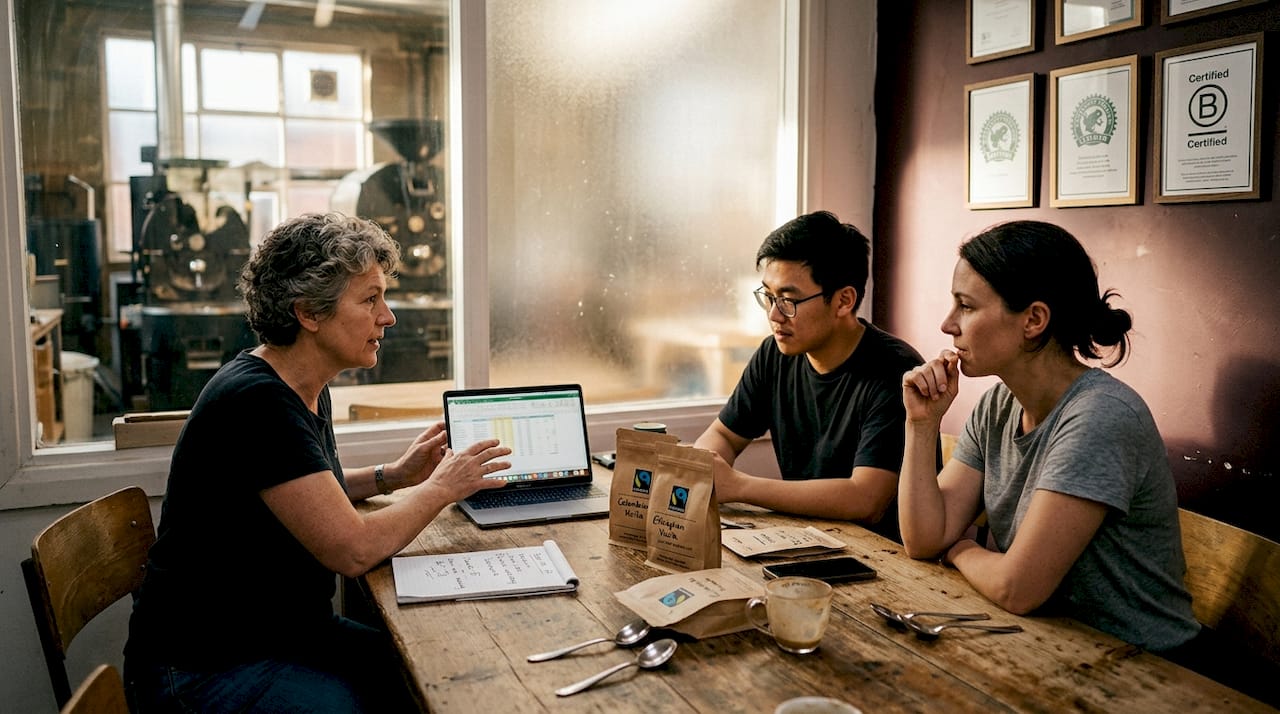
Own roasting represents a third option that can boost margins significantly but requires substantial upfront investment. You’ll need roasting equipment, trained staff, green coffee storage, and quality control systems. Whilst this approach offers maximum control over your coffee programme, it demands expertise and commitment that may distract from your core hospitality operations. Many successful venues partner with specialist roasters rather than roasting in-house, accessing similar quality benefits without the operational complexity.
| Supplier Type | Key Advantages | Main Challenges |
|---|---|---|
| Commodity | Lower costs, high availability, simple ordering | Limited traceability, lower quality, minimal support |
| Speciality | Superior quality, ethical sourcing, comprehensive support | Higher prices, potentially smaller suppliers |
| Own Roasting | Maximum control, highest margins, unique offerings | Equipment costs, training needs, operational complexity |
Consider your venue’s positioning and customer expectations when choosing between these options. Fine dining establishments and speciality cafés typically benefit from speciality suppliers who align with their quality standards. High-volume operations like hotel breakfast services might balance costs through commodity suppliers for basic offerings whilst featuring speciality options for premium menus.
Pro tip: Adopt a hybrid approach that combines speciality coffee for signature drinks and commodity options for high-volume service. This strategy optimises costs whilst maintaining quality where it matters most to customers. Review your wholesale services overview options and consider private label services that let you offer branded coffee without roasting in-house.
Ensure supplier reliability through reviews, delivery, and support
Customer reviews and industry longevity provide valuable insights into supplier dependability. Search for testimonials from hospitality businesses similar to yours, focusing on comments about delivery consistency, quality control, and problem resolution. Suppliers with five or more years serving the UK market have demonstrated resilience through various challenges. Contact current customers directly if possible, asking specific questions about their experience during busy periods and how the supplier handled any issues.
Delivery schedules and flexible MOQs directly impact your operational efficiency and cash flow. Consistent delivery windows let you plan stock levels accurately, reducing waste from over-ordering or service disruptions from shortages. Small to medium venues benefit particularly from suppliers offering MOQs of 5 to 10 kilograms, allowing frequent orders of fresh coffee without tying up capital in excess inventory. Confirm whether suppliers accommodate emergency orders and what lead times they require for standard deliveries.
Added services distinguish exceptional suppliers from basic wholesalers. Barista training ensures your team can showcase coffee quality through proper extraction and milk technique. Equipment rental or maintenance programmes reduce your capital expenditure whilst ensuring machines perform optimally. Some suppliers provide marketing support including menu design, point-of-sale materials, and customer education resources. These services compound your coffee investment by helping you extract maximum value from quality beans.
Pro tip: Vet potential suppliers by requesting detailed information about their onboarding process and quality control measures. Ask how they handle complaints, what guarantees they offer, and how quickly they respond to urgent requests. Suppliers confident in their service will answer these questions thoroughly and provide references. Consider scheduling barista training for staff and exploring coffee machine rental options that reduce upfront costs whilst ensuring equipment quality.
Flexible ordering systems accommodate the variable demand patterns typical in hospitality. Online portals that allow easy reordering, order tracking, and account management save administrative time. Suppliers who understand seasonal fluctuations and special event requirements demonstrate genuine partnership rather than transactional relationships. Discuss your specific needs including peak periods, menu changes, and growth plans to ensure the supplier can scale with your business.
Navigate market challenges and build supplier resilience
Brexit and global supply disruptions have reshaped the UK coffee market significantly. Revenue dropped 2.1% annually between 2020 and 2025, creating challenges for importers and wholesalers managing customs delays, currency fluctuations, and increased administrative costs. These pressures have eliminated some suppliers whilst strengthening others who invested in robust logistics and diverse sourcing. Understanding these market dynamics helps you select partners positioned for long-term stability rather than those struggling with structural challenges.
Hospitality buyers increasingly favour resilient local and speciality suppliers who demonstrate supply chain agility. Regional roasters often maintain closer relationships with importers and can respond more quickly to disruptions than large commodity suppliers. Their smaller scale allows personalised service and flexibility that larger operations cannot match. Speciality suppliers typically diversify across multiple origins, reducing vulnerability to single-country supply issues or quality problems.
Building relationships with one primary and one secondary supplier creates sourcing flexibility and risk management. Your primary supplier provides your core coffee programme, whilst a secondary partner offers backup capacity and variety for seasonal specials or experimental offerings. This dual approach prevents over-dependence on any single supplier whilst maintaining the consistency customers expect. Communicate openly with both suppliers about your arrangement, as most understand and respect this prudent business practice.
| Supply Chain Challenge | Supplier Resilience Strategy |
|---|---|
| Brexit customs delays | Partner with regional suppliers maintaining UK stock |
| Currency fluctuations | Fixed-price contracts or transparent pricing models |
| Origin disruptions | Suppliers sourcing from multiple countries |
| Quality inconsistency | Rigorous cupping and quality control programmes |
| Delivery unreliability | Local suppliers with direct distribution networks |
Seasonal specials and local blends provide opportunities to delight customers whilst managing supply risk. Work with suppliers who offer rotating single origins or limited releases that add excitement to your menu. These offerings let you test customer preferences without committing to large volumes. Local blends tailored to regional water profiles and customer tastes demonstrate attention to detail that builds loyalty.
Pro tip: Choose local Devon suppliers who understand Southwest UK hospitality needs and can deliver reliably within your region. Local partnerships reduce transportation costs and carbon footprint whilst supporting regional business networks. Explore seasonal specials that keep your menu fresh and give customers reasons to return for new experiences.
How our wholesale coffee services support your hospitality needs
Selecting the right coffee supplier transforms from a daunting challenge into a strategic advantage when you partner with specialists who understand hospitality demands. The Coffee Factory combines ethically sourced, premium coffee with the reliability and support services Southwest UK venues need to thrive.
As a family-run roastery based in Devon, we’ve built our reputation on delivering consistently excellent coffee to cafés, hotels, and restaurants throughout the region. Our wholesale coffee supplier services include flexible ordering tailored to your volume needs, reliable delivery schedules that keep your operation running smoothly, and comprehensive support from equipment to training. Explore our coffee blends overview to find profiles that match your venue’s character, then connect with our team to arrange tastings. We also provide barista training for staff that ensures your team can showcase our coffee’s quality through proper technique and customer engagement.
FAQ
How do I verify a coffee supplier’s ethical claims?
Request copies of Fairtrade, Rainforest Alliance, or Organic certifications directly from the supplier. Ask for documentation of direct trade relationships including farm visit reports and pricing transparency. Reputable suppliers willingly share this information and can connect you with origin partners if needed.
What minimum order quantities should I expect?
Speciality suppliers typically require 5 to 10 kilograms for small venues, whilst commodity suppliers may demand 25 kilograms or more. Negotiate MOQs that align with your consumption rate to ensure freshness without excess inventory. Many suppliers offer flexibility for established accounts with consistent ordering patterns.
Can I have multiple coffee suppliers for variety?
Maintaining one primary supplier for your core programme and a secondary supplier for variety and backup is standard practice. This approach provides menu diversity whilst ensuring supply continuity. Communicate transparently with both partners about your arrangement to build trust and realistic expectations.
How important is supplier support like training?
Barista training and equipment support significantly impact your coffee programme’s success. Even quality beans produce poor results without proper extraction technique and equipment maintenance. Suppliers offering comprehensive support help you maximise your investment and maintain consistency across shifts and staff changes.
What impact has Brexit had on coffee sourcing?
Brexit introduced customs delays, increased administrative costs, and currency fluctuations that reduced UK wholesale coffee revenue by 2.1% annually from 2020 to 2025. These challenges favour resilient regional suppliers with UK stock and established import relationships. Partnering with local roasters often provides more stability than relying on large importers navigating complex customs processes.