
The UK coffee market reached unprecedented scale in 2026, with roasted coffee claiming over 51% of market share and driving billions in annual revenue. Yet behind every cup served in your hotel or restaurant lies a complex global supply chain spanning multiple continents and intermediaries. For hospitality managers in Southwest England, understanding this chain isn’t academic curiosity, it’s essential for securing reliable supply, managing costs, and delivering consistent quality to guests. This guide breaks down the coffee journey from farm to cup, reveals the forces creating price swings and availability gaps, and shows how informed procurement strategies protect your business.
Table of Contents
- The UK Coffee Market Landscape In 2026
- Understanding The Coffee Supply Chain Stages And Complexities
- Price Volatility And Supply Disruptions Impacting Procurement Strategies
- Navigating Sourcing Strategies And Compliance In 2026
- Explore Wholesale Coffee Solutions To Optimize Your Supply
- Frequently Asked Questions
Key takeaways
| Point | Details |
|---|---|
| UK market scale | Roasted coffee dominates with over 51% market share, but total reliance on imports creates vulnerability |
| Supply chain length | Coffee passes through up to seven intermediaries over 4 to 8 weeks, complicating traceability and quality control |
| Price volatility drivers | C-market futures, climate events, and shipping disruptions cause unpredictable cost swings affecting budgets |
| Compliance requirements | EU Deforestation Regulation demands supply chain transparency, making sourcing relationships more critical |
| Strategic procurement | Building direct roaster relationships and understanding certifications mitigates risks better than transactional buying |
The UK coffee market landscape in 2026
The UK stands as one of Europe’s largest coffee consumers, yet produces zero commercial green coffee domestically. The UK is heavily import-dependent with no domestic commercial green coffee production, serving as a critical European hub for distribution across the continent. This paradox shapes every procurement decision you make. Understanding market dynamics helps you anticipate supply pressures and negotiate better terms with suppliers.
Roasted coffee’s dominance reflects consumer preference for convenience and quality, but it also means your supply depends on roasters who themselves face green coffee procurement challenges. The market segments into distinct categories based on bean type, quality grades, and certifications. Arabica beans command premium prices for their nuanced flavors, while Robusta offers cost efficiency and higher caffeine content. Specialty grade coffees scoring 80+ points attract discerning customers willing to pay more, whereas commercial grades serve high-volume operations prioritizing consistency over complexity.
Compared to top global consumers like Finland and Norway, the UK’s per capita consumption remains moderate, but absolute volume creates massive demand. This positions UK importers and roasters as significant market players who can influence pricing and availability. For hospitality managers, this means your local coffee supplier benefits from economies of scale while maintaining flexibility to serve regional needs.
Certifications segment the market further. Fairtrade guarantees minimum prices to farmers, Organic certification ensures chemical-free cultivation, and Rainforest Alliance focuses on environmental sustainability. Each certification adds cost but appeals to specific customer values. Understanding which certifications matter to your guests helps justify premium pricing and differentiate your offerings.
Market segmentation factors:
- Bean type: Arabica (premium, complex) vs. Robusta (strong, economical)
- Quality grade: Specialty (80+ score) vs. Commercial (consistent, volume)
- Certification: Fairtrade, Organic, Rainforest Alliance, or conventional
- Processing method: Washed (clean, bright) vs. Natural (fruity, bold)
- Origin: Single-origin (distinctive) vs. Blends (balanced, reliable)
| Factor | Impact on Procurement |
|---|---|
| Import dependence | Creates vulnerability to global supply shocks and currency fluctuations |
| Roasted coffee dominance | Shifts complexity to roasters but limits your direct sourcing options |
| Certification demand | Adds cost but enables premium positioning and ethical marketing |
| Market concentration | Large roasters dominate but regional specialists offer personalized service |
Understanding the coffee supply chain stages and complexities
Your morning espresso traveled further and touched more hands than most products in your kitchen. A single bag of coffee may pass through seven intermediaries before reaching retailers, each adding cost, time, and potential quality variance. Grasping this journey reveals where procurement risks hide and how to mitigate them.
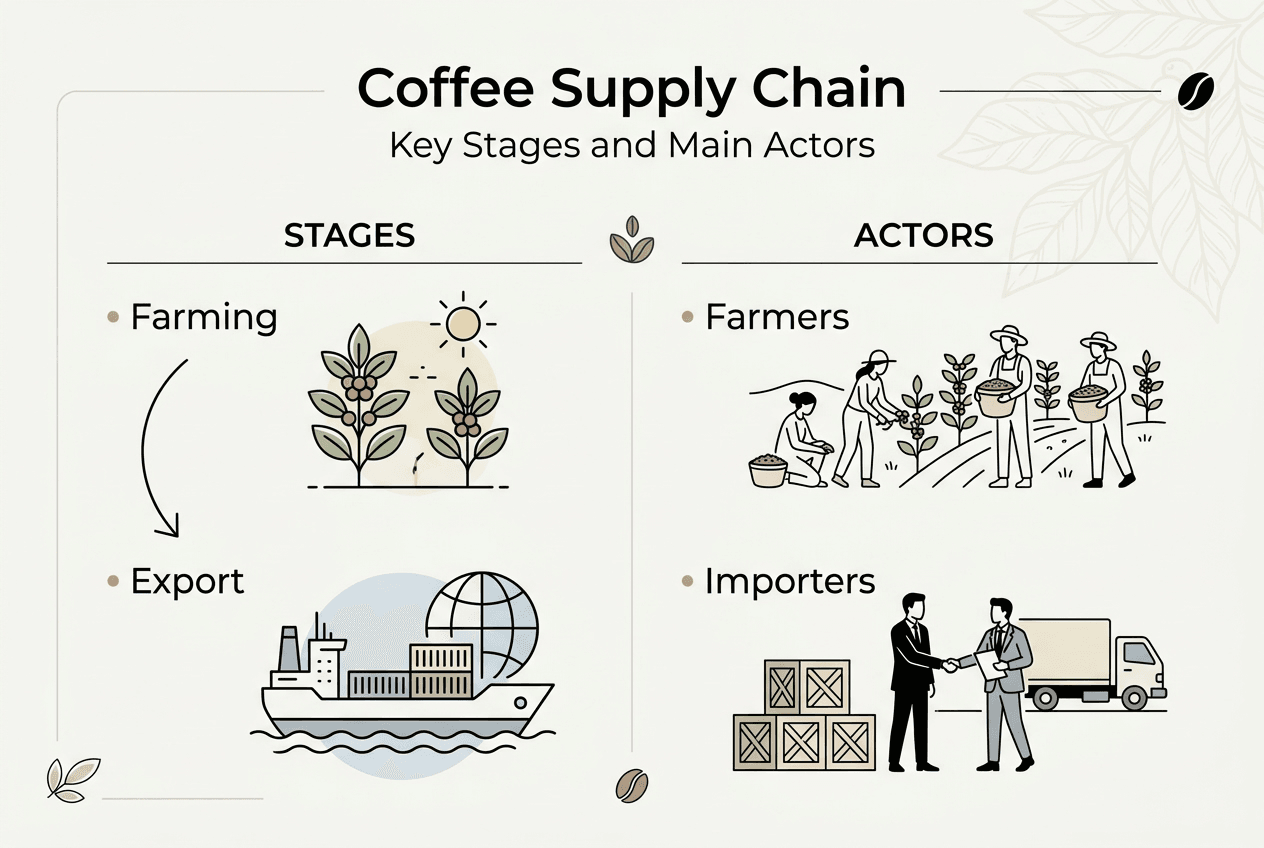
The chain starts with smallholder farmers in equatorial regions who harvest ripe cherries by hand. Local collectors aggregate small lots from multiple farms, creating the first traceability challenge. Mills remove fruit and parchment, then dry the beans to stable moisture levels. Exporters consolidate container loads and handle documentation for international shipping. Importers receive containers at UK ports, manage customs, and distribute to roasters. Roasters transform green beans into the aromatic product you recognize, then package for wholesale distribution. Finally, your business receives coffee bags and pods ready for service.
The seven-stage supply chain:
- Farmer: Cultivates, harvests, and performs initial processing of coffee cherries
- Collector: Aggregates small lots from multiple farms in producing regions
- Miller: Removes fruit and parchment, dries beans to 10 to 12% moisture
- Exporter: Consolidates containers, manages export documentation and quality control
- Importer: Receives shipments, clears customs, warehouses green coffee inventory
- Roaster: Develops flavor profiles, packages, and distributes to wholesale clients
- Retailer/Hospitality: Prepares and serves finished beverages to end consumers
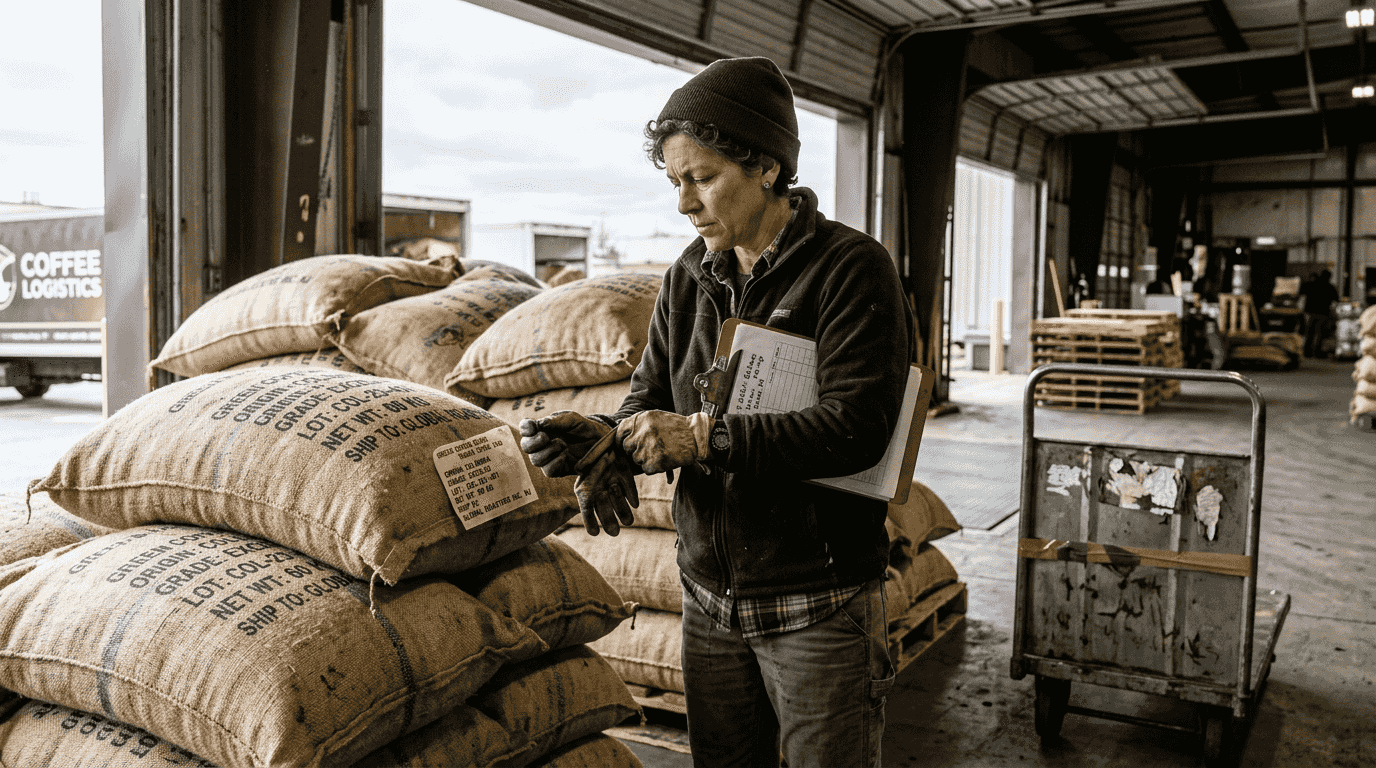
Shipping typically requires four to eight weeks in refrigerated containers, with beans packed in 60kg jute bags. Ocean freight costs fluctuate with fuel prices and container availability, adding another variable to your procurement equation. Each handoff introduces potential for quality degradation if storage conditions slip or transit delays extend beyond planned timelines.
Fragmentation complicates traceability. When collectors mix beans from dozens of farms, pinpointing origin becomes nearly impossible without robust tracking systems. This matters increasingly as consumers and regulators demand transparency about environmental and social practices. For hospitality managers, fragmented supply chains mean you must rely on roaster integrity and third-party certifications to verify claims about origin and sustainability.
Pro Tip: Request detailed origin information from your roaster, including farm names, processing methods, and harvest dates. Suppliers willing to share this transparency typically maintain better quality control throughout their supply chain and can trace issues quickly if problems arise.
Price volatility and supply disruptions impacting procurement strategies
Coffee prices swing wildly, creating budget headaches and forcing difficult choices between cost control and quality maintenance. Understanding volatility drivers helps you anticipate changes and structure contracts that protect your business while maintaining supplier relationships.
The C-market, a global futures contract traded in New York, sets baseline pricing for commodity coffee. Coffee price volatility on the ‘C-market’ creates budgeting and contract challenges as prices respond to weather forecasts, political instability, and currency fluctuations in producing countries. When frost threatens Brazilian harvests or drought hits Vietnam, prices spike within days. Specialty coffees trade at premiums above C-market rates, but those premiums also fluctuate based on quality assessments and origin popularity.
Supply chain disruptions amplify price volatility. Container shortages and port delays disrupted delivery schedules, affecting availability throughout 2024 and 2025, with effects persisting into 2026. When containers sit at ports for weeks, roasters face inventory gaps that force them to source emergency replacements at premium prices. These costs flow downstream to hospitality buyers through mid-contract price adjustments or reduced availability of preferred blends.
Payment delays create cascading effects. Roasters typically pay importers 30 to 90 days after receiving green coffee, but if container delays push deliveries back, roasters must finance inventory longer than planned. This ties up capital and increases financial risk, particularly for smaller roasters operating on thin margins. When defaults occur, the entire supply chain contracts as participants reduce credit terms and require faster payment.
| Volatility Factor | Impact on Budget Planning | Impact on Service Quality |
| — | — |
| C-market price swings | Difficult to lock annual costs, mid-contract adjustments likely | Pressure to switch to cheaper beans, compromising taste profiles |
| Supply disruptions | Emergency sourcing at premium prices strains margins | Inconsistent availability forces menu changes or substitutions |
| Currency fluctuations | Sterling weakness increases import costs immediately | Quality maintenance requires absorbing FX losses or raising prices |
| Climate events | Sudden scarcity drives panic buying and hoarding | Preferred origins become unavailable, forcing unfamiliar replacements |
Strategies to mitigate volatility risks:
- Negotiate flexible contracts with price caps and floors that share risk between buyer and supplier
- Diversify suppliers to avoid single-source dependency when disruptions hit specific origins
- Build inventory buffers during stable periods to ride out short-term availability gaps
- Establish relationships with seasonal coffee specials suppliers who can pivot quickly
- Monitor C-market trends and origin weather reports to anticipate price movements
- Consider wholesale coffee services for hotels that include supply guarantees
Pro Tip: Structure annual contracts with quarterly price reviews tied to transparent indices rather than fixed pricing. This approach shares risk fairly while preventing surprise mid-contract increases that damage trust and force emergency renegotiations.
Navigating sourcing strategies and compliance in 2026
How you source coffee matters as much as what you source. The shift from transactional buying to relationship-based procurement reflects growing complexity and risk in global supply chains, while new compliance requirements add urgency to transparency efforts.
Transactional sourcing is increasingly complex and risky for specialty coffee roasters who must evaluate unfamiliar offerings quickly and accept quality uncertainty. For hospitality buyers, transactional relationships with roasters create similar challenges. When you simply order from available inventory without understanding sourcing practices, you lose visibility into quality consistency and ethical standards. Price becomes the primary differentiator, pushing suppliers toward cost-cutting that eventually degrades cup quality.
Relationship-based sourcing builds mutual understanding and aligned incentives. When your roaster knows your volume patterns, flavor preferences, and service standards, they can reserve appropriate inventory and develop custom blends that differentiate your offerings. You gain priority access during shortage periods and early notification of quality issues. Roasters benefit from predictable demand that enables better green coffee purchasing and reduced inventory risk.
Certifications provide third-party verification of ethical and environmental claims, but understanding what each certification guarantees prevents paying for attributes your customers don’t value. Fairtrade ensures farmers receive minimum prices and premiums for community development. Organic certification prohibits synthetic pesticides and fertilizers, appealing to health-conscious consumers. Rainforest Alliance focuses on biodiversity protection and worker welfare. Each certification involves audit costs and compliance requirements that increase prices by 10% to 30% over conventional coffee.
Understanding supply chain traceability is crucial due to EU Deforestation Regulation requirements taking effect in phases through 2026. This regulation prohibits placing coffee on EU markets if production contributed to deforestation after December 2020. Compliance requires documented proof of farm-level origin and land use history. For UK hospitality businesses, this means verifying that your roaster maintains compliant supply chains or risk being unable to source certified products.
Compliance and ethical sourcing checklist:
- Request origin documentation showing farm locations and harvest dates for transparency
- Verify roaster maintains certifications relevant to your brand positioning and customer values
- Confirm traceability systems meet EU Deforestation Regulation requirements for continued access
- Evaluate roaster’s direct trade relationships vs. commodity market purchases for quality assurance
- Review supplier audit reports or third-party assessments of labor and environmental practices
- Assess supplier financial stability to avoid disruptions from defaults or business failures
- Establish clear quality specifications with cupping scores and defect tolerances in contracts
Balancing cost, quality, and compliance requires strategic thinking. Decaf coffee product options illustrate this complexity, as decaffeination methods vary widely in cost, environmental impact, and flavor preservation. Swiss Water Process uses no chemicals but costs more, while conventional methods are cheaper but leave trace solvents. Your choice depends on customer priorities and price sensitivity.
Sustainable coffee wholesale approaches extend beyond certifications to encompass packaging choices, transportation methods, and roaster energy sources. Some hospitality businesses find that highlighting local roasting and reduced food miles resonates more powerfully with regional customers than distant origin certifications. Understanding your specific market helps prioritize which sustainability attributes justify premium pricing.
Explore wholesale coffee solutions to optimize your supply
Navigating coffee supply chain complexities becomes simpler with the right wholesale partner. The Coffee Factory offers tailored solutions for Southwest hospitality businesses seeking reliable supply, consistent quality, and transparent sourcing. Our Devon-based roastery combines regional proximity with specialty coffee expertise, delivering fresh roasted beans within 60 miles while maintaining direct relationships with origin partners.
Explore our wholesale coffee services for hotels to discover flexible contracts, equipment support, and staff training that elevate your coffee program. Our wholesale coffee blends deliver reliable flavor profiles developed specifically for high-volume hospitality service. Whether you need signature espresso blends, filter coffee for breakfast service, or specialized offerings for afternoon tea, we work with you to create consistent experiences your guests remember. Our barista training courses ensure your team extracts maximum quality from every bean, turning supply chain knowledge into competitive advantage.
Frequently asked questions
What are the main factors causing coffee price volatility?
C-market futures contracts respond rapidly to weather events in major producing countries, particularly Brazil and Vietnam, creating baseline price swings. Shipping disruptions from container shortages and port delays add logistical costs that roasters pass downstream. Currency fluctuations between sterling and producer country currencies immediately affect import costs. Political instability and labor disputes in origin countries can halt exports suddenly, triggering panic buying. For hospitality managers, these combined factors make fixed annual pricing nearly impossible, requiring flexible contract structures that acknowledge shared risk.
How long does it typically take for coffee to arrive from farm to UK roaster?
The journey from farm gate to destination port typically takes four to eight weeks depending on origin and shipping routes. African coffees often take longer due to fewer direct shipping lines, while Central American origins benefit from established routes to European ports. Add customs clearance, inland transportation, and roaster scheduling, and total time from harvest to your cup can reach three to four months. This extended timeline means the coffee you serve today was picked last season, making inventory planning and storage conditions critical for maintaining freshness and flavor.
What is transactional sourcing and why is it risky for hospitality buyers?
Transactional sourcing involves buying from a list of available coffees, but it is increasingly complex and risky due to quality inconsistency and limited recourse when problems arise. You evaluate unfamiliar offerings based on limited information, making quality prediction difficult. When supply tightens, transactional buyers lose access first as suppliers prioritize relationship customers. Price becomes the primary competitive factor, incentivizing suppliers to cut corners on quality control and sourcing standards. For hospitality operations where coffee quality directly impacts guest satisfaction and repeat business, transactional relationships create unacceptable variability and reputational risk.
How does compliance with the EU Deforestation Regulation affect coffee procurement?
Compliance requires traceability of coffee origins to avoid deforestation impacts occurring after December 2020, with phased implementation through 2026. Your roaster must provide documented proof that coffee came from farms not involved in forest conversion, requiring robust tracking systems throughout the supply chain. Non-compliant coffee cannot legally enter UK markets, potentially cutting off access to certain origins or suppliers lacking proper documentation. For hospitality buyers, this regulation makes supplier due diligence essential and rewards relationships with roasters who invested early in traceability infrastructure. Beyond legal compliance, demonstrated forest protection appeals to environmentally conscious guests and protects brand reputation.