
TL;DR:
- Choosing the right coffee blend influences guest experience, consistency, and brand perception.
- Key evaluation factors include taste, aroma, body, purity, and sustainability for high-quality results.
- Local regional blends and reliable supplier relationships are vital for freshness, support, and tailored service.
Choosing the right coffee blend for your hospitality venue is far more than a purchasing decision. It shapes every guest interaction, from the first sip of a breakfast flat white to the final espresso after a long dinner service. With dozens of blends on the market, each backed by different roasters, flavour profiles, and sustainability claims, the choice can feel overwhelming. We’ve put together this practical guide to cut through the noise, drawing on expert rankings and our own roasting experience here in Devon, so you can make a confident, informed decision for your venue.
Table of Contents
- What matters when evaluating coffee blends
- Top expert-rated blends for Southwest UK venues
- At-a-glance coffee blend comparison table
- Tailoring your blend choice: Scenarios for hospitality venues
- What coffee blend lists often overlook: Local context and staff training
- Elevate your menu with local wholesale coffee solutions
- Frequently asked questions
Key Takeaways
| Point | Details |
|---|---|
| Blend choice shapes guest satisfaction | Choosing the right blend enhances your reputation and encourages repeat visits. |
| Expert criteria guide selection | Assess blends based on taste, aroma, lab-tested purity, sustainability, and value. |
| Local supply adds reliability | Partnering with Southwest UK suppliers ensures freshness and flexible delivery. |
| Staff training boosts quality | Ongoing barista training helps deliver the best from your blend every time. |
What matters when evaluating coffee blends
Before you can compare blends meaningfully, you need a clear framework. Industry professionals and independent reviewers consistently judge coffee quality against five core pillars: taste profile, aroma, body, health and purity, and sustainability.
Taste profile is the obvious starting point. Does the blend deliver balance across acidity, sweetness, and bitterness? Can it hold its character through milk and steam, not just in a black cup? For busy hospitality venues, this matters enormously because the majority of orders will involve milk-based drinks.
Aroma is often underestimated. The moment a guest walks past your counter and catches a freshly pulled espresso, that sensory cue does real work for your brand.
Body refers to the weight and texture of the coffee on the palate. A full-bodied blend will stand up to a large latte; a lighter-bodied one might suit a pour-over menu or an afternoon filter offering.
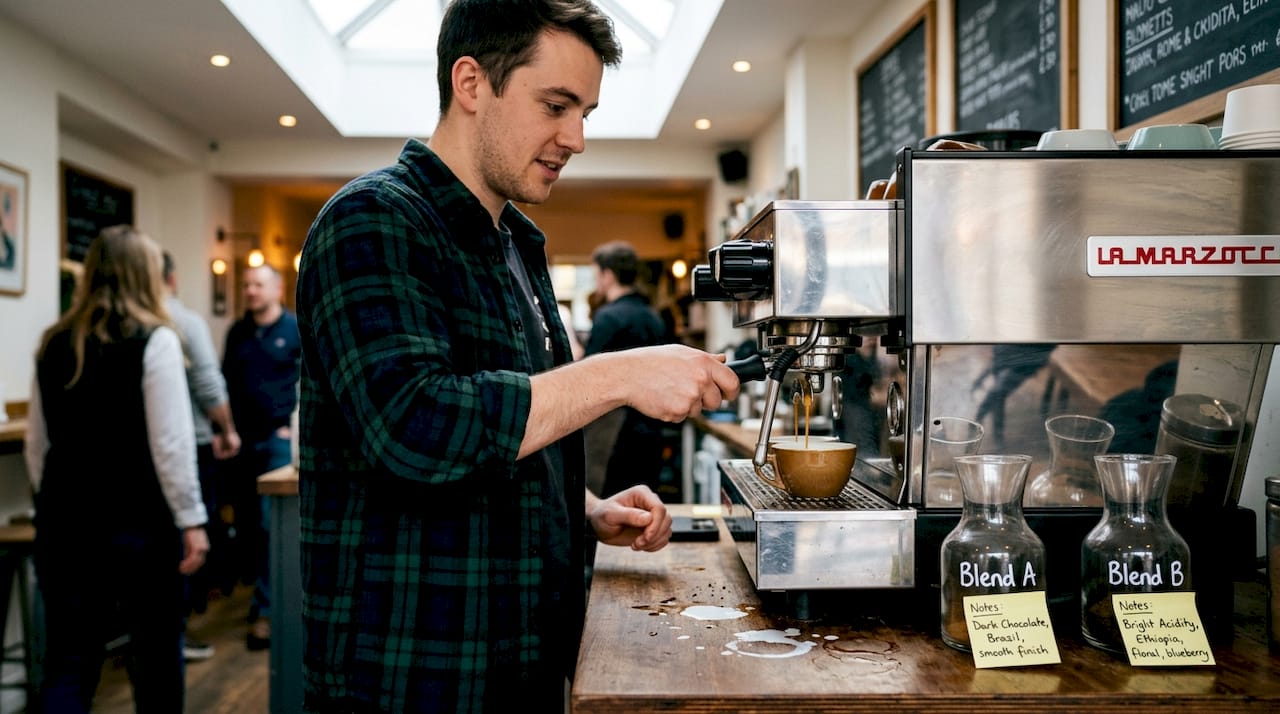
Health and purity is a growing priority. Lab-tested purity and SCA 80+ scores are now key ranking factors in expert reviews, with mycotoxin and pesticide-free credentials particularly valued by health-conscious guests and operators.
Sustainability covers everything from sustainable sourcing practices to Fairtrade and direct trade certifications. Guests increasingly notice and respond to visible ethical commitments.
Blends offer something single origins rarely can: reliable consistency. When a delivery arrives and the head barista is off sick, a well-designed blend keeps the standard steady. Single origins bring nuance and storytelling potential but carry more variability. Understanding roast mechanics also helps here; roast level affects solubility, extraction time, and how a blend performs across different brewing methods.
Key evaluation points to apply:
- Taste balance across espresso, milk drinks, and filter
- Aroma intensity and persistence
- Body suitability for your primary service format
- Verified purity credentials (mycotoxin, pesticide-free)
- Fairtrade, direct trade, or Rainforest Alliance certification
- SCA score (80 or above indicates specialty grade quality)
Pro Tip: For hospitality venues, an SCA score of 80 or above is a reliable baseline indicator that a blend has been objectively assessed for quality. It is a quick filter when you are shortlisting suppliers.
Top expert-rated blends for Southwest UK venues
With criteria established, see how leading blends measure up for practical hospitality needs.
Expert-tested rankings point to several standout options across different needs and budgets. Here is how the most relevant ones break down:
- Balance Coffee Stability Blend: Scored 91 out of 100 in independent testing, leading for health-focused, mycotoxin-free credentials. A strong choice for venues with health-conscious clientele.
- Assembly House Espresso: Rich and chocolatey with a reliable structure. Performs well in high-volume milk drink environments.
- Square Mile Red Brick: A classic among specialty venues. Bright fruit notes and clean finish. Better suited to espresso-forward menus than heavy milk formats.
- Rave Signature Blend: Versatile and approachable. A solid mid-range option for mixed-format venues.
For venues within our region, our blend range has been specifically developed with Southwest UK hospitality in mind:
- Daily Brew: Smooth caramel and cocoa notes. Consistent across all milk ratios and ideal for breakfast and brunch service.
- Black Bear: Malt chocolate and cherry character. Excellent for venues with a craft-focused or artisan identity.
- Big Red: Brighter profile with apricot and lime. Works beautifully as a seasonal or signature espresso.
One clear advantage of sourcing locally is delivery reliability. When summer tourism surges or a bank holiday weekend creates unexpected demand, proximity to your roastery matters. Freshness is not a luxury; it is a commercial advantage.
“The Stability Blend stands out as the top pick for operators who want a premium, health-verified coffee with no compromise on flavour.” — Balance Journal expert panel
Pro Tip: For budget-conscious venues, Rave Signature offers excellent quality at a competitive wholesale price point. It is often overlooked in favour of premium names, but it delivers consistently across multiple brew formats.
At-a-glance coffee blend comparison table
To help visualise differences and speed up decision-making, here is how the top blends stack up side by side. Fifteen blends were tested by UK experts across aroma, taste, clarity, health, sustainability, and value, and the results make for useful reading.
The table below draws on those full 2026 rankings alongside our own knowledge of regional hospitality needs. Check blend details for full flavour notes and wholesale pricing.
| Blend | Aroma | Taste profile | Health/purity | Sustainability | Best for |
|---|---|---|---|---|---|
| Balance Stability | High | Smooth, balanced | Mycotoxin-free | Direct trade | Health-conscious venues |
| Assembly House Espresso | Medium-high | Chocolate, nutty | Standard | Ethical sourcing | High-volume espresso |
| Square Mile Red Brick | High | Bright, fruity | Standard | Fairtrade | Specialty cafes |
| Rave Signature | Medium | Versatile, mild | Standard | Rainforest Alliance | Mixed-format venues |
| TCF Daily Brew | High | Caramel, cocoa | Freshly roasted | Direct relationships | Breakfast and brunch |
| TCF Black Bear | Medium-high | Malt, chocolate, cherry | Freshly roasted | Direct relationships | Artisan and craft venues |
| TCF Big Red | High | Apricot, lime, bright | Freshly roasted | Direct relationships | Signature espresso menus |
Standout for health: Balance Stability leads on verified purity credentials. Standout for sustainability: Square Mile Red Brick carries strong Fairtrade accreditation. Best for espresso: TCF Big Red and Square Mile Red Brick both shine as straight espresso options. Best for filter coffee: Balance Stability and Rave Signature both transition well to filter formats.
For Southwest UK venues, freshness is a key variable that tables alone cannot capture. A locally roasted blend arriving within days of roasting will outperform a premium national brand that has spent two weeks in transit storage.
Tailoring your blend choice: Scenarios for hospitality venues
Now that the blends are compared, the next step is matching the right option to your venue’s unique needs. Blends deliver reliability for high-volume hospitality, while single origins create signature experiences. Here is how to think through your own situation:
- Breakfast buffet or hotel morning service: Volume and consistency are everything. Choose a medium-roast blend with strong milk performance, like TCF Daily Brew or Assembly House Espresso. Staff changeover is common, so ease of extraction matters.
- High-volume lunch trade (cafe or bistro): Speed and repeatability drive quality here. A blend with a forgiving extraction window, such as Rave Signature or Daily Brew, reduces waste and keeps the queue moving.
- Boutique hotel lounge or fine dining: This is where you have room to tell a story. Black Bear or Big Red give you distinctive flavour notes worth featuring on your menu. Pair with a brief staff explanation for maximum guest impact.
- Hybrid venues with espresso and filter: Look for blends tested across both formats. Balance Stability and Rave Signature both perform across brew methods, making them genuinely versatile options.
Seasonality deserves real attention in the Southwest. Summer tourism brings higher footfall and often less experienced seasonal staff. That is the moment a forgiving, well-supported blend from a local supplier becomes a genuine business asset. Our foodservice support resources cover this kind of scenario in practical detail.
Pro Tip: Build a simple “flight” for your menu by pairing your house blend with a rotating single origin. It adds a premium option without overcomplicating your workflow, and it gives your team something genuinely interesting to talk about with guests.
What coffee blend lists often overlook: Local context and staff training
Every expert ranking has its place, and we genuinely value the rigour behind independent reviews. But from our experience working with venues across Devon and the wider Southwest, we have observed something the tables rarely capture: the supplier relationship often matters more than the blend itself.
A 91-point blend that arrives late, inconsistently packed, or without technical support is worth less in practice than a solid 84-point blend backed by a supplier who answers the phone, knows your machine, and can be on-site within hours if something goes wrong. Barista training for your team turns a good blend into a consistently excellent guest experience. Without it, even the most awarded coffee underperforms.
Southwest UK venues also face specific logistical realities. Coastal locations, narrow delivery windows, and seasonal demand spikes all require a supplier with genuine regional knowledge. Local delivery partnerships built around your specific patterns are worth more than any national account discount. The perfect blend is the one your team can execute brilliantly, day after day.
Elevate your menu with local wholesale coffee solutions
If you are ready to move beyond the shortlist and find a blend that genuinely fits your venue, we would love to help. At The Coffee Factory, we work with cafes, hotels, restaurants, and foodservice operators across the Southwest, offering freshly roasted regional blend options tailored to your format, volume, and guest expectations.
From guided tastings and menu building to staff training options and our hospitality delivery guide, we offer the kind of hands-on, local support that national suppliers simply cannot match. Get in touch with our team and let’s find your perfect blend together.
Frequently asked questions
What is the main difference between a coffee blend and a single origin?
A coffee blend combines beans from different origins to achieve flavour consistency, while a single origin offers distinctive, place-specific notes that can vary by harvest. Blends deliver reliability where consistency is paramount, and single origins bring nuance where storytelling adds value.
Which coffee blend is best for busy hospitality venues?
Balance Coffee Stability and The Coffee Factory’s Daily Brew are both highly rated for reliability and ease of use in fast-paced environments. The Stability Blend excels on health credentials, while Daily Brew is optimised for high-volume hospitality service.
How important is coffee blend sustainability for guests?
Sustainability is a growing priority for guests and operators alike. Sustainability is a major ranking pillar in expert reviews, and venues that communicate their ethical sourcing choices often see stronger guest loyalty and positive word of mouth.
Can the same blend suit espresso and filter coffee?
Some blends are specifically developed to perform across both formats, but others are optimised for one method. Blend composition and roast level significantly affect suitability, so always ask your supplier for brewing recommendations or request a tasting before committing.