
TL;DR:
- Most UK hospitality venues now prefer leasing coffee equipment over buying outright to reduce upfront costs and access the latest technology. Operating leases offer tax benefits, included maintenance, and flexibility, while finance leases are suited for long-term ownership. Careful evaluation of support, upgrade options, and contract terms is essential for choosing the right leasing arrangement.
Buying coffee equipment outright might seem like the safe, straightforward choice. But for most hospitality venues across the Southwest UK, that assumption is quietly being turned on its head. Leasing has become the default approach for cafes, hotels, and restaurants that want premium kit without the capital hit. Yet many owners still feel uncertain about how leasing actually works, what the tax implications are, and whether it truly suits their business. This guide cuts through that confusion. We’ll explain what coffee equipment leasing means, how the main lease types differ, what financial advantages you can expect, and how to choose wisely when the time comes.
Table of Contents
- What is coffee equipment leasing?
- Key benefits of leasing coffee equipment
- Tax implications and financial considerations
- Choosing wisely: how to select the right coffee equipment lease
- Our perspective: why leasing is evolving and what most miss
- Level up your coffee experience with expert support
- Frequently asked questions
Key Takeaways
| Point | Details |
|---|---|
| Leasing explained simply | Leasing coffee equipment means renting it for a fixed period with regular payments, rather than buying it outright. |
| Major cost and tax advantages | Leasing reduces upfront spend and may save up to 25% in tax annually for UK hospitality businesses. |
| Maintenance and support vary | Always check what support and maintenance are included before choosing a provider. |
| Choosing the right lease | Compare terms, clarify responsibilities, and prioritise local support to get the most value from leasing. |
| Leasing is now mainstream | Over 60% of UK venues now lease coffee equipment, reflecting its flexibility and benefits. |
What is coffee equipment leasing?
At its simplest, coffee equipment leasing means renting a machine or set of machines for an agreed period, paying a fixed monthly or quarterly fee rather than buying outright. You get full use of the equipment, and at the end of the term, you either return it, upgrade, or in some cases purchase it at a residual value. It’s a model that’s been common in sectors like vehicle hire and office technology for years, and it’s now firmly established in hospitality.
There are two main lease types you’ll encounter:
- Operating lease: A shorter to medium-term arrangement, typically one to three years. The equipment stays on the lessor’s balance sheet. Payments are treated as a straightforward business expense, which has clear tax advantages. This is the most common choice for cafes and restaurants wanting flexibility.
- Finance lease: A longer-term arrangement where the asset effectively sits on your balance sheet. You bear more of the financial risk and responsibility, but you may benefit from capital allowances. This suits venues planning to keep equipment for many years.
In practice, rental and lease options for hospitality cover a wide range of equipment: commercial espresso machines, automatic bean-to-cup machines, grinders, water filtration systems, and ancillary kit. The right equipment choices for hospitality depend on your volume, service style, and budget.
Leasing is increasingly common among UK operators, with usage rising sharply over the past five years. Here’s a quick snapshot of how the landscape looks:
| Metric | Figure |
|---|---|
| UK venues currently leasing | Over 60% |
| Five years ago | Around 45% |
| Typical lease term (operating) | 12 to 36 months |
| Typical lease term (finance) | 36 to 60 months |
Understanding which types of coffee machines suit your operation is the first step before committing to any lease agreement.
Pro Tip: Always ask your leasing provider exactly what support and maintenance are included before signing. Some agreements bundle in servicing; others leave you fully responsible for repairs. The difference can significantly affect your total cost of ownership.
Key benefits of leasing coffee equipment
With the basics established, it helps to understand why so many venues choose to lease and the advantages that could genuinely transform your coffee service.
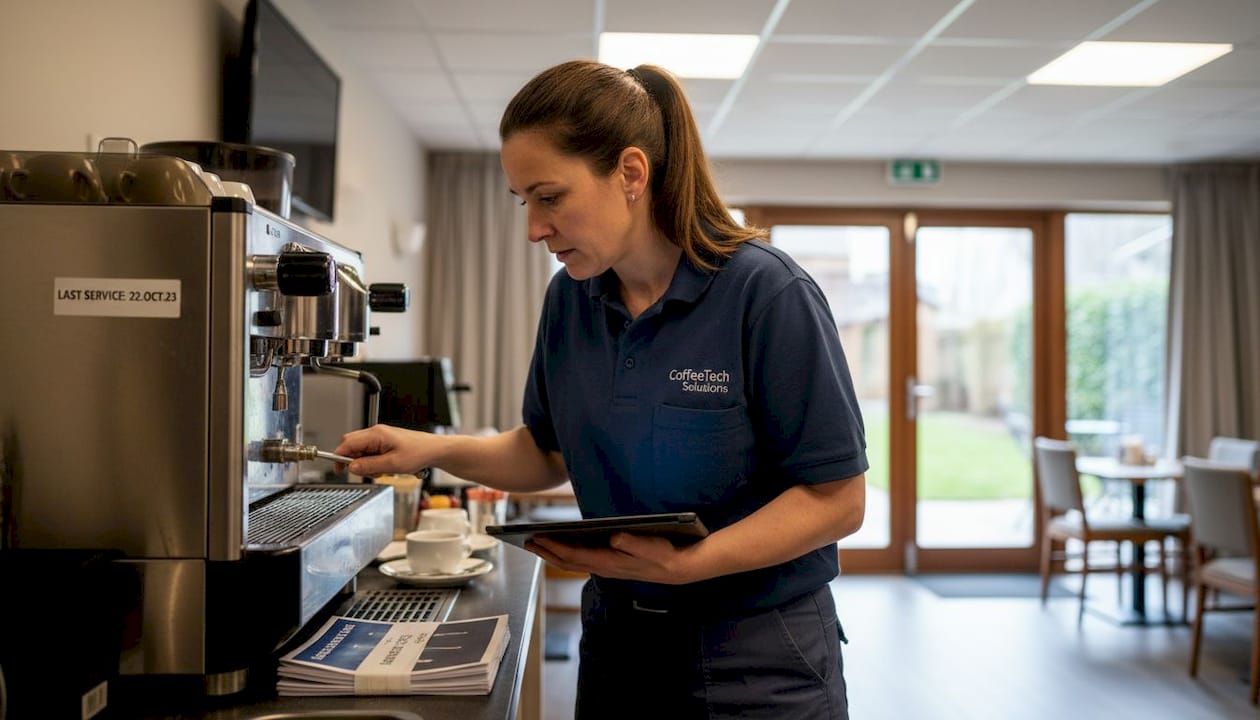
1. Lower upfront costs. Purchasing a commercial espresso machine outright can cost anywhere from £3,000 to over £15,000. Leasing spreads that cost into manageable monthly payments, freeing capital for staffing, refurbishment, or stock.
2. Access to the latest technology. Equipment evolves quickly. Leasing means you can upgrade to newer models at the end of each term rather than being locked into ageing machinery.
3. Maintenance often included. Many leases, particularly operating leases, bundle in servicing and breakdown cover. This reduces unexpected costs and keeps your machines running during peak service.
4. Predictable budgeting. Fixed monthly payments make cash flow planning far simpler. You know exactly what you’re paying, every month, for the full term.
5. Tax efficiency. Operating lease payments are fully deductible as a business expense, which we’ll cover in more detail shortly.
The revenue upside can be striking. A new leased machine generated £37,000 in revenue within just seven months for one UK cafe, demonstrating how the right equipment, accessed affordably through leasing, can pay for itself many times over.
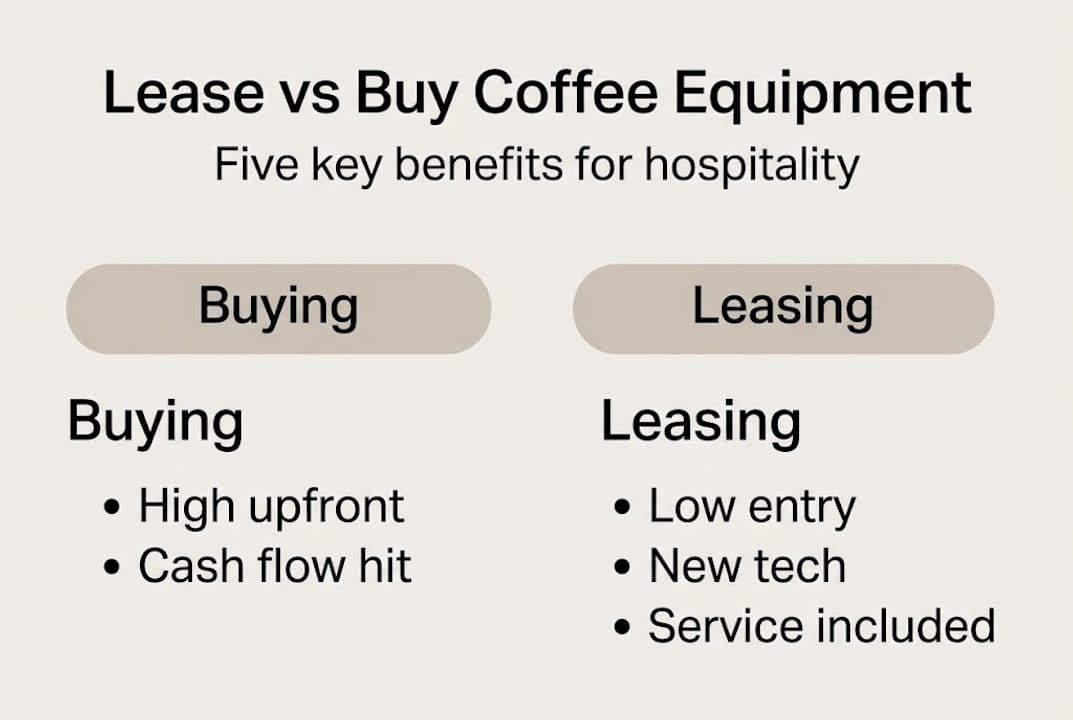
Here’s a simple comparison to frame the decision:
| Factor | Buying outright | Leasing |
|---|---|---|
| Upfront cost | High | Low or none |
| Cash flow impact | Significant | Minimal |
| Technology upgrades | Your responsibility | Built into lease cycle |
| Maintenance | Your cost | Often included |
| Tax treatment | Capital allowances | Expense deduction (operating) |
| Balance sheet | Asset recorded | Off balance sheet (operating) |
For further reading on what’s working for hospitality businesses right now, insights from our coffee blog cover real-world examples from venues across Devon and Somerset.
Pro Tip: If you’re a seasonal business, look for leases with flexible payment structures or break clauses. A fixed 36-month contract at full rate can be a burden through quieter winter months.
Tax implications and financial considerations
Understanding the financial upsides is vital, but the full real-world impact rests on how your lease is treated for tax and accounting purposes.
The key distinction sits between the two lease types. Operating leases are fully deductible as a business expense; finance leases may qualify for capital allowances, and VAT is reclaimable on both. In practical terms, this means:
- Operating lease: Monthly payments reduce your taxable profit directly. If you pay £6,000 per year in lease costs and your corporation tax rate is 25%, you save £1,500 in tax.
- Finance lease: The asset appears on your balance sheet. You claim capital allowances rather than a direct expense deduction, which can spread relief over a longer period.
- VAT: If your business is VAT-registered, you can reclaim the VAT element on lease payments, improving your net cost position.
Here’s a simplified breakdown:
| Lease type | Tax treatment | VAT reclaimable? | Balance sheet impact |
|---|---|---|---|
| Operating lease | Full expense deduction | Yes | Off balance sheet |
| Finance lease | Capital allowances | Yes | On balance sheet |
For contract and tax clarity, it’s worth reviewing your lease agreement with your accountant before signing, particularly around lease classification.
Important: Lease misclassification is a real risk. If HMRC determines that what you’ve called an operating lease should actually be classified as a finance lease, the tax treatment changes. Early termination fees can also be substantial. Always read the small print and seek professional advice if you’re uncertain.
Maintenance costs deserve attention too. Some leases include full servicing; others cover only parts, or nothing at all. A machine that breaks down during a busy weekend service is a revenue problem, not just a repair bill. Know exactly what your agreement covers before you sign.
Choosing wisely: how to select the right coffee equipment lease
Knowing the numbers matters, but picking the right lease can save headaches and money down the road.
Start with a clear checklist before approaching any provider:
- Define your equipment needs. What volume do you serve daily? A small cafe doing 50 covers needs different kit from a hotel restaurant doing 200.
- Confirm what support is included. Ask specifically about response times, weekend cover, and who handles parts.
- Check upgrade options. Can you move to newer equipment mid-term or at renewal without heavy penalties?
- Understand the exit terms. What happens if your business model changes or you need to end the lease early?
- Compare total cost, not just monthly payments. A cheaper monthly rate with high exit fees may cost more overall.
For Southwest UK venues, choosing a local provider matters more than many realise. A supplier based in Devon or Somerset can respond quickly to breakdowns, understands the regional hospitality calendar, and builds genuine relationships rather than transactional ones.
Maintenance responsibility, support, and early termination policies vary significantly between leases, so scrutinise every clause. Red flags to watch for include vague maintenance language, no defined response time, and penalties that exceed three months’ payments for early exit.
For venues with strong service contracts already in place, an operating lease with separate servicing can work well. For those who prefer everything bundled, look for all-inclusive arrangements that cover both equipment and support services.
Pro Tip: Insist on a written commitment for 24-hour response times and clear weekend cover in any lease or service contract. Verbal assurances are not enough when your espresso machine fails on a Saturday morning.
Our perspective: why leasing is evolving and what most miss
We’ve spent years advising hospitality operators across Devon and Somerset, and one pattern keeps repeating: too many venues focus almost entirely on the monthly payment figure and miss everything else that matters.
The real value of a good lease isn’t the price. It’s the reliability, the service response, and the confidence that your coffee operation won’t grind to a halt when something goes wrong. Support and response times are just as vital as monthly costs when leasing, yet they’re rarely the first question asked.
There’s also persistent confusion between rental and leasing. They’re not the same thing, and the distinction affects everything from your tax position to your upgrade rights. Getting that wrong at the start costs money later.
Local support in the Southwest is a genuine competitive advantage. A provider who knows your venue, your team, and your busiest trading periods is worth far more than a national company offering a marginally cheaper rate. Leasing decisions should be built around coffee quality, staff uptime, and the hidden value inside a well-written contract. Explore maintenance workflow tips to understand what good operational support actually looks like in practice.
Level up your coffee experience with expert support
If you’re ready to upgrade your setup or want honest, straightforward advice on leasing options, we’re here to help. At The Coffee Factory, we work with hospitality businesses across Devon and Somerset, offering tailored solutions that go well beyond simply supplying coffee.
From wholesale coffee services to flexible machine rental choices and a full range of equipment options, we build partnerships that support your business through every season. We’re a family-run roastery with real experience and genuine commitment to the venues we serve. Get in touch and let’s find the right fit for you.
Frequently asked questions
What is the difference between operating and finance leases for coffee equipment?
Operating leases are shorter term and fully deductible as a business expense; finance leases differ in tax treatment as they may count as a capital asset attracting capital allowances rather than a direct expense deduction.
How much money can I save on tax by leasing coffee equipment?
With an operating lease, you could save around 25% of your annual rental cost in corporation tax. A £6,000 annual rental saves £1,500 at the standard 25% corporation tax rate.
What risks should I check before signing a coffee equipment lease?
Key risks include early termination penalties, unclear maintenance responsibility, and the possibility of lease type misclassification, which can alter your tax position significantly.
Do most UK cafes lease their coffee equipment now?
Yes. Over 60% of UK venues now use leases for their coffee equipment, up from around 45% five years ago, reflecting a clear shift in how hospitality businesses manage their equipment costs.