
Many hospitality professionals assume espresso quality depends solely on the beans they purchase, yet extraction fundamentals reveal that brewing technique determines whether premium coffee delivers exceptional flavour or disappointing results. Espresso extraction transforms ground coffee into the concentrated beverage your customers expect, but the process involves precise control of multiple variables that directly impact taste, consistency, and profitability. This guide clarifies what espresso extraction actually involves, explains the key factors affecting quality, and provides practical strategies Southwest UK hospitality businesses can implement immediately to elevate their coffee service and customer satisfaction.
Table of Contents
- Key takeaways
- Understanding the espresso extraction process
- Key variables and metrics in espresso extraction
- Expert insights on espresso extraction nuances and quality control
- Practical applications for coffee businesses in the Southwest UK
- Improve your espresso quality with The Coffee Factory
- Frequently asked questions
Key Takeaways
| Point | Details |
|---|---|
| Espresso extraction basics | Espresso extraction involves forcing hot water through finely ground coffee under controlled pressure and temperature to produce a concentrated beverage with crema, typically at nine bars and ninety to ninety six degrees Celsius for about twenty five to thirty seconds. |
| Key quality variables | Core controllable factors include dose, grind size, tamping pressure, water temperature, and the length of contact time, all of which shape flavour development and consistency. |
| Ideal extraction targets | Guidance recommends aiming for an extraction yield of 18 to 22 per cent and a total dissolved solids level of 8 to 12 per cent to achieve balanced flavour. |
| Puck preparation to avoid channeling | Proper puck preparation including techniques such as the Weiss Distribution Technique helps break up clumps and distribute coffee evenly to prevent channeling and ensure uniform extraction. |
Understanding the espresso extraction process
Espresso extraction relies on forcing hot water through finely ground coffee under controlled conditions to produce concentrated liquid with characteristic crema. The process requires 9 bars of pressure applied to water heated between 90-96°C, typically completing within 25-30 seconds. During this brief window, water dissolves soluble compounds from the coffee particles, carrying oils, sugars, acids, and aromatic molecules into your cup whilst leaving behind spent grounds.
The coffee puck acts as a resistance bed that slows water flow, allowing sufficient contact time for extraction. When water contacts the grounds, it first extracts lighter, more acidic compounds before pulling heavier oils and bitter elements. This sequential extraction explains why timing matters tremendously. Stop too early and you capture only sour acids; continue too long and harsh bitterness dominates.
Commercial espresso machines maintain precise temperature and pressure, but four physical factors determine whether extraction succeeds. Grind size controls how quickly water flows through the puck. Dose establishes how much coffee resists the water. Tamping pressure affects puck density and uniformity. Water temperature influences which compounds dissolve most readily. Professional barista training for staff ensures your team understands how these elements interact.
Pro Tip: Use the Weiss Distribution Technique before tamping by stirring grounds with a thin needle or specialized tool. This breaks up clumps and distributes particles evenly throughout the basket, preventing channeling that creates weak spots where water rushes through too quickly and ruins extraction consistency across busy service periods.
Key variables and metrics in espresso extraction
Mastering espresso extraction requires understanding both the variables you control and the metrics that measure success. Your dose represents the coffee mass loaded into the portafilter basket, typically 17-20 grams for commercial double shots. Yield describes the liquid espresso weight collected in the cup, usually 1.5 to 2.5 times the dose weight. This brew ratio fundamentally shapes flavour intensity and body.
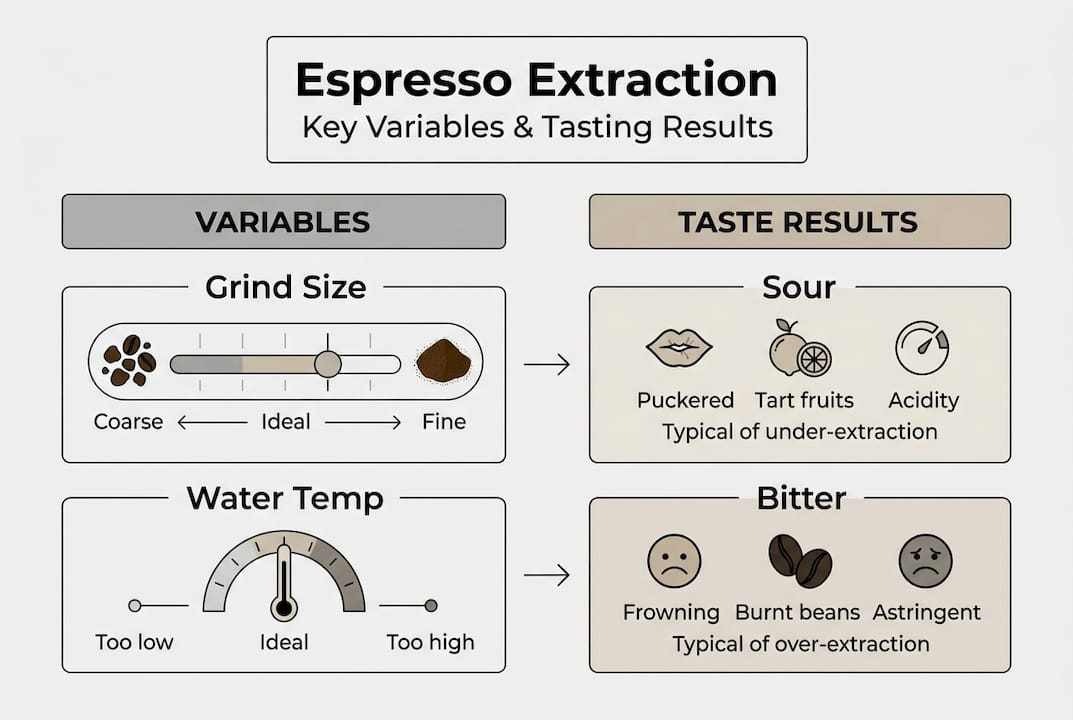
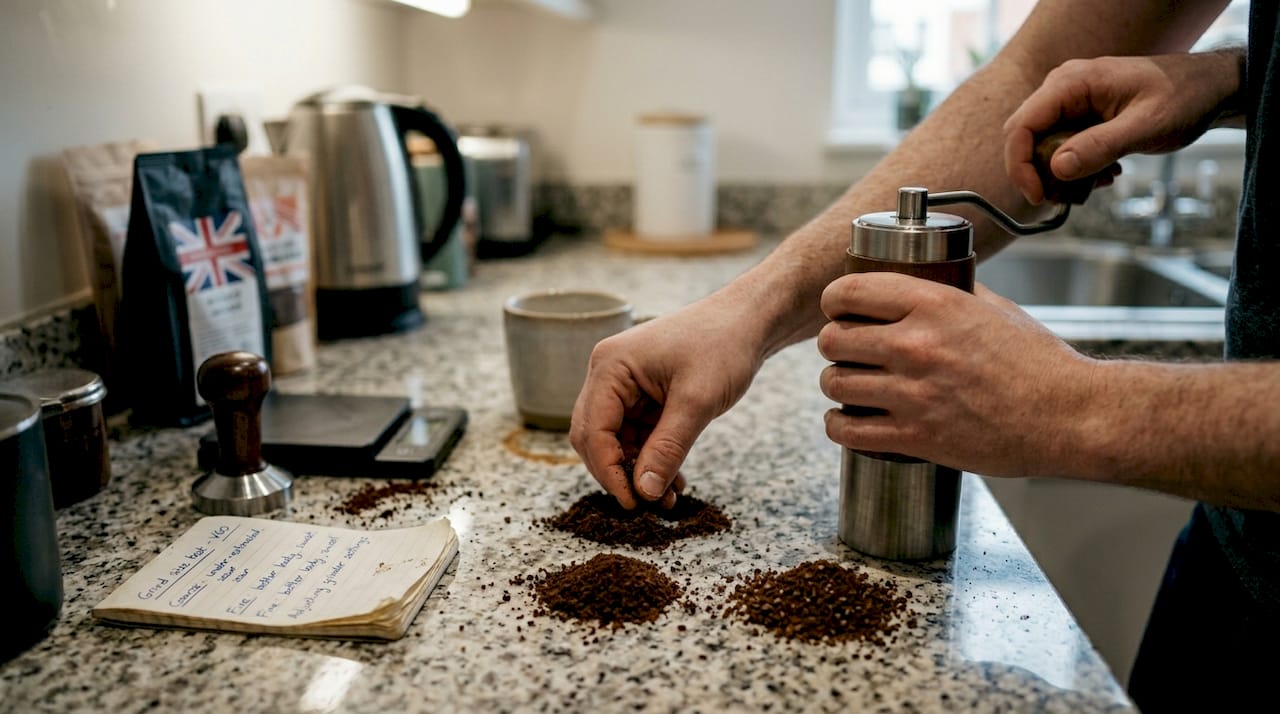
Grind size determines particle surface area and flow resistance. Finer grinds slow extraction and increase compound dissolution, whilst coarser grinds speed flow and reduce extraction efficiency. Tamping pressure compresses grounds into a uniform puck, though research shows consistent technique matters more than absolute force. Water temperature between 90-96°C extracts different compound profiles, with higher temperatures pulling more bitter elements and lower temperatures emphasising brightness.
Extraction yield and total dissolved solids provide objective quality measurements. Extraction yield calculates the percentage of coffee mass dissolved into the beverage, whilst TDS measures the concentration of dissolved solids in the liquid espresso. Professional guidelines suggest targeting 18-22% extraction yield with 8-12% TDS for balanced flavour. Calculate extraction yield by dividing dissolved solids mass by original coffee dose, then multiplying by 100.
| Variable | Typical range | Impact on extraction |
|---|---|---|
| Dose | 17-20g | Higher dose increases resistance and extraction time |
| Yield | 25-50g | Lower ratios create intense flavour, higher ratios increase volume |
| Extraction yield | 18-22% | Below 18% tastes sour, above 22% tastes bitter |
| Total dissolved solids | 8-12% | Below 8% tastes weak, above 12% tastes overly strong |
Under-extraction produces espresso that tastes sour, salty, and thin with minimal sweetness. The shot flows too quickly, appearing pale and watery. Correct this by grinding finer, increasing dose, or raising temperature. Over-extraction creates bitter, astringent espresso with burnt flavours and excessive dryness. The shot flows too slowly, often appearing dark and syrupy. Address over-extraction by grinding coarser, reducing dose, or lowering temperature slightly.
Pro Tip: Invest in a refractometer to measure TDS objectively, but never ignore your palate. Taste remains the ultimate judge of quality, and combining instrument readings with sensory evaluation trains your team to recognise excellent espresso consistently. Many decaffeinated coffee options require different extraction parameters despite similar appearance.
Expert insights on espresso extraction nuances and quality control
Particle size distribution affects extraction more than average grind size alone. Coffee grinders produce particles ranging from fine dust to larger chunks, and this distribution influences flow rate and extraction uniformity. Research demonstrates that excessive fines create muddy flavours and increase channeling risk, whilst too many large particles leave extraction potential untapped. Quality grinders with sharp burrs produce narrower distributions that extract more evenly.
Temperature profiling during extraction enables advanced control over flavour development. Lower initial temperatures preserve delicate aromatics and bright acidity, whilst higher finishing temperatures extract body and sweetness. Some commercial machines offer programmable temperature curves, though consistent baseline temperature proves more important than complex profiles for most hospitality operations.
Five essential puck preparation practices ensure even extraction across every shot. First, dose precisely using scales rather than volumetric estimates. Second, distribute grounds evenly in the basket using distribution tools or the Weiss technique. Third, tamp with consistent downward pressure perpendicular to the basket. Fourth, polish the puck surface with a slight twist to seal any surface cracks. Fifth, inspect the basket rim and wipe away stray grounds that could compromise the seal.
“Puck preparation determines extraction success more than any other single factor in commercial settings. Investing time in proper distribution and tamping techniques delivers immediate quality improvements that customers notice and appreciate, whilst reducing shot-to-shot variation that frustrates baristas during peak service.”
Diagnosing and correcting extraction problems requires systematic observation and adjustment:
- Measure shot time from pump activation to target yield weight, adjusting grind size if extraction completes outside the 25-30 second window
- Observe flow characteristics, watching for uneven streams or spurting that indicate channeling from poor puck preparation
- Taste the espresso systematically, noting dominant flavours and identifying whether sourness or bitterness suggests under or over-extraction
- Check equipment maintenance, ensuring clean shower screens, fresh gaskets, and calibrated pressure and temperature
- Document successful parameters for each coffee, creating reference points that simplify dialling in after bean changes or equipment service
Channeling occurs when water finds paths of least resistance through the puck, rushing through weak spots whilst leaving surrounding coffee under-extracted. This produces simultaneous under and over-extraction in a single shot, creating confused flavours that lack balance. Prevent channeling through meticulous distribution, consistent tamping, and regular basket inspection for wear. Professional barista training for staff emphasises these preparation fundamentals.
Temperature stability throughout extraction prevents flavour defects caused by thermal fluctuation. Machines with PID temperature control maintain tighter tolerances than simpler thermostatic systems, though proper warm-up time matters more than sophisticated electronics. Allow espresso machines at least 20 minutes to reach thermal equilibrium before pulling shots, and flush the group head briefly before each extraction to purge cooler water from idle periods. Quality coffee machine installation service ensures equipment operates within manufacturer specifications.
Practical applications for coffee businesses in the Southwest UK
Implementing quality control routines transforms technical knowledge into consistent results during busy service periods. Pull a test shot at opening to verify grind settings remain appropriate after overnight settling. Taste espresso periodically throughout service, particularly after extended idle periods when grinder temperature affects particle size. Weigh several shots hourly to confirm dose consistency, as grinder retention and ambient humidity alter output. Clean portafilters and baskets between uses to prevent old coffee oils from contaminating fresh extractions.
| Extraction issue | Symptoms | Primary causes | Corrections |
|---|---|---|---|
| Under-extraction | Sour, salty, thin body, fast flow, pale crema | Grind too coarse, dose too low, temperature too cool, time too short | Grind finer, increase dose, raise temperature, check basket size |
| Over-extraction | Bitter, astringent, dry finish, slow flow, dark appearance | Grind too fine, dose too high, temperature too hot, time too long | Grind coarser, reduce dose, lower temperature, descale machine |
Staff training programmes should emphasise practical skills alongside theoretical understanding. Teach baristas to recognise proper extraction by appearance, timing, and taste rather than relying solely on measurements. Demonstrate how grind adjustments affect flow rate and flavour, allowing team members to make informed corrections independently. Establish clear documentation systems that record successful parameters for each coffee, creating institutional knowledge that survives staff turnover. Regular barista courses for staff refresh skills and introduce new techniques.
Equipment maintenance directly impacts extraction consistency and longevity. Backflush espresso machines daily with appropriate detergent to remove coffee oil buildup from group heads and valves. Descale every three months or according to water hardness and usage volume. Replace shower screens and gaskets annually or when wear becomes visible. Clean grinders weekly by removing burrs and brushing away accumulated oils and fines. Calibrate grinder settings seasonally as burrs wear and cutting characteristics change.
Commercial machine rental programmes provide access to professional equipment without capital investment, whilst including maintenance and repair coverage that protects operational continuity. Coffee machine rental options suit businesses testing specialty coffee programmes or managing seasonal demand fluctuations. Rental agreements typically include preventive maintenance visits and priority emergency repair service that minimises downtime when equipment failures occur.
Sourcing coffee locally from regional roasters ensures freshness that significantly impacts extraction success. Coffee flavour peaks within two weeks of roasting, and stale beans require parameter adjustments that compromise results. Local suppliers provide smaller, more frequent deliveries that maintain optimal freshness whilst supporting regional businesses. Establishing relationships with roasters enables custom blend development and ongoing consultation about extraction techniques specific to their coffees.
Professional quality control methods combine objective measurements with sensory evaluation. Refractometers provide TDS readings that verify extraction consistency, particularly useful when training new staff or troubleshooting quality complaints. However, taste ultimately determines customer satisfaction, and developing your palate remains essential. Regular cupping sessions train sensory recognition of extraction defects and ideal flavour profiles, creating shared quality standards across your team.
Improve your espresso quality with The Coffee Factory
Mastering espresso extraction requires more than theoretical knowledge. It demands quality equipment, fresh coffee, and ongoing professional development. The Coffee Factory supports Southwest UK hospitality businesses with comprehensive solutions designed for commercial success. Our wholesale coffee services deliver freshly roasted beans within our 60-mile Devon service radius, ensuring optimal flavour potential for every extraction.
Professional barista training courses teach your team proper extraction techniques, puck preparation methods, and quality control systems that maintain consistency during peak service. We provide on-site instruction tailored to your equipment and coffee, creating practical skills your staff apply immediately. Our coffee machine rental options include commercial espresso machines with the temperature stability and pressure consistency extraction demands, supported by maintenance programmes that prevent quality degradation.
Frequently asked questions
What is espresso extraction?
Espresso extraction forces hot water at 9 bars pressure through finely ground coffee, dissolving soluble compounds that create concentrated espresso with characteristic crema. The process typically completes in 25-30 seconds, extracting acids, sugars, oils, and aromatic molecules whilst leaving spent grounds behind.
How does grind size affect espresso extraction?
Finer grinds increase particle surface area and slow water flow, extending contact time and raising extraction yield. Coarser grinds reduce resistance and speed flow, lowering extraction efficiency. Adjust grind size to control shot timing and balance flavour between brightness and body.
Why does my espresso taste sour?
Sour espresso indicates under-extraction caused by insufficient contact between water and coffee. This occurs when grind size is too coarse, dose is too low, water temperature is too cool, or extraction time is too short. Grind finer or increase dose to correct sourness.
What causes channeling in espresso extraction?
Channeling occurs when water finds paths of least resistance through the coffee puck, rushing through weak spots whilst leaving surrounding areas under-extracted. Poor distribution, inconsistent tamping, worn baskets, or clumped grounds create channels. Use distribution tools and consistent tamping technique to prevent channeling.
How often should I adjust my espresso grinder?
Adjust grinder settings whenever shot timing falls outside 25-30 seconds or flavour becomes unbalanced. Environmental factors like humidity affect grind consistency, requiring minor adjustments throughout the day. Expect more significant changes when switching between different coffees or after deep cleaning grinder burrs.
Do I need a refractometer for quality espresso?
Refractometers provide objective TDS measurements useful for training and troubleshooting, but taste remains the ultimate quality judge. Combining instrument readings with sensory evaluation creates the most reliable quality control system. Many successful cafes rely primarily on palate development and consistent technique rather than expensive measurement tools.