
TL;DR:
- Proactive coffee support significantly reduces machine downtime and extends equipment lifespan.
- Comprehensive support includes maintenance, training, water advice, and tailored SLAs.
- Investing in genuine support offers a competitive advantage by improving guest experience and operational efficiency.
Most hospitality businesses treat coffee support services as an optional extra, something to consider once things go wrong. That thinking is costly. Research shows that reactive repairs cost over twenty times more than proactive, planned support, and every hour of machine downtime during a busy service translates directly into lost revenue and frustrated guests. This guide is written for cafes, hotels, restaurants, and venues across the Southwest UK who want to understand what genuine coffee support looks like, what it costs, and why treating it as a strategic investment rather than a background expense changes everything about how your operation performs.
Table of Contents
- Understanding coffee support services in hospitality
- Preventive maintenance versus emergency repairs: The business case
- Common challenges: Limescale, user error, and capacity issues
- Beyond repairs: Training, technology, and tailored SLAs
- The overlooked advantage: Why true coffee support is a competitive edge
- Enhance your hospitality coffee service with tailored support
- Frequently asked questions
Key Takeaways
| Point | Details |
|---|---|
| Support cuts costs | Preventive support reduces emergency repair spend and boosts machine lifespan. |
| Avoid common failures | Addressing limescale, staff training, and periodic checks prevents most breakdowns. |
| Modern support is holistic | Today’s support includes training, tech, and custom agreements—not just repairs. |
| True support gives an edge | Strategic investment in coffee support results in happier guests and higher margins. |
Understanding coffee support services in hospitality
The phrase ‘coffee support services’ covers far more than a technician arriving when something breaks. At its core, a proper support package combines planned preventive maintenance, technical assistance, barista training, supply guidance, and equipment advice into one coherent relationship between your venue and your coffee partner.
Basic coffee supply simply means beans, milk, and consumables arriving on schedule. Support services, by contrast, keep the entire coffee operation running smoothly, from the grinder calibration to the boiler pressure. For hospitality businesses, this distinction matters enormously. A hotel serving 300 breakfasts cannot afford a machine fault at 7am. A busy café in Exeter or Plymouth cannot wait three days for a parts order.
A comprehensive support package typically includes:
- Scheduled preventive maintenance visits to clean, calibrate, and inspect equipment
- Technical helplines for rapid remote troubleshooting
- On-site barista training to reduce user error and improve drink quality
- Water quality and filtration advice to protect equipment from limescale damage
- Supply chain guidance to match coffee selection to your menu and volume
- Equipment reviews to identify when machines are approaching end of life
For venues in the Southwest UK, the case for expert local partners is particularly strong. The region’s water hardness varies considerably across Devon, Cornwall, and Dorset, making tailored filtration advice essential rather than optional. Seasonal peaks, from summer tourism to Christmas trading, create volume surges that stress equipment. The future of coffee service is moving firmly towards personalised, technology-supported partnerships rather than transactional supply arrangements.
Cost is a real consideration. Service plans range from £200 to £1,000 per year for standard venues, rising to £900 to £3,000 annually for high-capacity operations. Viewed against the cost of a single emergency call-out or a week of lost coffee sales, those figures look very different. For venues serious about optimising coffee service profitability, a structured support plan is one of the most direct levers available.
Preventive maintenance versus emergency repairs: The business case
Let’s be direct about the numbers. Emergency call-outs for commercial coffee machines average £130 to £185 per visit, and that figure does not include parts, lost trading time, or the cost of disappointed guests who simply leave. Preventive maintenance, by contrast, catches the same faults before they become failures.
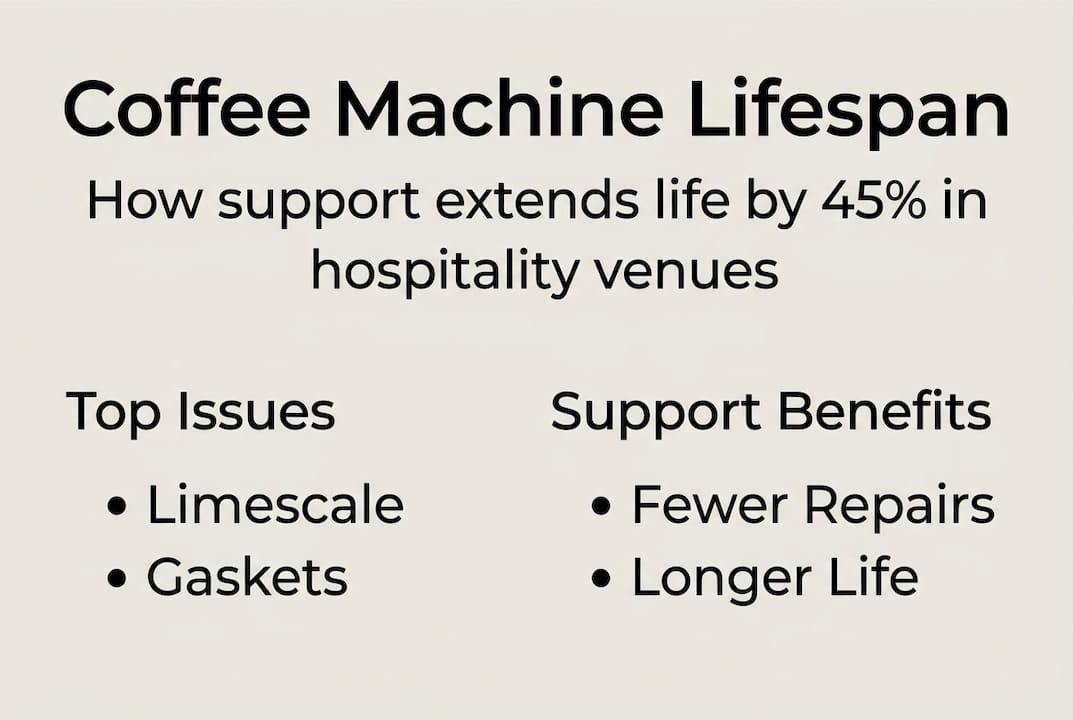
The data is striking. Preventive maintenance reduces downtime by 78%, extends machine lifespan by 45%, and can save over £25,000 per machine annually in avoided costs for high-volume venues. That is not a marginal improvement. That is a structural shift in how your business operates.
| Factor | Preventive maintenance | Emergency repair |
|---|---|---|
| Average cost per event | £200 to £500 per year | £130 to £185 per call-out |
| Typical downtime | Near zero | 4 to 24 hours |
| Guest experience impact | Minimal | Significant |
| Machine lifespan effect | Extended by up to 45% | Shortened by repeated stress |
| Predictability | High | None |
The guest experience column deserves particular attention. A machine failure during a Saturday morning rush does not just cost you that morning’s coffee revenue. It affects reviews, repeat visits, and the reputation your team has worked hard to build.
83% of commercial coffee machine failures are entirely preventable with basic, scheduled maintenance. That means the vast majority of emergency call-outs are avoidable costs.
Pro Tip: Schedule your preventive maintenance visits for mid-week, outside your busiest trading periods. Your technician can work without disruption, and your machine returns to peak condition before the weekend rush.
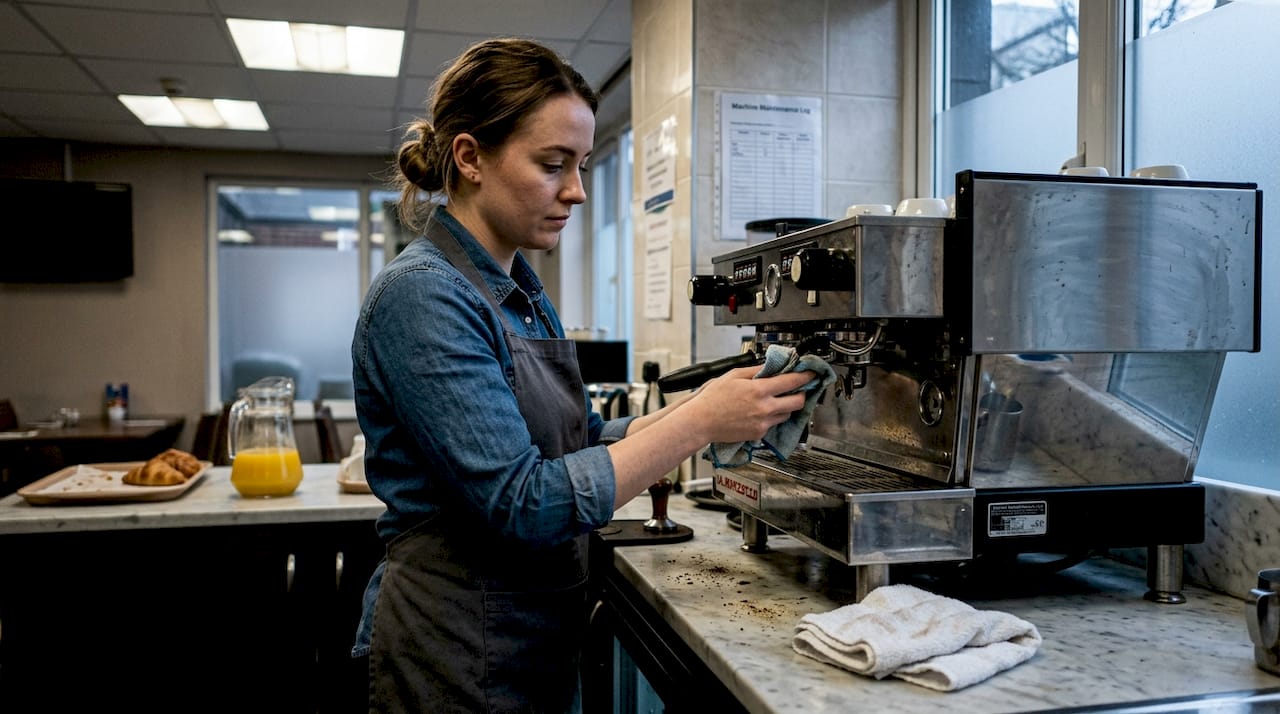
The lifecycle argument is equally compelling. A well-supported espresso machine can serve your venue reliably for eight to ten years. Without regular servicing, that same machine may struggle past four or five, requiring capital investment far sooner than planned. Exploring coffee machine maintenance contracts and understanding what a proper machine installation and setup service includes are sensible first steps for any venue reassessing its approach.
Common challenges: Limescale, user error, and capacity issues
Understanding why machines fail is as important as knowing how to fix them. The causes are well documented and, in most cases, entirely manageable with the right support in place.
42% of commercial coffee machine failures stem from limescale build-up, while 28% are caused by worn gaskets. The remaining failures split across user error, capacity overload, and outdated equipment.
| Cause of failure | Frequency | Primary prevention |
|---|---|---|
| Limescale build-up | 42% | Water filtration and descaling schedule |
| Worn gaskets and seals | 28% | Regular inspection and replacement |
| Staff misuse | 15% | Barista training and clear protocols |
| Capacity overload | 10% | Equipment review and upgrade planning |
| Outdated equipment | 5% | Lifecycle management and timely replacement |
Water quality is the single biggest variable that venue owners underestimate. Hard water areas, which cover much of Devon and Somerset, accelerate limescale deposits inside boilers, group heads, and steam wands. Without a proper filtration system matched to your local water supply, even a brand-new machine will degrade faster than it should.
Staff error is the second major risk. Busy services create pressure, and under pressure, shortcuts happen. Incorrect tamping, skipped backflushes, and improper milk texturing all place unnecessary stress on components. Good training does not just improve the quality of the drinks your team produces. It actively protects the equipment.
Capacity is a subtler problem. Many venues choose coffee machines based on their current volume, not their peak demand. A machine rated for 150 cups per day running at 220 during a summer Saturday is being pushed beyond its design limits regularly. That stress accumulates.
Compliance is also worth noting. PSSR (Pressure Systems Safety Regulations) boiler inspections are a legal requirement for commercial espresso machines, and venues that overlook them face both safety risks and potential insurance complications. A good support partner keeps you on the right side of these obligations automatically.
‘Old machines can cost twice as much to support and still leave you uncovered.’
Balancing automation with human expertise is a theme the future of hospitality coffee service addresses directly, and it applies to equipment decisions as much as staffing ones.
Beyond repairs: Training, technology, and tailored SLAs
Modern coffee support has moved well beyond the reactive call-out model. The most effective support packages now combine staff training, machine telemetry, and bespoke service level agreements (SLAs) into a joined-up system that prevents problems rather than simply responding to them.
Automation and telemetry reduce workload and errors, and tailored SLAs ensure that the support you receive matches your actual business needs rather than a generic template. As wage pressures increase in 2026, the ability to get more from existing equipment and staff becomes a genuine competitive advantage.
Here are the key features of an advanced support package worth looking for:
- On-site barista training covering technique, machine care, and drink consistency
- Machine telemetry that monitors performance data and flags issues before they become failures
- Bespoke SLAs aligned to your trading calendar, including seasonal peaks and quiet periods
- Rapid response lines with guaranteed call-back times during trading hours
- Regular supply reviews to ensure your coffee specification still fits your menu and customer base
- Compliance tracking to keep boiler inspections and safety checks current
Barista training deserves special emphasis. Investing in staff barista training is not simply about producing better espresso. It reduces machine wear, cuts waste, improves consistency, and gives your team confidence. Confident staff make fewer mistakes and stay in their roles longer, which matters when hospitality recruitment remains challenging.
Pro Tip: When negotiating an SLA, map it against your actual trading calendar. A venue that peaks in July and August needs faster response guarantees in those months, not in January. Build that into the agreement from the start.
For venues focused on improving hospitality coffee quality, the combination of trained staff and well-maintained equipment is where the biggest gains are found.
The overlooked advantage: Why true coffee support is a competitive edge
Here is the perspective most articles on this subject avoid. Coffee support is not a cost of doing business. It is one of the clearest differentiators available to hospitality venues right now, and most operators are leaving it completely untapped.
We see this regularly across the Southwest. Venues that invest in genuine support partnerships, not just a maintenance contract but training, telemetry, and a real relationship with their supplier, report less staff churn, stronger guest reviews, and fewer operational crises. That is not coincidence. It is the compounding effect of a system that works.
In 2026, with wage costs rising and customer expectations higher than ever, the venues that will stand out are those treating every element of their operation as a source of quality. Coffee is often a guest’s first and last impression of a venue. Getting it right, consistently, requires more than good beans. It requires a support structure built around your specific needs.
Building coffee expertise for hospitality into your operation is what separates a venue that serves coffee from one that is genuinely known for it. That distinction is worth far more than the cost of the support package that makes it possible.
Enhance your hospitality coffee service with tailored support
If this article has shifted how you think about coffee support, the next step is straightforward. At The Coffee Factory, we work with cafes, hotels, restaurants, and commercial venues across Devon and the wider Southwest to build support packages that fit your operation, not a generic template.
Our wholesale coffee services cover everything from freshly roasted supply through to equipment, barista training options, and maintenance planning. We are a family-run roastery that believes in genuine partnership, and our hospitality coffee solutions are designed to grow with your business. Get in touch and let’s build something that works properly for your venue.
Frequently asked questions
How does preventive maintenance save hospitality businesses money?
Preventive maintenance reduces downtime by 78% and can save over £25,000 per machine annually by eliminating emergency call-out costs, extending equipment lifespan, and protecting revenue during peak trading periods.
What are the most common coffee machine failures in hospitality?
The most frequent causes are limescale build-up at 42% and worn gaskets at 28%, with staff misuse and outdated equipment accounting for most of the remaining failures.
Why is barista training part of coffee support services?
Training reduces downtime and enhances service quality by equipping staff to operate and care for equipment correctly, cutting both machine wear and the inconsistency that drives guest dissatisfaction.
Recommended
- How to improve coffee quality in hospitality venues
- Types of coffee machines for hospitality success
- Coffee Machine Installation Service | Setup & Training | Devon Somerset
- Optimize restaurant coffee service for 2026 profitability
- Spülmaschinenfestigkeit bei Gläsern: 60% weniger Verschleiß – Shotglass24