
TL;DR:
- Coffee freshness depends on roast date, storage, and handling, not just brewing time.
- Proper storage in airtight, dark containers and FIFO stock rotation preserve coffee quality.
- Serving fresh coffee enhances customer satisfaction, loyalty, and reduces waste for hospitality businesses.
Fresh coffee is not simply coffee that was brewed five minutes ago. That misconception costs hospitality businesses more than they realise, because true freshness begins long before the espresso machine is switched on. It starts with the bean, the roast date, and every storage decision made between roastery and cup. For cafes, hotels, and restaurants across the southwest, understanding what freshness genuinely means is one of the most practical steps you can take to improve your coffee offering, protect your reputation, and keep customers coming back.
Table of Contents
- Understanding coffee freshness: what it really means
- Factors affecting coffee freshness in hospitality settings
- How to preserve coffee freshness: storage and handling protocols
- Freshness impact: benefits for hospitality businesses
- Our take: why coffee freshness is the secret ingredient to hospitality success
- Take your coffee freshness further with our solutions
- Frequently asked questions
Key Takeaways
| Point | Details |
|---|---|
| Freshness is about the bean | Coffee freshness begins with the roast and storage, not just brewing. |
| Storage makes a difference | Proper air-tight storage keeps coffee flavour and aroma optimal for weeks. |
| Hospitality benefits | Prioritising freshness increases customer satisfaction and repeat business. |
| Actionable protocols | Implement FIFO and regular audits for consistent coffee quality. |
Understanding coffee freshness: what it really means
Coffee freshness is a measure of how well a roasted bean retains its volatile aromatic compounds, the natural oils and gases that give coffee its distinctive flavour and scent. Immediately after roasting, beans release carbon dioxide in a process called degassing. During this window, typically two to seven days post-roast, the coffee is actually too gassy for optimal extraction. The sweet spot for most espresso blends sits between seven and twenty-one days after roasting, when degassing has settled and aromatic complexity is at its peak.
After that window, oxidation accelerates. Oxygen reacts with the oils in the bean, causing flavours to flatten and aromas to fade. What was once a vibrant, layered cup becomes dull and lifeless. For a hospitality business serving dozens or hundreds of coffees a day, this degradation is not abstract. It shows up in customer feedback, in the number of flat whites that go back to the bar, and in the reviews left online.
Common misconceptions about freshness include:
- Freshness equals recent brewing. Brewing a stale bean quickly does not restore its quality.
- Vacuum packaging guarantees freshness indefinitely. Packaging slows degradation but does not stop it.
- Dark roasts stay fresh longer. In fact, darker roasts have more surface oils exposed, making them more vulnerable to oxidation.
- Ground coffee is fine if used within a week. Ground coffee begins staling within hours, not days.
“The flavour potential of any coffee is fixed at the roast. Everything after that point is about preserving what already exists.”
As we often say, freshness starts with roast date, not just brewing. This is why sourcing from a roastery that can confirm roast dates and deliver on a reliable schedule matters so much. Understanding coffee quality in hospitality means accepting that the supply chain itself is part of the quality equation.
For hospitality businesses, the commercial stakes are real. A guest who receives a flat, stale espresso is unlikely to order a second. Worse, they may not return at all.
Factors affecting coffee freshness in hospitality settings
Having defined freshness, let’s explore what influences it most in hospitality environments. There are more variables at play than most venues account for, and each one compounds the others.
The single most important factor is the roast date, not the packaging date. These are not always the same. Some suppliers package coffee weeks after roasting, meaning the product arrives at your venue already past its prime. Always ask for the roast date specifically, and build your ordering schedule around it.
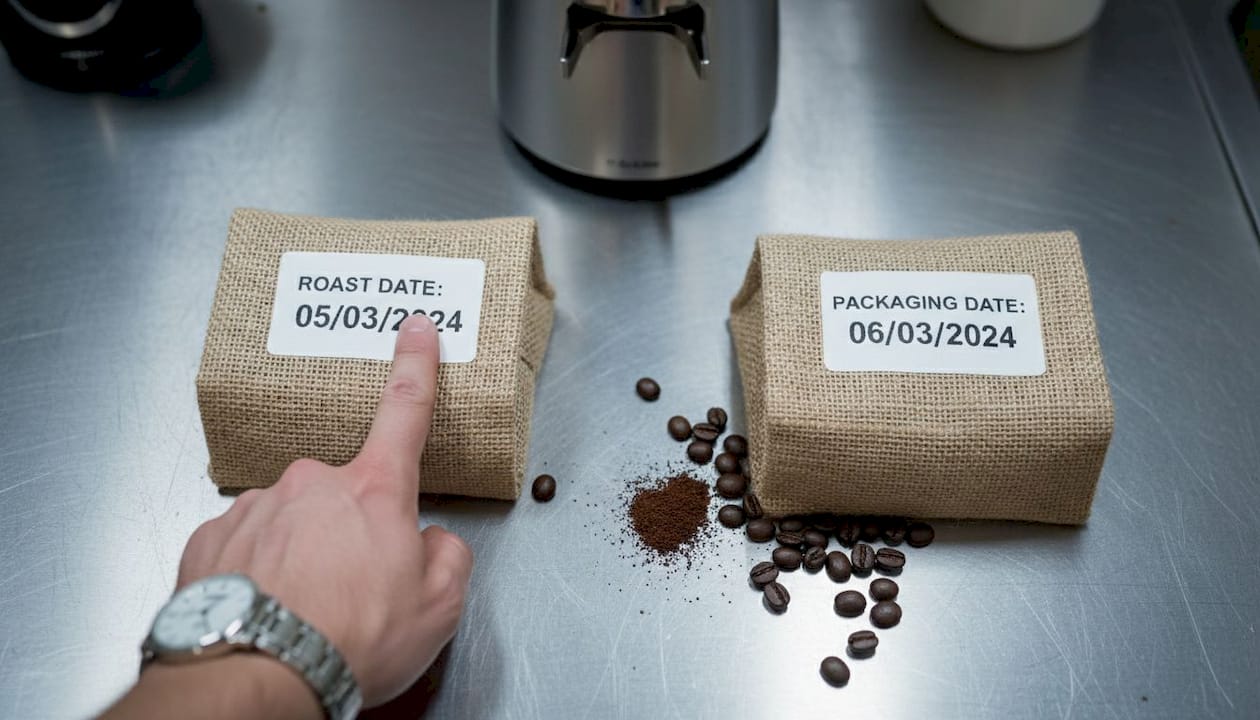
Bean type and blend composition also matter. Single-origin coffees tend to have more delicate aromatic profiles that fade faster. Blends, particularly those designed for espresso, are often formulated with stability in mind, making them more forgiving across a service window. However, no blend is immune to poor storage.
Environmental factors are the silent killers of coffee freshness:
- Oxygen exposure is the primary driver of staling. Every time a bag is opened, the clock speeds up.
- Moisture causes beans to absorb water, altering extraction and encouraging mould in extreme cases.
- Heat accelerates the chemical reactions that degrade flavour compounds.
- Light, particularly UV light, breaks down aromatic oils over time.
| Storage method | Freshness preservation | Recommended for |
|---|---|---|
| Room temperature, sealed bag | Good, up to 2-3 weeks | Daily use stock |
| Air-tight container, cool and dark | Very good, up to 4 weeks | Weekly stock rotation |
| Vacuum-sealed, cool and dark | Excellent, up to 6 weeks | Bulk or backup stock |
| Refrigeration (whole bean, sealed) | Moderate, risk of moisture | Not generally recommended |
| Freezing (whole bean, sealed) | Good for long-term only | Extended storage only |
Pro Tip: Never store your working supply of beans near an oven, dishwasher, or steam source. Even ambient heat from kitchen equipment is enough to accelerate staling significantly.
Proper storage can significantly prolong the life and quality of coffee, which is why we encourage every venue to review where and how their beans are kept as a first step. Pairing good storage habits with guidance on improving coffee quality and choosing coffee suppliers who prioritise roast-to-delivery speed gives your team the best possible foundation.
How to preserve coffee freshness: storage and handling protocols
Understanding the factors is key, but effective protocols put those insights into practice. The difference between a venue that consistently serves great coffee and one that struggles is often not the blend. It is the handling.
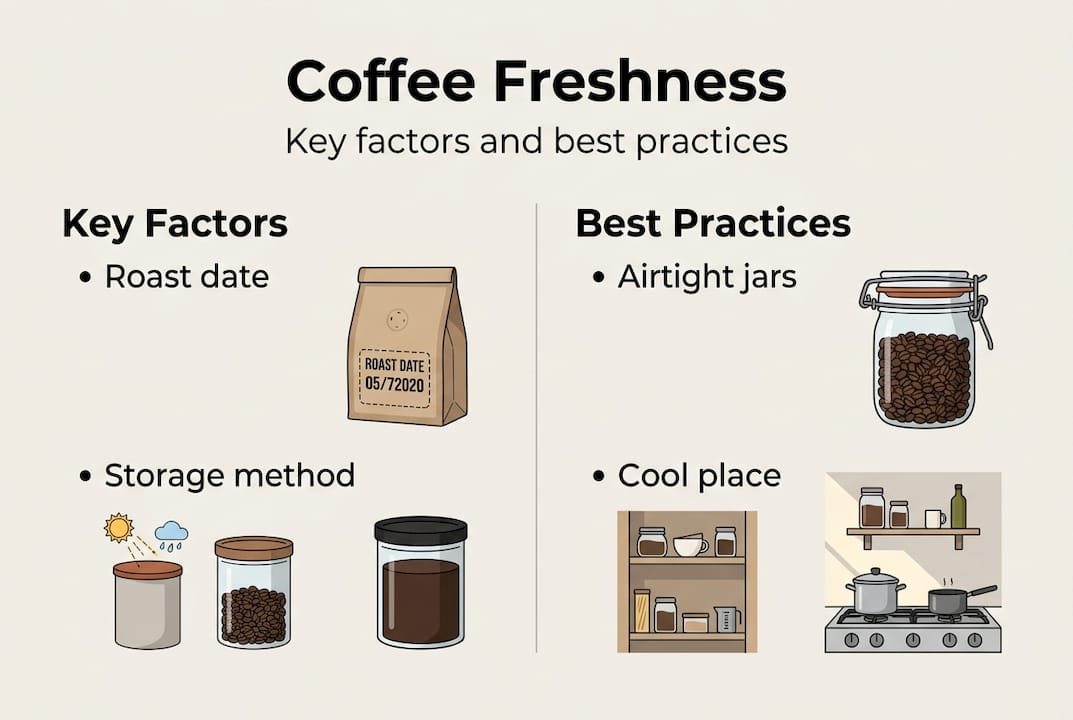
Start with your storage setup. Every venue should have dedicated, air-tight containers for working stock, kept in a cool, dry location away from direct sunlight and heat sources. Do not store beans in the original bag once it has been opened unless it has a resealable, one-way valve. Even then, transferring to a proper canister is preferable for daily use.
Key storage best practices:
- Use opaque, air-tight canisters with one-way CO2 valves to allow degassing without letting oxygen in.
- Keep storage areas at a consistent temperature, ideally between 15°C and 20°C.
- Never mix old and new stock in the same container. This is a common cause of inconsistent flavour.
- Label every container with the roast date and opening date so staff can track freshness at a glance.
Handling protocols are equally important. The FIFO method (first-in, first-out) is the gold standard in hospitality stock management, and it applies directly to coffee. Older stock should always be used before newer deliveries are opened. Conduct regular stock audits, ideally weekly, to identify any beans approaching the end of their optimal window.
| Coffee type | Unopened shelf life | Opened shelf life |
|---|---|---|
| Whole bean (sealed bag) | Up to 6 months | 2-4 weeks |
| Whole bean (air-tight canister) | Up to 6 months | 3-5 weeks |
| Ground coffee (sealed bag) | Up to 3 months | 1-2 weeks |
| Ground coffee (air-tight canister) | Up to 3 months | Up to 1 week |
Correct handling and storage directly impact flavour and aroma preservation, which is why we recommend building these protocols into your staff onboarding from day one. Investing in coffee expertise for hospitality and pairing it with informed decisions when choosing commercial coffee beans creates a consistent, repeatable quality standard your customers will notice.
Portion control also plays a role. Pre-weighing doses into individual portions and storing them in sealed containers reduces the number of times your main stock is exposed to air during a busy service.
Freshness impact: benefits for hospitality businesses
With storage sorted, it is crucial to grasp the direct and indirect business benefits of prioritising freshness. This is not just about taste. It is about what that taste does for your business.
The most immediate benefit is customer satisfaction. Fresh coffee produces a noticeably richer aroma, a more vibrant crema on espresso, and a cleaner, more complex flavour profile. Customers may not always be able to articulate why one cafe’s flat white tastes better than another’s, but they feel it. And they come back because of it.
“Coffee is often the last thing a guest experiences before leaving your venue. Make it count.”
Freshness also elevates the perceived value of your drinks. A guest who receives a beautifully aromatic, well-extracted coffee is far more likely to consider it worth a premium price point. This creates genuine upselling potential, whether that is moving customers toward single-origin filter options, premium espresso blends, or seasonal specials.
The business benefits stack up quickly:
- Higher customer satisfaction scores and more positive online reviews.
- Increased repeat visits driven by a consistent, memorable coffee experience.
- Stronger word-of-mouth referrals, particularly in tight-knit local communities across Devon, Somerset, and Cornwall.
- Reduced waste, because fresher stock used within its optimal window means fewer batches discarded due to poor flavour.
- Staff confidence, as baristas working with quality, fresh beans are more motivated and produce better results.
Pro Tip: Run a simple blind tasting with your team using coffee at different stages of freshness, from one week post-roast to four weeks post-roast. The difference is immediately apparent and becomes a powerful training tool.
A fresh coffee offering enhances customer loyalty and increases positive reviews, which is why we see freshness protocols as a direct investment in your venue’s reputation. Combining this with data-driven roasting insights means you are not guessing at quality. You are engineering it.
Our take: why coffee freshness is the secret ingredient to hospitality success
We have worked with cafes, hotels, and restaurants across the southwest for many years, and the pattern is consistent. The venues that serve the best coffee are rarely the ones with the most expensive equipment. They are the ones that take freshness seriously at every stage.
Most venues underestimate how much stale coffee is costing them. Not in wasted product, though that matters, but in missed opportunities. Every mediocre cup is a customer who might not return, a review that was never written, a word-of-mouth recommendation that never happened.
The venues we have seen transform their coffee offer most dramatically have done so through small, disciplined changes: tighter ordering schedules aligned to roast dates, proper storage containers, FIFO stock rotation, and regular tasting panels. That last point is one we feel strongly about. Encouraging your team to engage in professional coffee tasting builds a shared language around quality and keeps standards from drifting over time.
Freshness is not a luxury reserved for specialty coffee bars. It is the baseline every hospitality business should be working from.
Take your coffee freshness further with our solutions
If these insights have prompted you to look more closely at your current coffee setup, we are here to help. At The Coffee Factory, we roast in small batches from our Devon roastery and deliver fresh to hospitality businesses across the southwest, so you always know exactly when your beans were roasted.
You can explore our coffee blends to find the right fit for your venue, or learn more about our wholesale coffee services and how a tailored supply contract can take the guesswork out of freshness. We also offer barista training for staff to ensure your team has the skills to handle and serve coffee at its best. Let’s get brewing.
Frequently asked questions
How long does coffee stay fresh after roasting?
Freshness peaks within weeks of roasting, with most beans offering their best flavour between seven and twenty-eight days post-roast when stored in air-tight conditions away from moisture and light.
What is the ideal storage practice for coffee beans in hospitality venues?
Proper storage preserves bean quality most effectively when beans are kept in opaque, air-tight containers at a stable temperature between 15°C and 20°C, away from heat sources, direct light, and moisture.
Does grinding coffee in advance reduce its freshness?
Yes. Grinding increases oxygen exposure, dramatically accelerating staling, so grinding only as needed, ideally per dose or per service, is the best way to preserve flavour and aroma.
Can decaffeinated options offer the same freshness as regular coffee?
Quality decaf remains fresh through careful handling and correct storage, making it a fully viable option for hospitality venues that want to offer consistent quality across their entire coffee menu.