
TL;DR:
- Office coffee impacts staff wellbeing, productivity, retention, and client perceptions.
- Choosing local suppliers ensures fresher beans, faster service, and personalized support.
- Regular maintenance and supply review prevent issues and optimize office coffee quality.
Picture this: it’s Monday morning, the meeting room is full, and someone has just discovered the coffee supply ran out on Friday. Staff are restless, the mood dips, and a small oversight suddenly feels like a big problem. UK office workers consume 2 to 3 cups per person per day, making coffee one of the most consumed beverages in any workplace. Getting your office coffee supply right is not just about convenience. It directly shapes staff satisfaction, your company’s culture, and even how clients perceive you when they walk through the door. This guide covers every step, from estimating demand and choosing a supplier to troubleshooting common problems and making your supply more sustainable.
Table of Contents
- Why coffee matters in the modern office
- What you need for a successful office coffee supply
- Step-by-step: Setting up your office coffee supply
- Troubleshooting and optimising your coffee supply
- Rethinking office coffee: What most managers overlook
- How we can help with your coffee supply
- Frequently asked questions
Key Takeaways
| Point | Details |
|---|---|
| Understand your needs | Evaluate staff numbers and preferences to set the right order quantities and coffee types. |
| Select local suppliers | Partnering with Southwest UK roasters means fresher coffee and responsive service. |
| Follow a clear setup process | A step-by-step supplier approach ensures smooth installation and ongoing delivery. |
| Monitor and optimise | Check regularly for issues so your team enjoys consistently high-quality coffee. |
Why coffee matters in the modern office
Coffee is woven into the fabric of British working life. It punctuates the day, fuels conversations, and gives teams a reason to gather. But beyond the ritual, there is a genuine business case for investing in quality workplace coffee.
Consider the numbers. Office coffee accounts for 25% of total UK coffee consumption, and 41% of professionals drink three or more cups each working day. That is a significant volume, and it means the quality of what you serve matters enormously to the people drinking it.
The benefits of getting it right extend well beyond a pleasant brew:
- Staff wellbeing: A good coffee offering signals that you value your team’s comfort and experience at work.
- Productivity: Caffeine aside, the social ritual of making and sharing coffee creates natural breaks that support focus and reduce fatigue.
- Retention and recruitment: Workplace perks, including quality coffee, feature in employee satisfaction surveys and can tip the balance during recruitment.
- Client impressions: A well-presented coffee offering in your reception or meeting rooms communicates professionalism and attention to detail.
- Culture building: Shared coffee moments encourage informal collaboration and strengthen team relationships.
Small changes can make a noticeable difference here. Switching from instant to freshly roasted beans, for example, is one of the quickest wins available to any office manager. Understanding the benefits of local suppliers adds another layer of value, from fresher stock to faster response times when something goes wrong.
It is also worth thinking about variety. Not everyone drinks the same thing. Offering a decaf option, a milk alternative, and a range of roast profiles means more of your team feel considered. If you want to improve office coffee quality without overhauling your entire setup, starting with better beans and a consistent brewing method is the most impactful place to begin.
Now that we have set the context, let us look at what is needed to put a robust coffee supply in place.
What you need for a successful office coffee supply
With an understanding of why excellent coffee is valuable, let us break down what you will actually need to make it a reality in your workplace.
The starting point is always your office size. A team of ten has very different needs to a team of sixty. Use a simple calculation: multiply your headcount by two to three cups per person per day, then factor in client visits and meetings. This gives you a reliable weekly volume estimate.
| Office size | Est. daily cups | Suggested weekly order |
|---|---|---|
| Up to 15 staff | 30 to 45 | 1 to 2 kg beans |
| 16 to 40 staff | 48 to 120 | 2 to 4 kg beans |
| 41 to 80 staff | 123 to 240 | 4 to 8 kg beans |
| 80+ staff | 240+ | 8+ kg beans |
Beyond volume, you will need to think about equipment, consumables, and support:
- Espresso machine or bean-to-cup machine: Bean-to-cup suits most offices for ease of use; espresso machines suit environments with trained staff or a dedicated coffee point.
- Grinder: Essential if you are using whole beans with a traditional machine.
- Milk and alternatives: Oat, soya, and almond milk are now standard expectations in many workplaces.
- Cups and consumables: Reusable cups reduce waste; disposables suit high-traffic areas or client-facing spaces.
- Cleaning supplies: Descaler, cleaning tablets, and cloths keep machines running well.
- Ancillaries: Tampers, knock boxes, and milk jugs if you are running an espresso setup.
Choosing a local roaster for your supply makes a real difference. Southwest UK suppliers such as The Coffee Factory in Devon offer fresh roast and delivery cycles that national chains simply cannot match. Fresher beans mean better flavour and a more consistent cup.
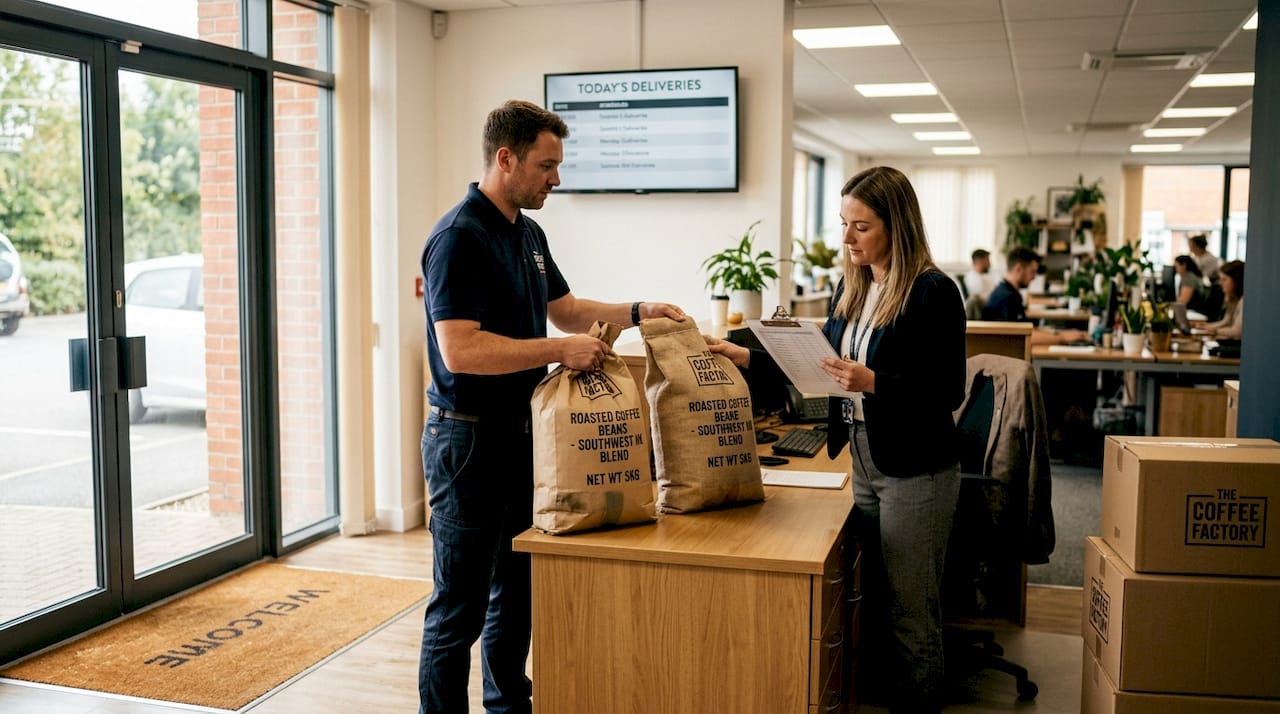
Pro Tip: Before signing any supply agreement, check what is included in the contract. A good office coffee delivery guide will help you understand delivery schedules, minimum orders, and lead times. Reviewing office coffee contracts in detail before committing protects you from unexpected costs down the line.
Step-by-step: Setting up your office coffee supply
Once requirements are clear, it is time to put your plan into action with a practical, step-by-step approach.
- Estimate your demand. Use the table above as your starting point. Add a 10 to 15% buffer for busy periods, client meetings, and new starters.
- Define your budget. Separate your equipment budget from your ongoing consumables spend. Equipment can often be leased or provided as part of a supply contract.
- Research and shortlist suppliers. Prioritise local roasters for freshness and responsiveness. Choosing a supplier with strong regional credentials means faster deliveries and a real person to call when you need support.
- Request samples. Any reputable roaster will provide sample bags before you commit. Involve your team in tasting to build buy-in and find the right profile.
- Agree your contract terms. Confirm delivery frequency, minimum order quantities, payment terms, and what happens if you need to scale up or down.
- Arrange installation and setup. Local roasters offer next-day delivery, training, and flexible contracts, making the setup process far smoother than working with a distant national supplier.
- Book staff training. Even a 30-minute session on correct machine use, cleaning, and basic brewing technique makes a measurable difference to cup quality and machine longevity.
- Set a review date. Plan a check-in after four to six weeks to assess whether volumes, variety, and delivery schedules are working well.
| Approach | Local roaster | National chain |
|---|---|---|
| Delivery speed | Next day | 3 to 5 days |
| Contract flexibility | High | Low to medium |
| Training support | On-site available | Limited |
| Freshness of roast | Days old | Weeks old |
| Personalised service | Yes | Rarely |
Pro Tip: Ask your supplier about their installation and setup service. A good partner will handle the technical side so your team can focus on what they do best.
Troubleshooting and optimising your coffee supply
Even well-run coffee supplies can hit snags, so here is how to spot and solve issues efficiently.
The three most common problems office managers face are stockouts, stale coffee, and machine breakdowns. Each has a straightforward fix once you know what to look for.
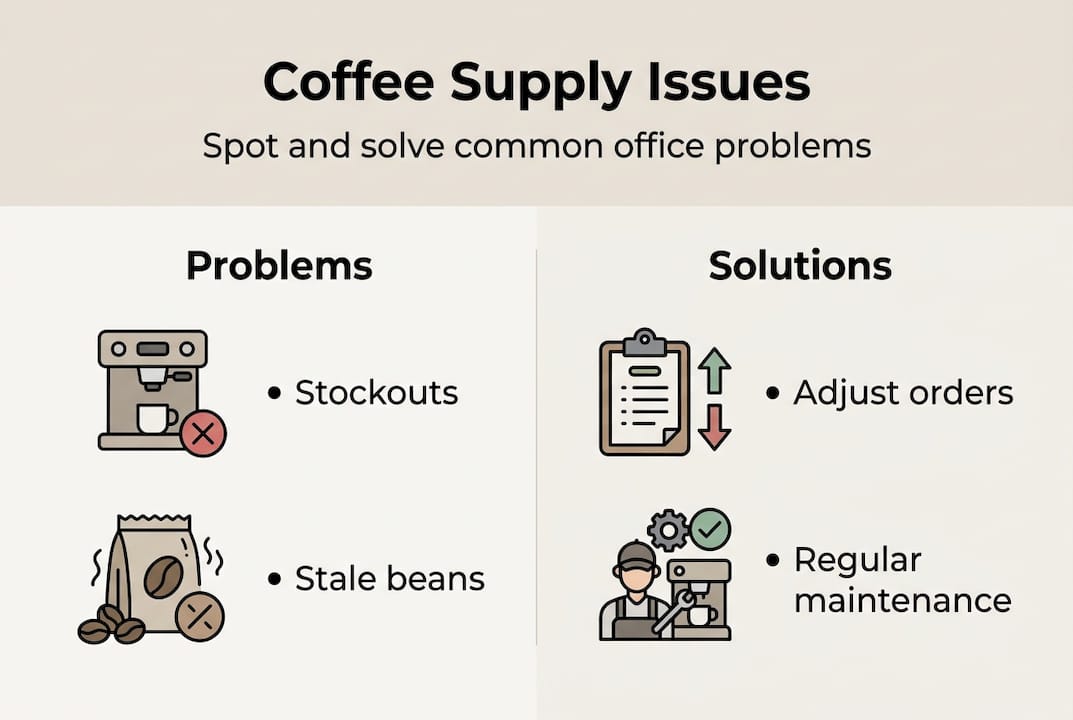
Stockouts usually happen when demand has grown but your order schedule has not kept pace. Review your volumes every quarter and adjust your standing order accordingly. A buffer stock of one extra week’s supply is a sensible safety net.
Stale coffee is often a sign that you are ordering too much at once or storing beans incorrectly. Coffee should be stored in an airtight container, away from direct light and heat. Order little and often rather than in bulk, and check roast dates on every delivery.
Machine breakdowns are disruptive but manageable. Keep a simple maintenance checklist on the wall near your machine:
- Daily: rinse group heads, empty knock box, wipe steam wand
- Weekly: run a cleaning cycle with tablets
- Monthly: descale and check water filter
- Quarterly: book a service check with your supplier
“41% of UK professionals drink three or more cups per day, meaning office coffee satisfaction directly drives repeat consumption and staff morale. A machine that is out of action is not just an inconvenience. It is a daily frustration for nearly half your team.”
When issues go beyond routine maintenance, contact your supplier promptly. A responsive local partner will often resolve problems within 24 hours. Streamlining your delivery schedule also reduces the risk of gaps in supply.
For offices looking to upgrade, sustainability is an increasingly important consideration. Switching to sustainable office coffee options, such as ethically sourced beans and compostable packaging, is a straightforward way to align your coffee supply with broader company values.
Rethinking office coffee: What most managers overlook
Most procurement decisions around office coffee focus on cost per cup and machine reliability. Both matter, but they miss the bigger picture.
We have seen offices transform their team culture simply by upgrading their coffee offering and, more importantly, by building a genuine relationship with their supplier. When you work with a local roaster rather than a faceless national account, you gain access to something that cannot be itemised on an invoice: real expertise, genuine flexibility, and a partner who wants your business to thrive.
Coffee is also a recruitment and retention tool that is chronically undervalued. Candidates notice the details during office visits. A well-equipped coffee station with quality beans sends a quiet but clear signal about how a business treats its people.
There is also the matter of sustainability. Many businesses have environmental commitments on paper but overlook the supply chain implications of their daily coffee order. Choosing a roaster with genuine local supplier partnerships and a transparent sourcing policy is one of the simplest ways to close that gap.
Our honest view: the offices that get the most value from their coffee supply are not those who spend the most. They are the ones who engage most actively with their supplier, ask questions, request training, and treat coffee as a living part of their workplace culture rather than a line item to be minimised.
How we can help with your coffee supply
At The Coffee Factory, we have spent years helping Southwest UK businesses build coffee supplies that genuinely work. From small teams in Devon to busy offices across Somerset and beyond, we understand what regional workplaces need: reliable delivery, freshly roasted beans, flexible contracts, and a team you can actually speak to.
Whether you are setting up from scratch or looking to improve what you already have, our wholesale coffee services are built around your needs. Explore our full coffee blends overview to find the right roast profile for your team, and do not forget to check our decaf coffee options for colleagues who prefer something without the caffeine. Let us get brewing together.
Frequently asked questions
How do I estimate how much coffee my office needs?
Multiply your staff count by 2 to 3 cups per person per day to get an accurate weekly order estimate, then add a small buffer for meetings and visitors.
What are the benefits of using a local coffee supplier in the Southwest UK?
Local roasters in the Southwest such as The Coffee Factory offer fresher beans, faster deliveries, and flexible contracts that are tailored to the needs of regional offices rather than national averages.
How often should an office schedule coffee deliveries?
Most offices find that weekly or bi-weekly deliveries keep supplies fresh and consistent, though flexible delivery schedules from local roasters mean you can adjust frequency as your needs change.
What should I do if our machine breaks down?
Contact your supplier immediately for support, and keep a simple daily and weekly maintenance checklist in place to catch minor issues before they become bigger problems.
How can we make our office coffee supply more sustainable?
Choose a supplier with a clear environmental commitment and opt for ethically sourced beans with eco-friendly packaging to align your coffee supply with your company’s sustainability goals.