
Picture a busy Saturday morning in your café or hotel. The breakfast rush is in full swing, your team is firing on all cylinders, and then someone checks the stockroom: you’re nearly out of coffee. That sinking feeling is entirely avoidable. This guide walks you through every stage of an efficient coffee delivery process, from choosing the right supplier to managing stock levels and handling seasonal surges. Get it right, and you’ll serve consistently excellent coffee, reduce operational stress, and give your guests the experience they came for.
Table of Contents
- Understanding the coffee delivery challenges in Southwest UK hospitality
- What you need to streamline your coffee delivery
- Step-by-step: How the coffee delivery process works
- Inventory management and ensuring continual freshness
- Handling urgencies, seasonal changes, and support services
- Coffee delivery solutions for every Southwest UK hospitality need
- Frequently asked questions
Key Takeaways
| Point | Details |
|---|---|
| Local delivery is crucial | Personal delivery from nearby roasters guarantees peak freshness and rapid response to demand. |
| Flexible, tech-enabled ordering | Online portals and real-time inventory tools simplify reordering and accommodate seasonal surges. |
| Maintain ideal stock levels | Keep 1-2 weeks’ coffee supply for uninterrupted operations without waste or shortage. |
| Plan for emergencies | Work with suppliers offering emergency deliveries and equipment support to avoid service disruption. |
| Quality checks matter | Always inspect coffee on arrival and prioritise climate-controlled transport for best results. |
Understanding the coffee delivery challenges in Southwest UK hospitality
Running a hospitality business in the Southwest means navigating a genuinely unpredictable supply landscape. Tourism peaks in Devon, Somerset, and Cornwall can send demand soaring overnight, while rural locations add extra complexity to logistics. When your coffee supply is inconsistent, the knock-on effect reaches every corner of the guest experience.
The three issues that come up most often for Southwest UK hospitality businesses are:
- Seasonal surges that outpace standing orders, leaving kitchens short during peak weeks
- Unpredictable delays from national courier networks, particularly during bank holidays
- Quality inconsistency when coffee sits in a depot for days before reaching your venue
These aren’t minor inconveniences. Delays affect 12% of shipments and logistics costs have risen 7% since 2023, squeezing margins that are already tight. Understanding the premium coffee benefits for hospitality businesses makes it even clearer why supply reliability is non-negotiable.
Freshness is the factor that separates a memorable cup from a forgettable one. Coffee that has been roasted, warehoused, and couriered through a national network loses volatile aromatic compounds with every passing day. Your guests may not articulate why the coffee tastes flat, but they’ll notice.
“Direct local delivery increases customer satisfaction by 10–15% compared to standard courier services, largely because freshness and communication are far easier to maintain.”
The solution isn’t simply ordering more coffee. It’s building a delivery process that accounts for your venue’s rhythm, your region’s quirks, and your guests’ expectations. Our blog covers many of these regional considerations in more detail.
What you need to streamline your coffee delivery
Before you can optimise your delivery process, you need the right foundations in place. Think of this as your pre-flight checklist before the orders start flowing.
The core prerequisites are straightforward:
- A trade account with a local or regional roaster
- Access to an online ordering portal for scheduling and account management
- A clear understanding of minimum order quantities and lead times
- Designated storage space that’s cool, dry, and away from strong odours
Local roasters offer next-day delivery, scheduled weekly or bi-weekly, with account setup and clearly defined minimum orders. That predictability alone is worth the switch from ad hoc purchasing.
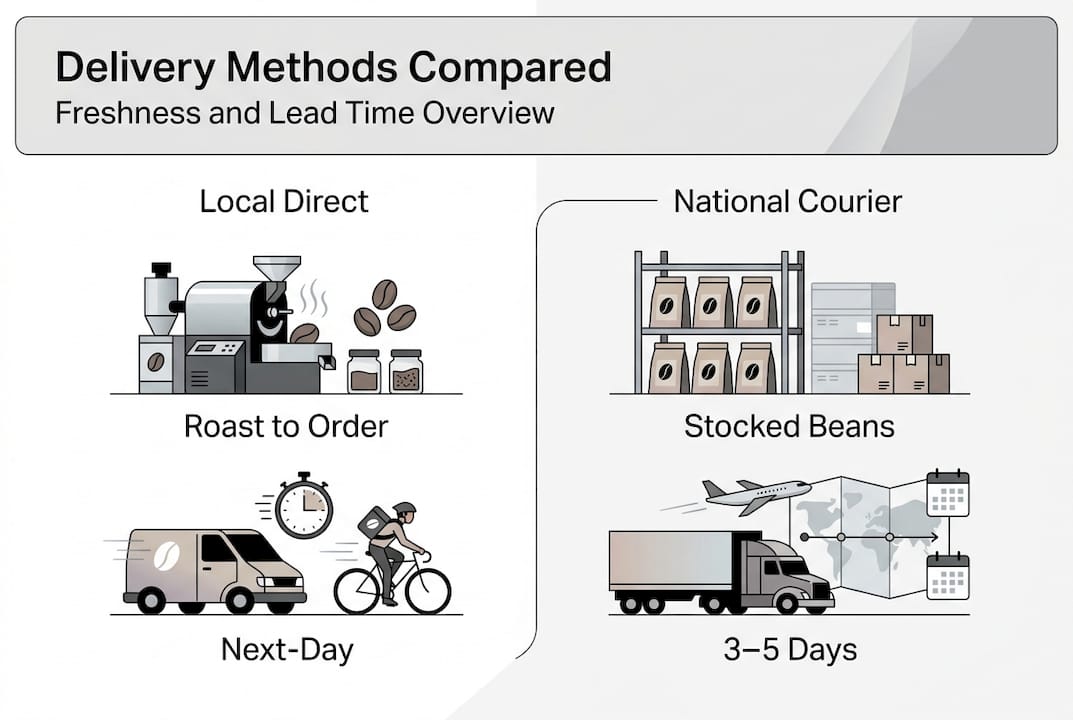
When comparing your options, the difference between local direct delivery and a national courier service is significant:
| Factor | Local direct delivery | National courier |
|---|---|---|
| Freshness | Roasted to order, delivered within days | May sit in depot for 3–7 days |
| Speed | Next day to 2–5 days | 2–7 days, variable |
| Personalisation | Account manager, tailored scheduling | Standardised service |
| Quality assurance | Staff deliver directly, feedback loop | No direct quality oversight |
| Flexibility | Seasonal adjustments, emergency options | Fixed terms, volume penalties |
Your supplier should also offer climate-controlled delivery to protect beans from heat and humidity during transit. This matters more than many managers realise, particularly in summer when van temperatures can spike.
Pro Tip: If your venue is in Devon or the wider Southwest, choosing a Devon-based roaster keeps your supply chain short, your coffee fresher, and your response times faster when something goes wrong.
Look beyond the beans themselves. Suppliers who offer barista training and equipment maintenance as part of the partnership add genuine operational value. Explore innovative coffee menu ideas and consider how mastering coffee expertise can differentiate your offering once the supply side is sorted.
Step-by-step: How the coffee delivery process works
Once your account is set up, the delivery process itself should feel routine. Here’s how it works from start to finish:
- Register your trade account with your chosen roaster, providing venue details, estimated weekly usage, and preferred delivery days.
- Select your coffee range, whether that’s a house espresso blend, single origins, decaf, or a combination.
- Choose your delivery schedule, typically weekly or bi-weekly, aligned with the roastery’s roast days.
- Confirm your order via the online portal, adjusting quantities based on upcoming demand.
- Receive your delivery, ideally from a member of the roastery’s own team rather than a third-party courier.
- Check quality on receipt: inspect packaging, check roast date, assess aroma, and log the delivery.
Hospitality businesses order via portal and receive freshly roasted beans within 2–5 days, with staff delivering directly in many cases. That direct delivery model creates a feedback loop that couriers simply can’t replicate.
Here’s a practical reference for Southwest UK delivery expectations:
| Delivery type | Typical lead time | Minimum order | Delivery days |
|---|---|---|---|
| Standard scheduled | 2–5 days post-roast | 6kg | Thursday/Friday |
| Weekly account | 1–2 days | Variable | Agreed in advance |
| Emergency/urgent | Same day or Saturday | Supplier dependent | By arrangement |
Minimum order quantities such as 6kg are typical for wholesale accounts, with Thursday and Friday being common delivery days to set venues up for the weekend rush.
Pro Tip: Ask your roaster which days they roast and schedule your deliveries for 24–48 hours afterwards. You’ll receive coffee at its most vibrant, before degassing is complete and before any staleness sets in.
The The Coffee Factory trade portal makes account management straightforward, with order history, scheduling tools, and direct contact options all in one place. Browse the full coffee bags and pods range to plan your menu, and revisit coffee supply chain basics if you want a deeper understanding of how your beans travel from roaster to cup.
Inventory management and ensuring continual freshness
Even the most reliable delivery schedule can’t protect you if your stock management is reactive rather than planned. Par-level management is the answer. A par level is simply the minimum quantity of coffee you need on hand at any given time to cover your usage until the next delivery arrives, plus a buffer.
Best practice is maintaining 1–2 weeks’ worth of coffee beyond your delivery lead time. That buffer prevents stockouts without tipping into waste territory, which matters when you’re buying freshly roasted beans with a finite peak window.
Useful tools for tracking your coffee inventory include:
- EPOS or POS systems with stock tracking modules integrated into your till
- Simple spreadsheet dashboards updated weekly with usage and delivery data
- Supplier portals that show order history and flag when reorders are due
- Real-time stock apps such as MarketMan or Lightspeed for larger operations
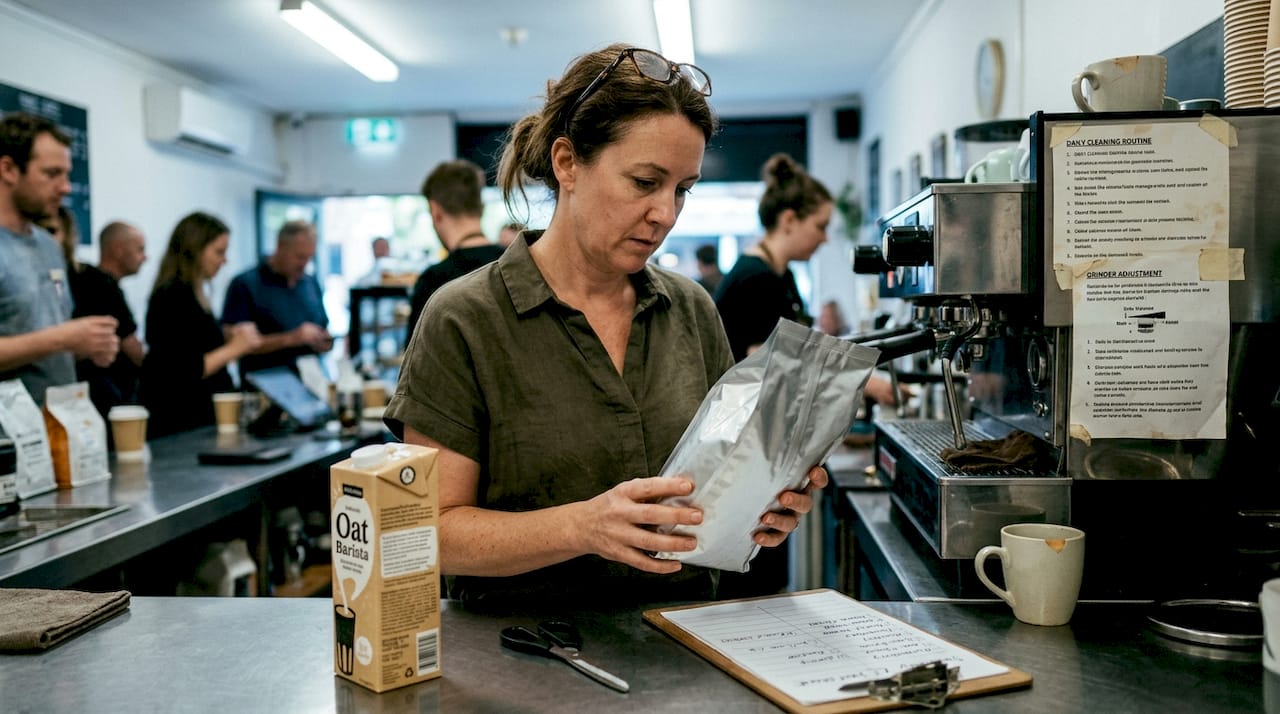
Quality checks on delivery are just as important as the ordering process. When your delivery arrives, check the roast date on every bag, assess the aroma when you open the first one, and inspect packaging for any damage or moisture. Log it all. If something is off, your supplier needs to know immediately.
Pro Tip: The peak freshness window for roasted coffee is 7–21 days post-roast. Structure your delivery schedule so that you’re never serving coffee outside that window. Smaller, more frequent orders beat large bulk deliveries for quality every time.
Seasonal trends are particularly relevant in the Southwest. Tourism peaks between May and September can double your coffee usage in a matter of weeks. Monitor your sales data from previous years and adjust your standing orders proactively rather than reactively. You can optimise your restaurant coffee service further by aligning your menu and stock with seasonal demand patterns. For a broader view, revisit stock chain basics to understand how upstream factors affect your supply.
Handling urgencies, seasonal changes, and support services
Even the best-planned supply chain hits a wall occasionally. A supplier delay, an unexpected event booking, or a sudden spike in footfall can leave you scrambling. Having a plan for these moments is what separates resilient operations from stressed ones.
Flexible contract options are essential for Southwest UK hospitality, where seasonal fluctuations are a fact of life. A good supplier will allow you to scale orders up or down without penalties, accommodating the tourism highs of summer and the quieter winter months without locking you into fixed volumes.
For genuine emergencies, here’s what to arrange in advance:
- Confirm your supplier’s emergency delivery policy before you ever need it
- Identify a Saturday courier option for weekend crises
- Keep a small emergency reserve of vacuum-sealed coffee for genuine worst-case scenarios
- Have a secondary local supplier as a backup, particularly for high-volume periods
“Some suppliers offer a Saturday courier for emergencies and apply no volume penalties for seasonal changes, making it far easier to manage the unpredictability of Southwest UK hospitality.”
Barista training and equipment maintenance are often overlooked as part of the supplier relationship, but they add real value. Partner support may include barista training and equipment maintenance, reducing your reliance on external contractors and keeping your team confident behind the machine. Explore barista training for staff and ask about emergency repair service options when setting up your account. These services transform a transactional supplier relationship into a genuine operational partnership.
Coffee delivery solutions for every Southwest UK hospitality need
If this guide has highlighted gaps in your current coffee supply process, the good news is that the right partner can address all of them in one conversation. At The Coffee Factory, we work with cafés, hotels, restaurants, and offices across Devon and the wider Southwest, providing freshly roasted coffee with the kind of personal service that national wholesalers simply can’t match.
Our wholesale services overview covers everything from flexible delivery scheduling to tailored contracts and equipment support. Browse our coffee blends overview to find the right roast profile for your venue, whether you need a bold espresso blend, a smooth decaf, or something more adventurous. We’re proud to be a local, family-run roastery, and we’d encourage you to choose local Devon suppliers for the freshness, flexibility, and genuine support that your business deserves. Get in touch to set up a trade account and start serving better coffee from your very next delivery.
Frequently asked questions
How quickly can coffee be delivered to hospitality venues in Southwest UK?
Most local roasters offer next-day or 2–5 day delivery after roasting, on weekly or bi-weekly schedules across Devon, Somerset, and Dorset to ensure freshness.
What is the ideal stock level to maintain for peak coffee freshness?
Maintaining 1–2 weeks’ stock beyond your delivery lead time prevents stockouts while keeping coffee within its optimal freshness window.
Can emergency or weekend coffee deliveries be arranged?
Yes. Some suppliers offer a Saturday courier for emergencies or same-day service for urgent situations in the Southwest region, so it’s worth confirming this when setting up your account.
How do I ensure quality is maintained during the delivery process?
Choose suppliers using climate-controlled handling and direct staff delivery, and always inspect roast dates, packaging, and aroma when your order arrives.
Is it better to order in bulk or with frequent small deliveries?
Smaller, more frequent deliveries are preferable because 7–21 days post-roast is the peak freshness window, and bulk orders risk coffee going stale before it’s used.