
TL;DR:
- Genuine B2B coffee supply offers sourcing, equipment, training, and ongoing support tailored to hospitality needs.
- Local roasters ensure freshness, fast delivery, and flexibility, vital during seasonal peaks and demand fluctuations.
- Building strong supplier relationships provides operational stability, quality control, and compliance with emerging regulations.
Not all wholesale coffee suppliers are the same. Many hospitality businesses in Southwest UK discover this the hard way, settling for inconsistent roasts, unreliable deliveries, or contracts that leave them exposed during peak season. True B2B coffee supply is far more than a sack of beans on a doorstep. It is the wholesale provision of carefully sourced blends, specialist equipment, barista training, and ongoing support, all tailored to your venue’s specific needs. This article walks you through every layer of B2B coffee supply, from supply chain fundamentals to local roaster advantages, equipment choices, and regulatory compliance, so you can make confident, informed decisions for your business.
Table of Contents
- What is B2B coffee supply for hospitality?
- Inside the coffee supply chain: From farm to cup
- Local roasters in Southwest UK: Freshness and tailored support
- Choosing beans, equipment, and support: Operational gains
- Managing contracts, regulations, and edge cases
- Why relationship-based B2B coffee procurement transforms hospitality success
- Explore tailored B2B coffee solutions for Southwest UK hospitality
- Frequently asked questions
Key Takeaways
| Point | Details |
|---|---|
| B2B coffee supply defined | Wholesale coffee supply covers beans, blends, equipment, training, and support specifically tailored for hospitality businesses. |
| Direct trade boosts quality | Direct sourcing improves quality control and delivers up to 15% higher customer satisfaction for hospitality venues. |
| Local roasters offer advantages | Southwest UK roasters provide fresh coffee, flexible contracts, rapid delivery, and expert support services. |
| Flexible contracts for seasonality | Choose contracts that adapt to tourism peaks and regulatory changes to minimise risk and maximise business continuity. |
| Equipment and support matter | Investing in premium equipment and ongoing support cuts labour costs and improves service consistency. |
What is B2B coffee supply for hospitality?
At its core, B2B coffee supply means one business supplying another with everything required to serve consistently excellent coffee. For hospitality operators, that scope is broad. It is not simply about purchasing beans in bulk. A genuine B2B coffee partner provides a full ecosystem of products and services designed around your operation.
According to the business coffee supply guide UK, B2B coffee supply includes beans, blends, equipment, training, and tailored services, all working together to protect your quality and reputation. This matters enormously in a competitive hospitality market where a single bad cup can cost you a returning guest.
For hotels, cafes, and restaurants across Devon, Cornwall, and Somerset, the components of a strong B2B coffee relationship typically include:
- Freshly roasted beans and house blends matched to your customer profile
- Commercial espresso machines and grinders, either purchased or leased
- On-site barista training for front-of-house and kitchen staff
- Technical support and machine servicing to minimise downtime
- Reliable scheduled delivery, often weekly or fortnightly
- Flexible contract terms that accommodate seasonal trading patterns
For a foodservice coffee guide SW UK perspective, the distinction between a transactional supplier and a genuine B2B partner becomes clear quickly. A transactional supplier ships product. A B2B partner understands your busiest months, your staff turnover, your water hardness, and your guest expectations.
“The best B2B coffee relationships are built on shared goals, not just shared invoices. When your supplier understands your business, quality becomes a standard rather than a surprise.”
For Southwest UK hospitality businesses, where tourism peaks are sharp and guest expectations are high, this depth of service is not a luxury. It is operational infrastructure. Getting it right from the start protects your margins, your reputation, and your team’s confidence behind the counter.
Inside the coffee supply chain: From farm to cup
Understanding where your coffee comes from is not just an ethical concern. It is a procurement strategy. The coffee supply chain involves 7 stages and 4 to 8 weeks of transit, with up to 7 intermediaries adding costs and quality risks at every step. Each hand the coffee passes through introduces potential for inconsistency, price inflation, and reduced traceability.
The typical journey looks like this:
- Farmer harvests and processes the cherry
- Collector aggregates from multiple smallholders
- Miller hulls and grades the green bean
- Exporter manages logistics and documentation
- Importer receives and warehouses in the destination country
- Roaster transforms green bean into the finished product
- Hospitality end-user serves the final cup
Each stage adds time, cost, and a degree of separation from the origin. The alternative is direct trade, where roasters build relationships directly with farmers or cooperatives, bypassing several intermediaries. Direct trade sourcing improves quality control and customer satisfaction by 10 to 15%, because the roaster controls more of the quality journey.
| Sourcing model | Cost transparency | Quality control | Traceability | Flexibility |
|---|---|---|---|---|
| Commodity trading | Low | Variable | Minimal | High volume |
| Direct trade | High | Strong | Full | Limited volume |
| Blended approach | Medium | Good | Partial | Moderate |
For hospitality operators, the practical implication is this: ask your supplier how they source. A roaster with B2B coffee expertise will answer confidently, with detail about origin relationships and quality benchmarks. A commodity trader will give you a vague answer and a low price.
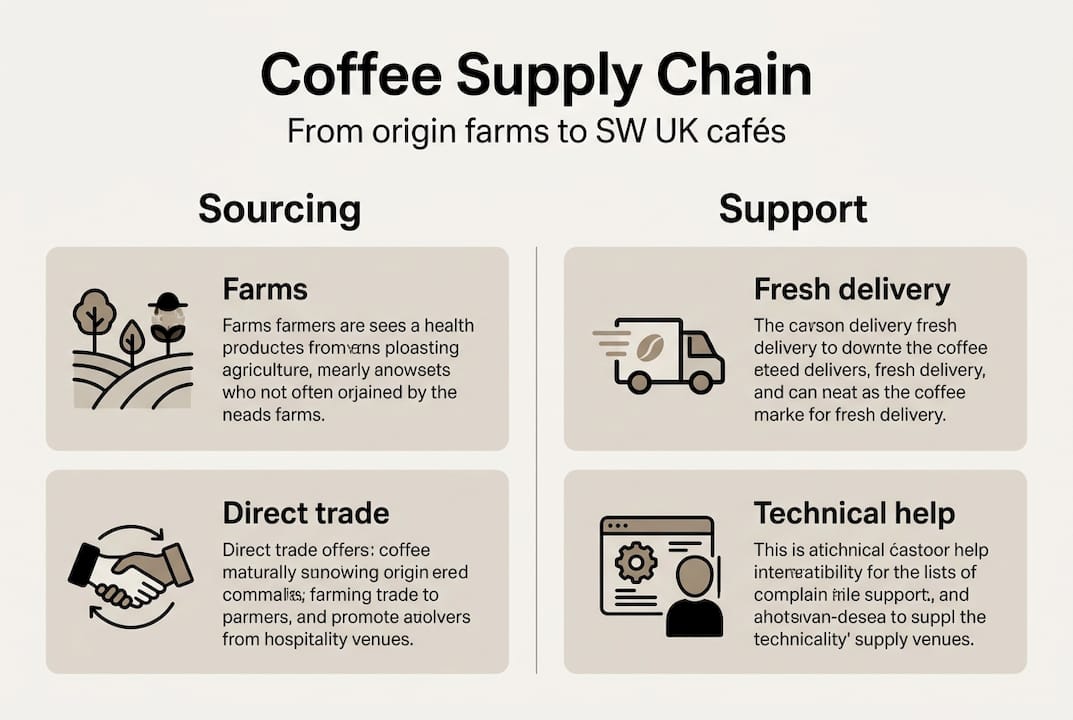
Strong B2B business collaboration between roasters and hospitality businesses also creates priority access during supply disruptions, something commodity buyers rarely enjoy.
Pro Tip: Ask your roaster which farms or cooperatives supply your house blend. If they cannot tell you, your quality control depends entirely on market luck rather than craft.
Local roasters in Southwest UK: Freshness and tailored support
Local roasters offer something a national distributor simply cannot: proximity, speed, and genuine investment in your success. Local roasters like The Coffee Factory provide fresh weekly roasts, rapid delivery, training, leasing, and flexible contracts, all within a relationship that grows with your business.
Freshness is the most immediate advantage. Coffee degasses for several days after roasting and reaches peak flavour within two to four weeks. When your roaster is in Devon and you are in Exeter or Truro, next-day delivery of a fresh roast is entirely realistic. A national distributor warehousing coffee for weeks cannot match that.
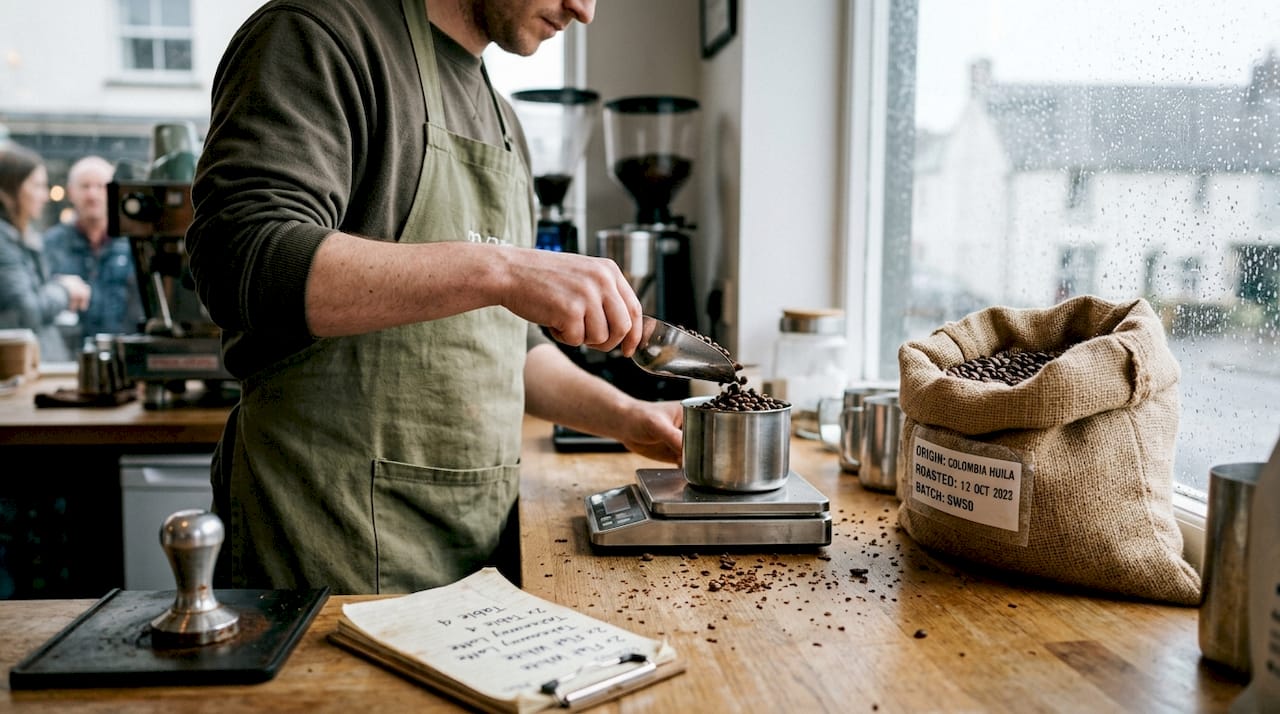
The UK coffee industry continues to grow, with the sector generating significant import volumes and regional market share expanding year on year. Southwest UK, driven by tourism and a thriving independent hospitality scene, is one of the most active regional markets in England.
Local roasters serving this market typically offer:
- Weekly or fortnightly fresh roast delivery within a defined radius
- Machine leasing and maintenance packages to reduce capital outlay
- On-site barista training tailored to your team’s skill level
- Emergency supply options for unexpected demand spikes
- Seasonal blend rotations to keep your menu interesting
For venues looking to elevate guest experience, the combination of freshness and support makes a measurable difference. Guests notice the difference between a stale espresso and a well-extracted, freshly roasted cup. Your team notices the difference between guessing at technique and receiving structured training.
Reliable Southwest UK coffee delivery is particularly valuable during the summer tourism peak, when demand can double or triple with little warning. Local roasters with flexible capacity can respond. A distant warehouse cannot.
For contract structure, coffee contracts in Southwest UK should reflect your trading reality, with seasonal volume adjustments built in rather than bolted on as exceptions.
Pro Tip: Negotiate emergency supply terms into your contract before you need them. A single sold-out weekend during peak season costs far more than the small premium for priority stock access.
Choosing beans, equipment, and support: Operational gains
The decisions you make about beans, machines, and support services have a direct impact on your daily operations, your staff confidence, and your bottom line. Getting these choices right is not complicated, but it does require a structured approach.
Start with your bean selection. Consider these factors in order:
- Origin character: Single origins offer traceability and story, blends offer consistency and cost control
- Roast profile: Lighter roasts suit filter and pour-over; medium to dark roasts suit espresso-based drinks
- Volume requirements: Match your weekly throughput to minimum order quantities
- Seasonal variation: Plan for a summer blend and a winter blend if your menu changes
For detailed guidance, the how to choose commercial coffee beans resource covers this in full. Pairing the right bean with the right machine is equally important.
Equipment choices shape your workflow more than most operators realise. A well-specified espresso machine reduces extraction variables, speeds up service, and reduces the skill burden on less experienced staff. Premium equipment reduces labour costs by 25%, and regular maintenance costing £200 to £800 prevents major repairs that can shut down your coffee service entirely.
Explore top examples of coffee equipment to understand which machine types suit different service volumes and venue styles.
Key support services to factor into your annual planning:
- Quarterly machine servicing to maintain extraction consistency
- Refresher barista training after staff changes or menu updates
- Water filtration assessment especially in hard water areas of Devon and Cornwall
- Seasonal stock planning to avoid shortfalls in July and August
Think of your coffee operation as a system. Every element, bean, grinder, machine, water, and barista, must work together. A weak link in any one area undermines the rest.
Managing contracts, regulations, and edge cases
A robust B2B coffee supply arrangement does not just cover what happens on a normal trading day. It protects you when things get complicated, whether that is a tourism surge, a regulatory change, or an unexpected supply disruption.
Flexible contracts are essential for Southwest UK hospitality businesses. Seasonal volume fluctuations require flexible contracts with minimum orders as low as 6kg, without penalties for adjusting volume between seasons. If your supplier insists on rigid monthly volumes, you will either over-order in January or under-supply in August.
Key contract considerations include:
- Minimum order flexibility: Ability to scale down in off-peak months without financial penalty
- Emergency supply clauses: Guaranteed access to additional stock within 24 to 48 hours
- Price review periods: Transparent review cycles tied to green bean market movements
- Exit terms: Clear, fair terms if your business needs change
On the regulatory side, 2026 brings continued focus on the EU Deforestation Regulation (EUDR). This legislation requires that all coffee imported into the EU must be accompanied by farm geolocation data and proof that it was grown on land free from deforestation after December 2020. For UK businesses sourcing from EU-based importers, EUDR compliance is increasingly a practical requirement.
Your supplier should be able to provide full documentation. If they cannot, your supply chain carries regulatory risk.
“Compliance is not a burden. It is a signal that your supplier takes quality and ethics seriously at every stage of the chain.”
For businesses committed to sustainability, working with an eco-friendly coffee supplier ensures your sourcing aligns with your brand values. And for venues that want to keep menus fresh, seasonal coffee specials offer a simple way to add interest without operational complexity.
Hard water is a practical edge case that Southwest UK operators often overlook. Limescale build-up in espresso machines accelerates wear and distorts extraction. A local supplier who knows your area will flag this immediately and recommend appropriate filtration.
Why relationship-based B2B coffee procurement transforms hospitality success
Most hospitality operators approach coffee procurement the same way they approach buying napkins: find the lowest cost per unit, place the order, move on. We think this is the wrong frame entirely.
Relationship-based procurement mitigates price volatility, ensures priority access, and creates the kind of transparency that commodity buying never delivers. When green bean prices spike due to a Brazilian frost or a shipping disruption, your supplier will protect loyal partners first. Transactional buyers get the price increase and a back-order notice.
The deeper benefit is knowledge transfer. A roaster who knows your venue, your team, and your guest profile will proactively suggest a blend adjustment, flag a new origin that suits your menu, or alert you to a regulatory change before it becomes your problem. That is not a service you can buy at commodity rates.
For hospitality coffee solutions that genuinely serve your business, the relationship is the product. Invest in it accordingly.
Explore tailored B2B coffee solutions for Southwest UK hospitality
If this article has clarified what genuine B2B coffee supply looks like, the next step is finding a partner who delivers it consistently. We work with cafes, hotels, restaurants, and offices across Devon and the wider Southwest, providing freshly roasted coffee, flexible contracts, barista training, and equipment support, all built around your specific operation.
Explore our full wholesale coffee services overview to see how we support hospitality businesses at every stage. If your team needs skills development, our barista training for staff programme is designed for real-world hospitality environments. And if you are considering a local partner, find out why so many venues choose local Devon suppliers for reliability, freshness, and genuine support. Let’s get brewing.
Frequently asked questions
How do I select the best local B2B coffee supplier for my hospitality venue?
Prioritise freshness, support services, contract flexibility, and proven regulatory compliance. Local roasters provide fresh weekly roasts, next-day delivery, training, leasing, and flexible seasonal contracts that national distributors rarely match.
What are the main benefits of direct trade coffee sourcing?
Direct trade delivers superior quality control, full traceability, and 10 to 15% higher customer satisfaction compared to commodity trading, because fewer intermediaries means more control over quality at every stage.
What can I do about seasonal demand fluctuations in my hotel or café?
Opt for flexible supply contracts with minimum orders as low as 6kg and no volume penalties, and ensure your supplier offers emergency stock access during peak trading periods.
How does equipment choice affect operational costs?
Premium equipment lowers labour costs by 25%, and budgeting £200 to £800 for regular maintenance prevents major breakdowns that can halt your coffee service at the worst possible moment.
What new regulations must I consider for coffee supply in 2026?
Ensure your supplier can provide EUDR farm geolocation data and proof of deforestation-free sourcing post-2020 for all EU-imported coffee, as non-compliance carries supply chain and reputational risk.