
TL;DR:
- Reliable coffee suppliers are essential for maintaining consistent guest experiences and protecting brand reputation.
- Building strong, transparent partnerships through clear criteria, regular reviews, and local sourcing enhances supply stability.
- Honest, relationship-first sourcing saves costs and boosts quality compared to transactional, price-focused approaches.
Unreliable coffee suppliers are one of the most quietly damaging problems a hospitality venue can face. A late delivery, an inconsistent roast, or a supplier who simply stops answering the phone can ripple through your entire guest experience before you have had a chance to fix it. For cafes, hotels, and restaurants across the Southwest UK, the stakes are especially high because coffee is no longer a side offering. It is a core revenue driver and a reflection of your brand. The good news is that a relationship-first, evidence-led approach to supplier management can protect your quality, your consistency, and ultimately your reputation.
Table of Contents
- Understand your needs and set clear criteria
- Approach and assess potential suppliers
- Build collaborative, resilient supplier partnerships
- Monitor, review, and adapt for ongoing improvement
- Why relationship-first sourcing trumps transactional deals
- Level up your coffee offer with expert support
- Frequently asked questions
Key Takeaways
| Point | Details |
|---|---|
| Scorecard criteria matter | Tailor your supplier scorecard to coffee quality, ethics, service, and cost for smarter choices. |
| Relationship trumps transaction | Ongoing, open supplier partnerships drive higher quality and resilience than one-off deals. |
| Review and adapt regularly | Quarterly data-led reviews ensure your coffee supply always meets guest expectations. |
| Local suppliers mean agility | Devon and Somerset roasters deliver faster, support better, and help you stand out. |
Understand your needs and set clear criteria
Before you approach a single supplier, you need to know exactly what you are asking for. Many hospitality managers skip this step and end up locked into arrangements that do not quite fit their operation. Getting clear on your requirements upfront is the foundation of every successful supplier relationship.
Start with quality standards. For coffee specifically, look for bean quality and consistency with SCA scores of 80 or above, ethical and direct trade sourcing, freshness roasted to order, and recognised certifications such as Fairtrade or Organic. These are not nice-to-haves. They are the baseline for any serious hospitality operation.
Next, map your service needs:
- Delivery frequency and lead times suited to your volume and storage capacity
- Technical support for equipment maintenance and troubleshooting
- Equipment provision or leasing options that reduce your upfront costs
- On-site barista training to keep your team confident and consistent
- Flexible ordering that can scale up during peak seasons
Sustainability matters too. Guests are paying closer attention to where their coffee comes from, and your sustainable coffee wholesale choices directly affect how your brand is perceived. Ethical sourcing is increasingly a differentiator, not just a moral preference.
Once you have your priorities mapped, build a supplier scorecard. Supplier scorecards evaluating price, reliability, quality, delivery, flexibility, sustainability, and ethics give you a structured way to compare options and revisit performance over time. Use five core dimensions: cost, reliability, service quality, supply stability, and cultural fit.
| Scorecard dimension | What to measure | Weighting |
|---|---|---|
| Cost | Price per kg, contract terms | 20% |
| Reliability | On-time delivery rate | 25% |
| Service quality | SCA scores, freshness, training | 25% |
| Supply stability | Backup capacity, traceability | 20% |
| Cultural fit | Responsiveness, shared values | 10% |
Pro Tip: Before committing to a long-term contract, request a trial order of two to four weeks. This lets you assess real-world performance against your scorecard without significant financial exposure. It also signals to the supplier that you are a professional buyer who takes quality seriously.
When choosing commercial coffee beans, do not rely on marketing materials alone. Ask for cupping notes, harvest dates, and farm-level traceability. The answers will tell you a great deal about how seriously a supplier takes their craft.
Approach and assess potential suppliers
With your criteria in hand, you can begin building a shortlist. For venues in Devon, Somerset, Cornwall, and across the Southwest, starting locally makes both commercial and practical sense. Local Devon-based roasters offer rapid delivery, flexible contracts, and on-site training that national resellers simply cannot match at the same level of personal service.
Here is a practical process for vetting and approaching suppliers:
- Compile your shortlist by researching local roasters, reading trade reviews, and asking peer hospitality managers for recommendations.
- Request documentation including SCA cupping scores, certifications, farm traceability records, and sample roast profiles.
- Arrange a tasting session or cupping to evaluate flavour consistency across multiple batches.
- Score each supplier against your scorecard before any formal conversation about pricing.
- Negotiate a short trial contract of one to three months before agreeing to long-term terms.
- Diversify where appropriate by maintaining a secondary supplier for critical periods such as peak summer or the Christmas season.
When you sit down with a prospective partner, ask the right questions. Can they provide farm names and harvest dates? What is their average lead time from roast to delivery? How do they handle supply disruptions? Requesting detailed traceability and cupping scores in contracts is not pedantic. It builds resilience against the climate and geopolitical risks that increasingly affect global coffee supply chains.
| Evaluation factor | National reseller | Local specialist roaster |
|---|---|---|
| Delivery speed | 3 to 5 days | 1 to 2 days |
| Contract flexibility | Rigid, volume-based | Tailored to your needs |
| Training support | Generic or none | On-site, bespoke |
| Traceability | Limited | Farm-level detail |
| Relationship quality | Account manager rotation | Consistent named contact |
Pro Tip: When comparing suppliers, do not just taste the coffee. Taste their service. How quickly do they respond to your initial enquiry? How clearly do they explain their pricing? These early signals predict how they will behave when something goes wrong.
For reliable coffee supply in the Southwest, the advantage of working with a roastery that understands your region is hard to overstate. Local knowledge, shared values, and physical proximity all contribute to a partnership that can genuinely flex with your business.
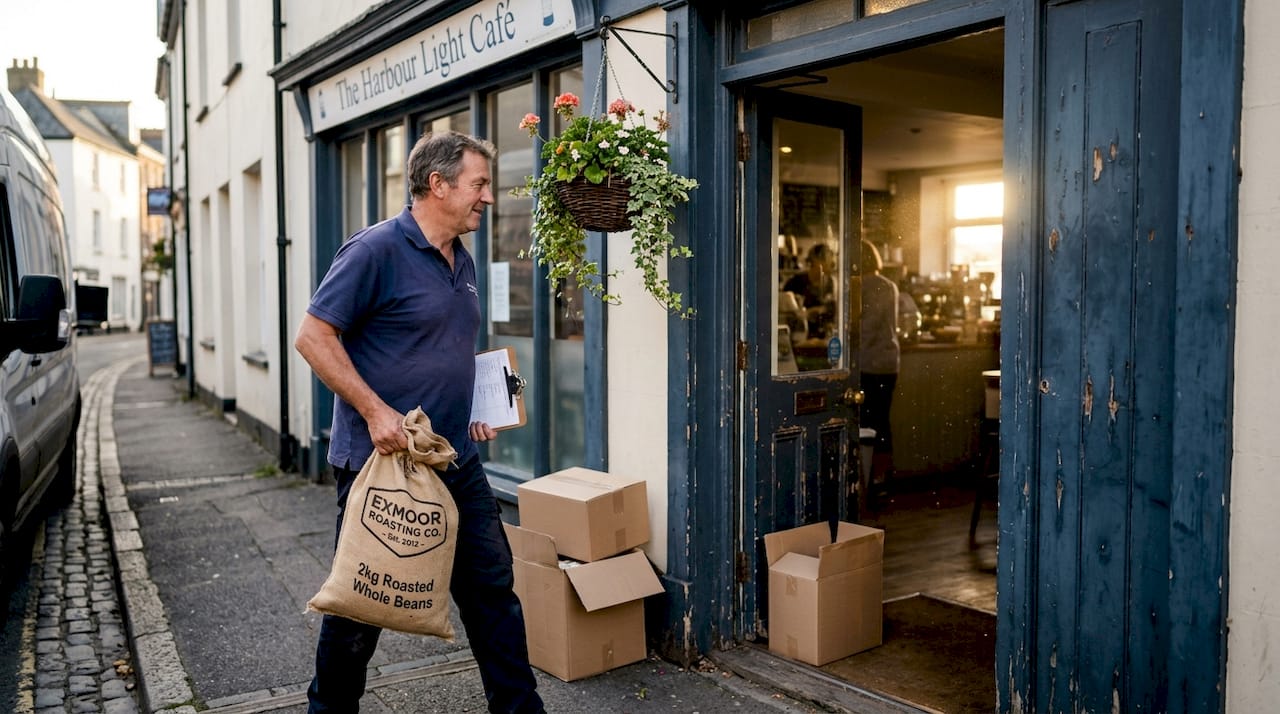
For further guidance on tips for choosing coffee suppliers, take time to review what peer venues in your area prioritise when making their decisions.
Build collaborative, resilient supplier partnerships
Selecting a supplier is just the beginning. The real value comes from what you build together over time. The most successful hospitality venues treat their coffee supplier as a genuine partner, not a vending machine that occasionally needs chasing.
Start by setting shared KPIs (key performance indicators) from day one. These should cover:
- Delivery accuracy: percentage of orders arriving on time and complete
- Quality consistency: batch-to-batch SCA score variance and rejection rate
- Responsiveness: average response time to queries and complaints
- Sustainability targets: progress against ethical sourcing and carbon commitments
- Innovation: new blend development, seasonal offerings, and menu support
Schedule quarterly performance reviews using your scorecard. These meetings are not just about flagging problems. They are an opportunity to share what is working, discuss your upcoming menu changes, and explore new opportunities together. Clear KPIs, regular reviews, and structured communication build the trust that leads to better terms and more responsive service when disruptions occur.
“The best supplier relationships we see in hospitality are built on transparency. When a venue communicates its challenges early, a good supplier will find a way to help. When they stay silent, problems compound.”
Negotiate contracts that reflect this collaborative spirit. Flexible contracts with price caps, volume discounts, and SLAs for response times protect both parties and remove the adversarial tension that plagues purely transactional arrangements. Define what happens when things go wrong: who is the point of contact, what is the escalation path, and what remedies are available.
For detailed coffee contract guidance specific to the Southwest UK hospitality sector, it is worth reviewing what a well-structured agreement should include before you sign anything. And when you are ready to explore the full range of support available, the wholesale services overview is a good place to start.
Monitor, review, and adapt for ongoing improvement
Even the best partnerships need structure to stay healthy. Without regular monitoring, small issues become entrenched problems, and suppliers who once performed well can quietly slip below your standards.
Set up a quarterly performance monitoring schedule as a minimum. Track these core metrics:
- On-time delivery rate: target 98% or above for a reliable partner
- Quality rejection rate: any batch failing your SCA or sensory threshold
- Price compliance: actual invoiced price versus agreed contract terms
- Complaint resolution time: how quickly issues are acknowledged and resolved
- Sustainability progress: updates on sourcing, certifications, and carbon reporting
Performance evaluation with metrics like on-time delivery, quality consistency, and responsiveness using quarterly scorecards gives you the data to negotiate confidently and reward suppliers who consistently deliver.
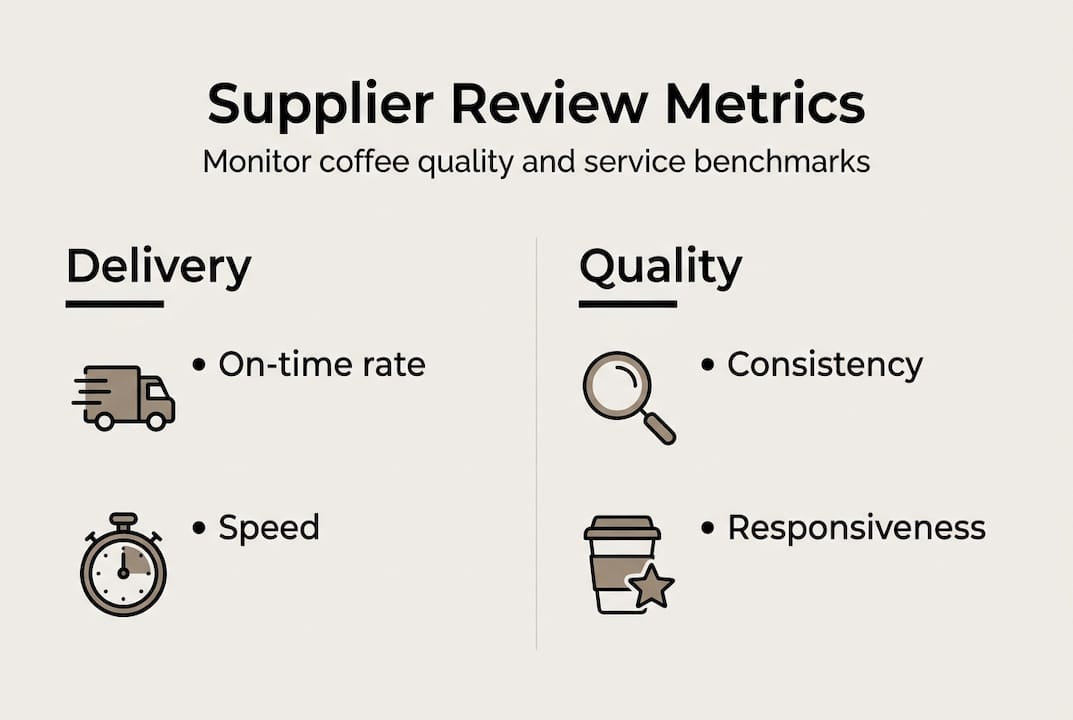
| Metric | Target benchmark | Review frequency |
|---|---|---|
| On-time delivery | 98%+ | Monthly |
| Quality rejection rate | Below 1% | Per delivery |
| Price compliance | 100% | Monthly |
| Complaint resolution | Within 24 hours | As needed |
| Sustainability reporting | Quarterly update | Quarterly |
Pro Tip: Use invoice automation tools to flag price discrepancies in real time. Even small overcharges compound over a year of orders. Having the data to hand makes review conversations straightforward rather than confrontational.
Digital tools also help you spot trends before they become problems. Real-time tools for data-backed negotiations and ESG (environmental, social, and governance) integration into your criteria are increasingly important as over 70% of UK consumers now prioritise sustainability when choosing where to eat and drink. Aligning your supplier strategy with guest expectations is not just good ethics. It is good business.
When your data reveals a consistent gap, address it directly in your next review. Bring evidence, propose solutions, and give your supplier a clear timeframe to improve. This approach protects the relationship while holding standards firm. Explore improving coffee quality at your venue as part of this ongoing cycle, and consider whether your coffee equipment options are keeping pace with your ambitions.
Why relationship-first sourcing trumps transactional deals
We have seen both approaches play out across the Southwest UK hospitality sector, and the difference is stark. Venues that chase the lowest price and switch suppliers at the first cheaper quote often find themselves managing inconsistency, poor communication, and a revolving door of account managers who do not know their operation.
Transactional sourcing risks inconsistency and cost-cutting, whereas relationship-based sourcing enables customisation, risk-sharing, and premium positioning. That is not marketing language. It is what we observe in practice.
A venue that invests in a genuine partnership with a local roastery gains access to custom blends developed around their menu, early warning of supply disruptions, and a supplier who will go the extra mile because the relationship has value beyond the invoice. That kind of responsiveness cannot be bought on a spot market.
The uncomfortable truth is that the cheapest supplier deal is rarely the most cost-effective one once you factor in the hidden costs of inconsistency: retraining staff, managing guest complaints, and scrambling for emergency supply. Mastering coffee expertise in your venue starts with choosing partners who are as invested in your success as you are. That is the standard we hold ourselves to, and it is the standard we encourage you to demand.
Level up your coffee offer with expert support
If this guide has prompted you to take a fresh look at how your venue sources and manages its coffee supply, we would love to help you take the next step.
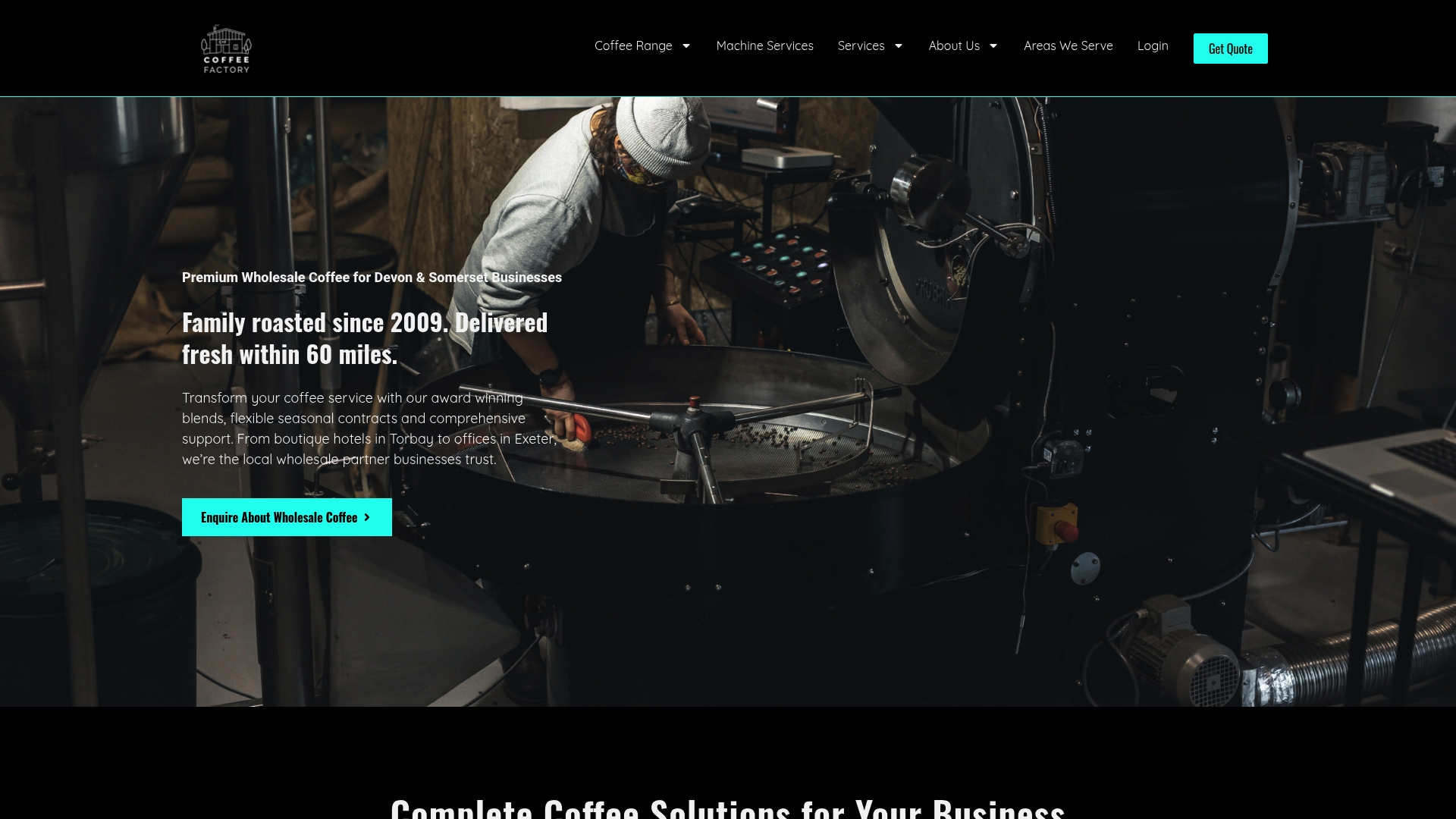
At The Coffee Factory, we work with cafes, hotels, restaurants, and offices across Devon and the wider Southwest to build coffee programmes that are consistent, quality-led, and genuinely supported. From our wholesale coffee services to specialist barista training for staff and a full range of equipment options for hospitality, we offer everything you need to build a coffee offer your guests will come back for. Let’s get brewing together.
Frequently asked questions
What should I include in a coffee supplier contract?
Include KPIs for delivery, quality, and price terms, alongside flexible SLAs and review schedules tailored to your hospitality operation’s specific needs.
How often should I review my coffee supplier’s performance?
Quarterly reviews using scorecards are the standard benchmark, ensuring consistent quality and reliable service are maintained throughout the year.
Why is it better to work with local roasters in Southwest UK?
Local roasters offer rapid delivery and on-site training support that national resellers cannot replicate at the same level of personalised, responsive service.
How can I mitigate risks in coffee supply for my venue?
Diversify across two or more suppliers, request farm-level traceability, and use short trial contracts before committing to long-term terms. Multi-supplier tiers and traceability are the most effective risk management tools available.
What certifications should I look for in coffee suppliers?
Prioritise SCA 80+ scores, Fairtrade, and direct trade certifications as your baseline for quality assurance and ethical sourcing standards.
Recommended
- Tips for choosing coffee suppliers to elevate hospitality
- How to choose commercial coffee beans: hospitality guide
- How to improve coffee quality in hospitality venues
- B2B coffee supply: Reliable solutions for SW UK hospitality
- A Pragmatic Guide to Building a Wholesale Business on Amazon – Reddog Consulting Group