
Many hospitality businesses in the Southwest UK assume coffee delivery simply means ordering a bag of beans online and waiting for a courier to drop it at the door. The reality is far richer. Specialist B2B coffee delivery connects cafes, hotels, restaurants, and offices directly with experienced roasteries that offer freshly roasted product, flexible scheduling, equipment support, and genuine partnership. In this guide, we explore what coffee delivery really means for your business, how it works in practice, which providers operate locally, and how choosing the right supplier can improve guest satisfaction, reduce waste, and strengthen your operation from the ground up.
Table of Contents
- Understanding coffee delivery for hospitality
- How coffee delivery works: schedules, logistics, and providers
- Benefits of specialist coffee delivery for your business
- Key considerations and pitfalls when choosing a supplier
- Why the best coffee delivery is about more than beans
- Find the right coffee delivery solution for your hospitality business
- Frequently asked questions
Key Takeaways
| Point | Details |
|---|---|
| B2B coffee delivery explained | It means direct, freshly roasted coffee supply from local roasters to hospitality businesses on regular or flexible schedules. |
| Business benefits | Using specialist coffee delivery boosts freshness, guest satisfaction, and often saves on costs and labour. |
| Choosing the right supplier | Focus on local providers who offer training, support, and sustainable practices, not just low prices. |
| Sustainability matters | Reusable packaging and ethical sourcing are increasingly essential for hospitality success. |
Understanding coffee delivery for hospitality
The term “coffee delivery” means something quite different depending on who you ask. For a consumer, it might mean a subscription box arriving monthly. For a hospitality or foodservice business, it is something far more purposeful. B2B coffee delivery in Southwest UK refers to wholesale services where specialist roasters supply freshly roasted coffee beans, ground coffee, and related products directly to cafes, restaurants, hotels, and offices via scheduled or on-demand deliveries.
This distinction matters enormously. When you source through a specialist roastery rather than a generic courier-based supplier, you are building a direct relationship with the people who craft your product. That relationship shapes everything: the freshness of your coffee, the consistency of your espresso, and the support you receive when something goes wrong mid-service.
Local B2B delivery in the Southwest typically covers a wide range of product formats:
- Whole beans for businesses with grinders and trained baristas
- Pre-ground coffee tailored to specific brew methods (espresso, filter, cafetière)
- Decaf and speciality blends for diverse guest preferences
- Pods and capsules for offices or smaller hospitality settings
- Equipment and accessories bundled with coffee supply contracts
Delivery scheduling is equally flexible. Some businesses prefer a fixed weekly drop, which suits high-volume venues like busy hotels or independent cafes. Others opt for on-demand ordering when stock runs low. Understanding streamlined delivery for fresher coffee is key to reducing the gap between roast date and cup, which directly affects flavour quality.
Local personal delivery is a genuine advantage over national courier services. A roastery driver who knows your venue, your team, and your preferences is far more valuable than an anonymous parcel. When choosing commercial coffee beans, freshness is the single most important factor, and local delivery makes that achievable.
Pro Tip: Ask any prospective supplier which days they roast and which days they deliver to your area. Ideally, you want coffee reaching you within 48 to 72 hours of roasting. Suppliers with clear local service coverage and fixed delivery routes will always offer greater freshness than those relying on third-party couriers.
| Format | Best suited for | Typical order size |
|---|---|---|
| Whole beans | Cafes, restaurants with grinders | 5kg to 20kg per week |
| Pre-ground | Hotels, offices, quick-service venues | 3kg to 10kg per week |
| Pods/capsules | Offices, meeting rooms, small venues | 100 to 500 units |
| Equipment bundles | New openings, upgrades | Varies by contract |
How coffee delivery works: schedules, logistics, and providers
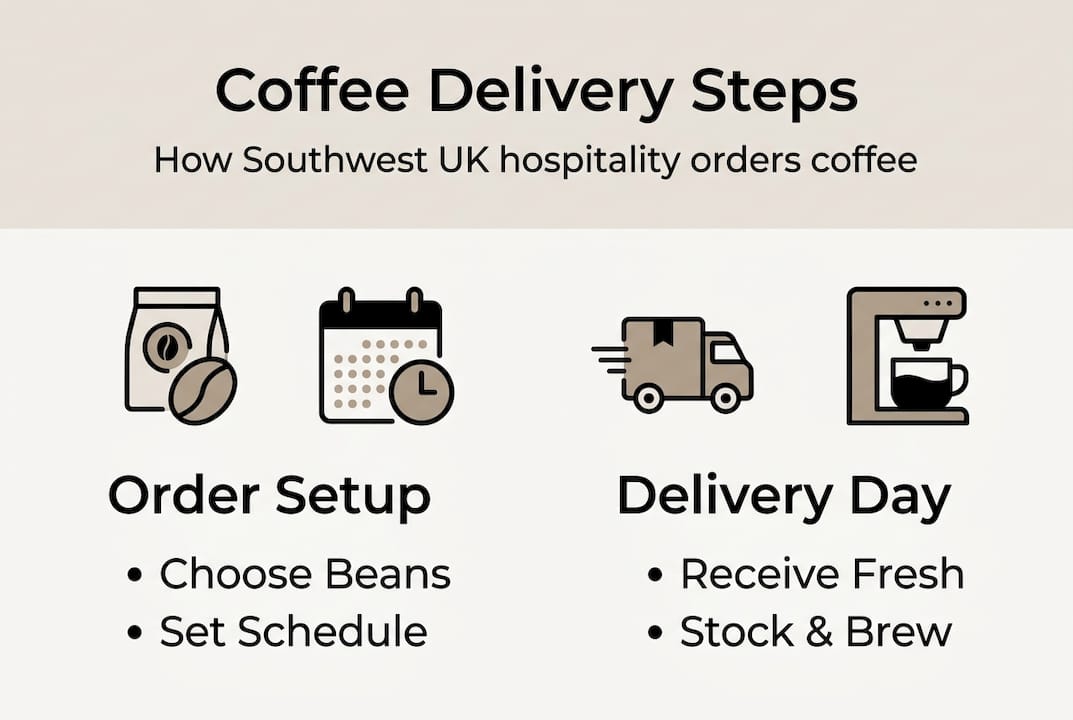
Once you understand what B2B coffee delivery is, the next question is how it actually operates day to day. The mechanics are more considered than most people expect. Key delivery mechanics include fresh roasting in weekly batches, direct personal delivery with no couriers for local clients, reusable packaging with tubs collected and cleaned, subscriptions offering up to 20% off, flexible volumes from 1kg bags to 10kg tubs, and minimum orders such as 6kg for a trade account.
For most Southwest UK providers, the weekly rhythm looks something like this:
- Coffee is roasted on a set day, typically Monday or Tuesday
- Orders are packed and prepared for dispatch within 24 hours
- Local deliveries are made Thursday and Friday by the roastery’s own team
- Clients on subscription accounts receive their order automatically
- On-demand clients place orders mid-week for end-of-week fulfilment
This rhythm suits the hospitality sector well. You can plan your stock around it, and you know exactly when your next delivery arrives. Explore the full range of wholesale coffee delivery services to understand what a structured supply agreement looks like in practice.
Several providers operate across the Southwest. The Coffee Factory, based in Devon, delivers within a 60-mile radius with a personal, family-run approach. Cornish Coffee and Fountain Rock also serve parts of the region, while Crave Coffee operates across broader areas. Each has a different model, so comparing them on the factors that matter most to your business is worthwhile.
Subscription models deserve particular attention. Locking in a regular order with a coffee contract typically unlocks trade discounts, priority delivery slots, and dedicated account support. For smaller independents, the minimum order threshold (often around 6kg) is easily met even at modest volumes.
| Provider | Delivery area | Personal delivery | Subscription available | Min. order |
|---|---|---|---|---|
| The Coffee Factory | Devon, 60-mile radius | Yes | Yes | 6kg |
| Cornish Coffee | Cornwall, West Devon | Partial | Yes | Varies |
| Fountain Rock | Bristol, Somerset | No (courier) | Yes | 5kg |
| Crave Coffee | South West, broader | No (courier) | Yes | 5kg |
Check provider coverage areas before committing to any supplier to confirm they can serve your specific location reliably.
Benefits of specialist coffee delivery for your business
Choosing the right coffee delivery partner is not just a procurement decision. It is a strategic one. Direct trade improves quality and customer satisfaction by 10 to 15%, automated equipment cuts labour by 25%, and sustainability through reusable tubs and ethical sourcing adds meaningful differentiation in a competitive market.
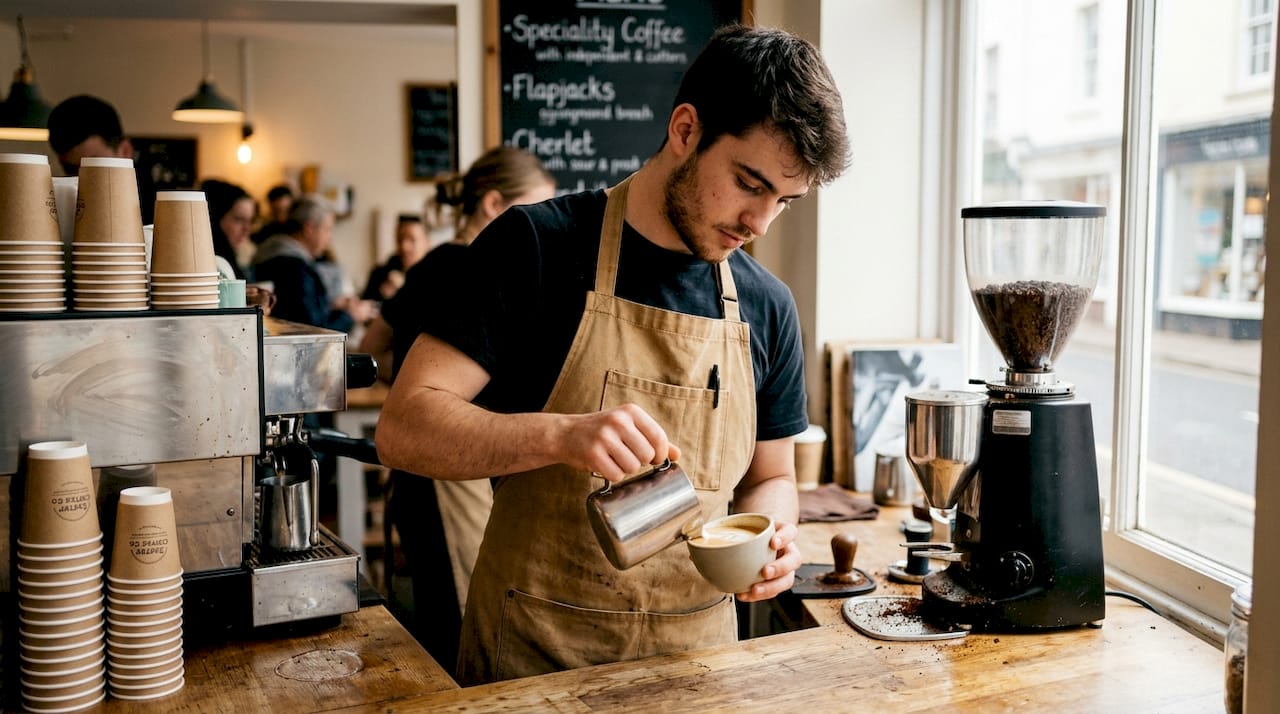
Freshness alone is a compelling reason to switch from a generic supplier. Coffee degasses after roasting, and stale beans produce flat, bitter espresso. When your guests notice the difference, they come back. That is not a small thing in hospitality.
The practical benefits of specialist delivery extend well beyond the cup:
- Consistent quality across every batch, roasted to the same profile each time
- Reduced waste through right-sized orders and reusable packaging
- Cost control via subscription pricing and transparent trade accounts
- Equipment support including installation, servicing, and troubleshooting
- Staff confidence through barista training and ongoing guidance
- Ethical storytelling that resonates with sustainability-minded guests
Sustainability is increasingly a deciding factor for hospitality businesses. Explore our sustainable coffee delivery approach to see how reusable tubs, ethical sourcing, and local logistics reduce your environmental footprint compared with nationally shipped alternatives.
“The best coffee suppliers do not just drop off beans. They help you serve better coffee, train your team, and solve problems before your guests ever notice them.”
Long-term supplier relationships consistently outperform transactional purchasing in both quality outcomes and operational resilience. When your supplier knows your business, they can anticipate your needs.
Pro Tip: Prioritise suppliers who offer barista training for your team as part of their service. Even a single half-day session can dramatically reduce inconsistency and waste, and it signals that your supplier is invested in your success, not just your order volume.
Key considerations and pitfalls when choosing a supplier
With the benefits clear, it is worth addressing the practical decisions and common mistakes businesses make when selecting a coffee delivery partner. The choice between commodity versus direct trade suppliers is the most fundamental. Commodity suppliers offer lower prices but limited traceability and storytelling. Direct trade suppliers offer better quality, provenance, and the kind of narrative your guests respond to.
Personal delivery versus courier is another real distinction. Personal delivery keeps coffee fresher and builds accountability. Courier delivery extends geographic reach but introduces delays and damage risk.
Here are five questions to ask any prospective supplier before signing a contract:
- What is your roast-to-delivery turnaround for my area?
- What are your minimum order requirements, and do they flex seasonally?
- Do you offer same-day or emergency supply if I run out mid-week?
- What equipment support and servicing is included in your contract?
- How do you handle packaging, and do you offer reusable or sustainable options?
Hidden fees are a genuine pitfall. Some suppliers charge separately for delivery, equipment maintenance, or training that competitors include as standard. Read any contract carefully and ask specifically about what is and is not included.
“A supplier who cannot tell you their roast schedule or delivery days is not running a fresh operation. That matters more than price.”
Seasonal flexibility is also worth probing. Hospitality volumes shift significantly between summer and winter in the Southwest. A good supplier will adjust your order size without penalty rather than locking you into fixed volumes year-round. Use our guide to choosing a coffee supplier to work through these considerations systematically before you commit.
Pro Tip: Ask specifically whether your supplier collects and cleans reusable tubs. This is a small operational detail that reveals a great deal about how seriously they take both sustainability and the quality of your product.
Why the best coffee delivery is about more than beans
Most businesses, when evaluating a coffee supplier, focus almost entirely on price per kilogram and blend options. We understand why. Those are tangible, comparable numbers. But in our experience, they are rarely what separates a good coffee programme from a great one.
The businesses that consistently serve outstanding coffee in the Southwest are the ones who treat their supplier as a genuine partner. They take up training offers. They ask questions about seasonal blends. They call when something is off and expect a real answer, not a ticket number.
We have seen venues transform their guest feedback simply by switching to a supplier who shows up, listens, and solves problems proactively. That is not something you can measure in a price comparison. It comes from long-term relationships built on trust and shared standards.
If you want to master coffee expertise as a competitive advantage, start by choosing a supplier who is as invested in your success as you are. The beans matter. The partnership matters more.
Find the right coffee delivery solution for your hospitality business
If this guide has helped you see coffee delivery in a new light, the next step is straightforward. Whether you are setting up a new account, upgrading your current supply, or simply exploring what better looks like, we are here to help.
Explore our full range of wholesale coffee services to find the right supply model for your venue. If equipment is part of your consideration, our professional coffee equipment options are designed to complement your delivery contract seamlessly. And if your team needs confidence behind the machine, our barista training for staff programme is built specifically for busy hospitality environments. Let’s get brewing.
Frequently asked questions
What types of coffee can I order through delivery for my café or hotel?
You can order freshly roasted beans, ground coffee, decaf options, pods, and accessories. Most suppliers offer flexible sizes from 1kg bags to 10kg tubs to suit different venue volumes.
How quickly will my coffee be delivered in the Southwest UK?
Local specialist providers often offer next-day delivery after roasting, with set delivery days each week for regular customers within a 60-mile radius.
Are there eco-friendly coffee delivery options?
Yes. Many providers use reusable tubs and ethical sourcing, collecting and cleaning packaging for refill and prioritising local logistics to reduce carbon footprint.
Can I get staff training or machine support with a coffee delivery contract?
Top suppliers include barista training and equipment support as part of their service packages, making it easier to maintain quality and consistency across your team.